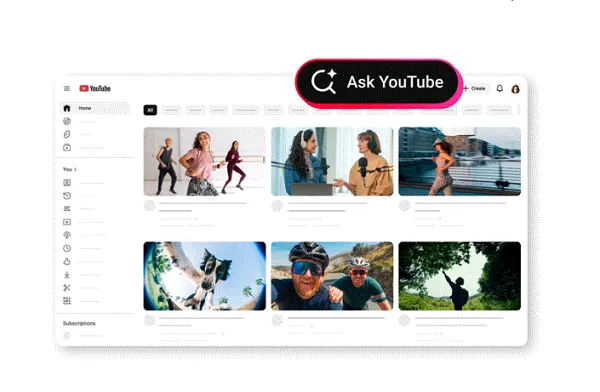
YouTube expanded mobile access to its AI-powered Ask YouTube functionality to all U.S. users, roughly four months after launching it on mobile for Premium subscribers in April.
What it does
Ask YouTube takes conversational queries and returns expanded responses built on contextual understanding. YouTube's own example captures the shape of it: ask for help planning a three-day road trip from San Francisco to Santa Barbara and you get a structured, step-by-step itinerary rather than a list of videos.
Follow-up questions work too. Ask YouTube is designed to answer subsequent queries with the context of its previous replies in mind.
Who gets it
All signed-in U.S. viewers aged 13 and older can now use the option on desktop, mobile and TV. YouTube said it is also working on bringing the feature to more countries and languages.
The position YouTube is claiming
The strategic move here is from a results page to an answer screen. YouTube holds an enormous library of topic-specific material, but extracting information from it required picking a video, playing it, and hunting for the relevant section. Structuring the answer removes that friction and raises YouTube's value as a research platform for products and services.
What marketers should prepare
First, video shifts from content that gets played to a source that gets summarized. The videos an AI can assemble answers from are the structured ones. Chapter your videos, caption them accurately, and state key information aloud inside the video. Information handled only as on-screen text risks being dropped at the summarization step.
Second, view counts change meaning. Information consumed as an answer generates no view. If search-driven views stall while brand mentions or direct traffic rise, consumption may be happening inside the answer screen.
Third, this is not a YouTube-only pattern. Search providers converting the entry point itself into an answer surface showed up the same way in Google Adds AI Feature Buttons Under Its Search Box. For recent channel-operations changes on YouTube, see YouTube Adds Vertical Livestream Practice Mode.