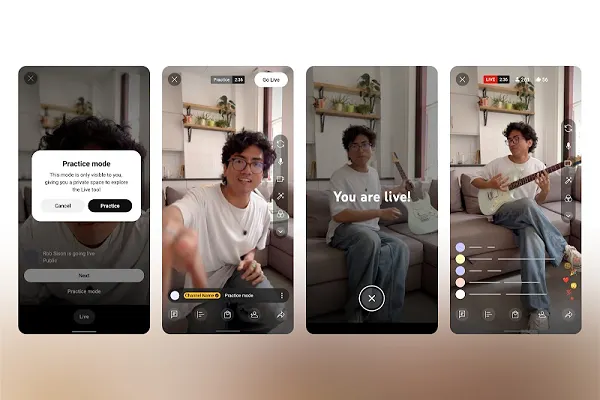
YouTube launched a feature letting creators test how a vertical livestream will look before going live, plus a new tool that projects performance insights on Shorts before publishing.
Practice Mode
YouTube Head of Editorial Rene Ritchie described it: "[Practice mode] lets creators who are interested in vertical live, but [are] maybe not 100% confident about handling everything from chat to polls, stickers to green screens, and just the stream, try things out on mobile, experiment and get comfortable in a zero-pressure environment."
Creators test setups and other elements in a private recording window, then go live directly from Practice Mode with the tap of a button once comfortable.
It is a genuinely useful training tool — and it is somewhat surprising it took this long. Instagram added live practice mode in 2021, and TikTok and LinkedIn have their own versions.
Pre-publish Shorts insights
YouTube is also rolling out automated insights on Shorts clips, providing tips and notes before publishing.
The option gives creators data-driven insights into their Shorts hook, visuals, and pacing to improve performance. Creators with access activate it by tapping the "Get Feedback" button in the Shorts composer.
What it means operationally
Directly useful for brands running live commerce or events. Being able to exercise chat, polls, stickers, and green screen before broadcast eliminates the cost of a separate rehearsal. Live has been a persistent priority across YouTube's platform evolution.
Pre-publish feedback changes the creative review process. Automated diagnostics on hook, visuals, and pacing create shared criteria where teams previously relied on instinct — with the caveat that those criteria converge on what the platform prefers.
Commerce-connected channels gain the most. In setups that run through to sales, like Cafe24's YouTube creator partnership API integration, a single broadcast failure is expensive.
Bottom line
Not a new idea, but new at YouTube's scale. Lower barriers mean more vertical live supply — and more competition for the same attention.