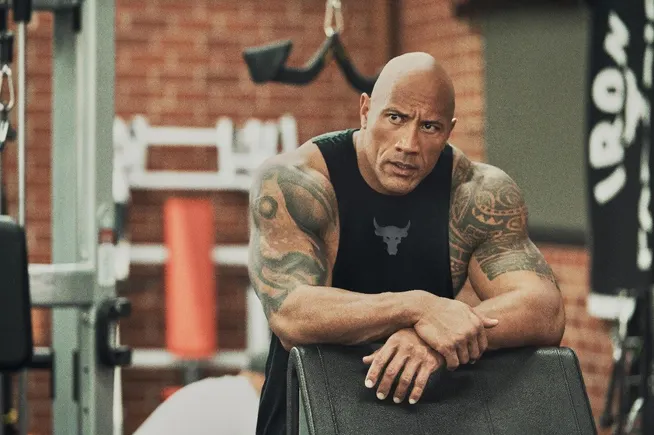
Under Armour has lost another longtime brand ambassador. Dwayne "The Rock" Johnson announced Thursday that his training brand Project Rock has ended its partnership with Under Armour.
What was announced
Project Rock was founded in 2017 and developed footwear, apparel and accessories through the Under Armour relationship. It will now focus on deepening its connection with customers and creating "innovative ways for more people to discover what training can build within them."
Under Armour said the partnership was reaching a "natural conclusion" after a decade-long run. "As we sharpen our focus and strengthen our core business, we're creating a more unified expression in our train category," a spokesperson said. "We're incredibly grateful to DJ and his entire team for their partnership, friendship, and everything we've built together over the past decade."
Under Armour will continue to sell Project Rock through October.
Johnson's statement carried both closure and pivot: "I'm grateful to Under Armour and to every person who helped us build this epic chapter of Project Rock. I'm proud of what we created together, and even more proud of all the people behind the scenes who poured themselves into Project Rock, and took great pride in making it their own … Now we move on to new north stars, new partners, and with one intention in mind — deliver for the people."
The second exit
This is the second longtime partnership to end recently. Under Armour cut ties with NBA star and longtime ambassador Steph Curry in November last year; Curry went on to sign with China-based sportswear company Li-Ning.
Within Under Armour, Project Rock formed partnerships with the UFC and extended its reach across Olympic sports, mixed martial arts and other arenas. The brand plans to carry that training ethos into new products, storytelling and experiences.
A new ambassador lineup
With two brand-defining partnerships over, Under Armour is pivoting. It announced a campaign starring "Heated Rivalry" actor François Arnaud last month, and a few weeks later named K-pop group BoyNextDoor as brand ambassadors.
"Marketing isn't broken"
On an earnings call earlier this month, founder and CEO Kevin Plank said the company's marketing "isn't broken" — it just needs better alignment with product. "We'll continue to be visible, and we'll win with this consumer and continue to bring them to Under Armour. But I'm proud of the way our marketing is working."
The company reported Q1 revenue down 3% and said it has rebalanced marketing spend, which will now be lower as a percentage of revenue.
Plank framed the reset precisely: "Our marketing reset is not only about how much we spend, but how effectively we spend it and what the return ultimately is. The point is to make each dollar work harder behind a brand idea consumers can understand, remember and purchase against."
What this means for marketers
The reading here isn't about whether a celebrity deal succeeded. It is about a structural property of the celebrity ambassador model.
First, a celebrity brand is both an asset and a competitor. Project Rock built an independent brand identity inside Under Armour. That identity walks out the door the moment the contract ends. Ten years of investment leaving as the partner's property was a predictable outcome of the structure. The spokesperson's phrase — "a more unified expression in our train category" — points directly at the problem.
Second, marketing efficiency resets usually begin with partnership cuts. When revenue declines and marketing has to shrink as a share of it, long-term contracts with fixed-cost characteristics are first to be reviewed. Plank's "make each dollar work harder" reads as a statement that celebrity deals didn't clear that bar.
Third, the replacement strategy is the interesting part. Moving from one global superstar to an actor plus a K-pop group is not just a price adjustment — it's a change in reach structure. Instead of one enormous name, a set of faces matched to distinct audience segments.
That kind of restructuring travels with organizational change. Like StarKist consolidating everything under one agency or Panera hiring Cava's marketing chief as CMO, brands under performance pressure tend to touch spending structure and decision structure first. Creative comes after.