As marketers look toward the second half of 2026, they are tasked with formulating an effective, early approach to holiday promotions so companies can maximise brand exposure and sales in the all-important final quarter.
It is also important to consider emerging opportunities and potential new pathways as online behaviour shifts and new discovery trends appear.
Pinterest, now up to 631 million shopping-focused monthly active users, could provide considerable possibility. The platform has been improving its discovery tools and aligning and tailoring search results to each user, becoming a key reference point for many shopping trends.
1. Use Pinterest Trends
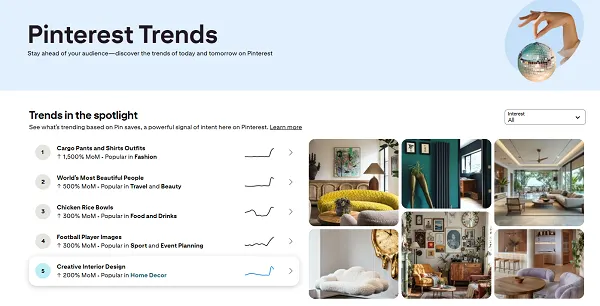
Pinterest has built up its trends tool over recent years, and it now offers insights into overall Pin trends and shopping-specific insights, plus keyword search within the app.
Marketers can glean insight into growing and seasonal trends as well as related search terms, filter results by demographic, and add qualifying keywords to searches.
Tapping through on any highlighted topic provides Pin examples demonstrating what is resonating with users.
The platform also offers a Promote a Pin activation. Pinterest says promoting a brand pin can be especially helpful for companies looking to test how their organic creative posts might work as ads.
2. Use Pinterest search
In-app search lets users filter by criteria including Pins, profiles, products and boards — each category yielding insight into trends and topics.
Search is also useful for identifying top influencers within a niche. Depending on reach and engagement, that can guide brands toward potential partners in the app.
3. Note what's working
Marketers should note which content formats drive the most engagement across both general trends and shopping insights. That includes colours, images and videos, all of which can inform brand approaches.
Note product description details too, and consider what other related brands focus on. Standing out is what matters in the Pin feed, so engagement stats belong in the assessment.
Comments, less present on Pinterest than elsewhere, can still provide guidance.
Timing matters as well. Pinterest says that when brands note key seasonal or life moments in the app, it can guide a strategy that connects with people while they are planning for specific events.
4. What about hashtags?
Should you use them? Pinterest's search tool is getting much better at displaying content based on related context, so marketers do not need to add specific hashtags to their Pins.
However, relevant keywords are important. It is worth noting the key terms others include and searching for them in Pinterest Trends to see whether people actually use them to discover content.
The shift in weight from hashtags to keywords is the platform's most operationally significant recent change.
5. Formulate a strategy
From that initial research, marketers can build a Pin strategy based on what actually resonates with their target audience.
A more specific focus on shopping trends could be particularly valuable, aligning with Pinners using the app for discovery.
6. Analyse and improve
With an approach in place, examine performance, double down on what works and cull the rest.
Practical notes
Work backwards from the holiday season. Pinterest is a platform used during planning. Because you need to reach people at the planning moment rather than the purchase moment, you start earlier than on other channels.
Read shopping insights separately from general trends. The two datasets can tell different stories. For commerce objectives, shopping-specific insights come first.
Use Promote a Pin as creative testing. It is a low-cost way to validate whether an organic Pin functions as an ad — worth running before locking creative.
Do not unify the approach across platforms. Pinterest's discovery logic differs from feed-based platforms. For the sequences elsewhere, see Building a Brand on Facebook in 2026 and Seven Steps for YouTube Marketing.
Build recurring formats. The principle in The New Fundamentals of Social Brand Strategy applies on Pinterest too.