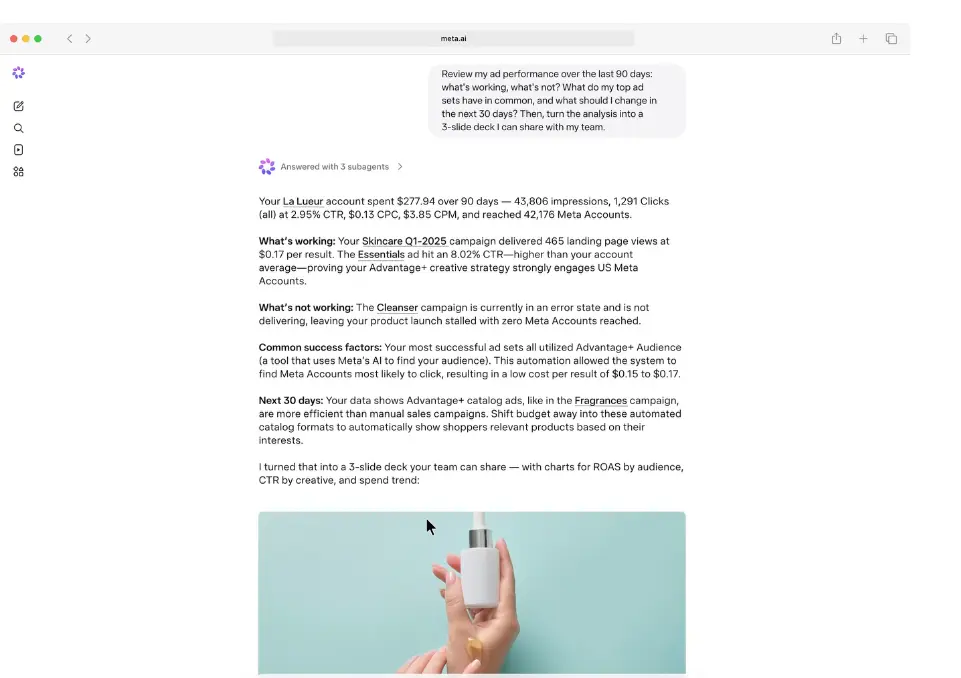
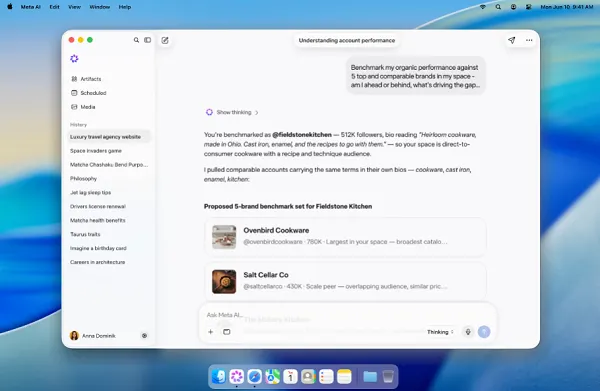
Meta has extended Meta AI into paid media operations. Advertisers can connect their Meta ad campaigns and Google Workspace data directly to the assistant for campaign analysis, optimization recommendations, and automated reporting. The capabilities are rolling out across web, mobile, and desktop.
What Connects
Advertisers can attach two categories of data:
- Meta Ads campaign data
- Google Workspace: Gmail, Docs, Sheets, and Slides
That combination matters. It means not only performance data but planning documents, reporting templates, and email history enter as context — because most of the work of turning campaign data into a report already happens inside Workspace.
What It Does
Campaign Optimization
Meta AI analyzes performance and surfaces what to change next. Meta says the assistant can identify which audiences are delivering, uncover patterns across top-performing creative, flag ads that may no longer be resonating, and point to areas where budget could work harder.
Creative Diagnosis
Meta positions this above a simple best-and-worst ranking. The assistant looks for patterns in successful content and attempts to explain why specific creative stopped landing — useful for deciding what to scale, refresh, or retire.
Budget Insight
It highlights where spend is producing results and where it could be redeployed. Whether those suggestions align with profitability, incrementality, and wider business objectives remains the advertiser's call.
From Analysis to Deliverables
Meta AI can convert its analysis into decks, documents, and spreadsheets, cutting manual work in producing client reports, internal presentations, and performance sheets.
Recurring Work
Advertisers can schedule recurring tasks and reminders. Instead of re-requesting the same analysis, a marketer can have Meta AI review performance on a cadence and produce updated reports.
The Structural Caveat
The important question is not the feature list — it is reliability. Meta AI is advising advertisers on how to spend on Meta's own advertising platform. That is a vendor doubling as a purchasing consultant, and neutrality of the recommendations cannot be assumed.
Three practices reduce that exposure:
- Treat AI suggestions as hypotheses. Attach an experiment design before acting.
- Keep incrementality validation independent. Verify outside the platform's own reporting.
- Automate report assembly, keep interpretation human. Compiling numbers scales well; judgment does not.
Why This Matters
The direction is clear: generative AI is moving from an adjacent helper into the operational workflow itself, and it is happening across platforms at once. The data and measurement prerequisites are effectively the same ones laid out in the four foundations you need before building AI agents for Google Ads. If you are setting up for peak season, read it alongside Meta's holiday marketing guides and their early-setup recommendation.
Bottom Line
Meta AI has moved from general assistance to paid media tooling. The scope now covers analysis, optimization recommendations, and reporting automation — but the conflict of interest in the recommendations is unchanged. Take the automation gains in reporting first, and keep budget decisions on top of your own verification.