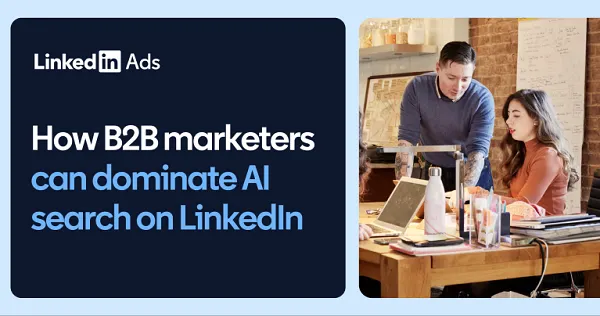
LinkedIn's guide to AI citation optimization
LinkedIn published a playbook on optimizing content for AI chatbot citations, focused on using the platform to build brand credibility — a key signal for chatbots deciding what to cite.
LinkedIn has been leaning hard on its value as a route into AI answers, and the argument has gained weight as people increasingly turn to chatbots for answers and as LinkedIn becomes a core resource for AI tools. Third-party research shows LinkedIn is among the most-cited references in AI chatbot answers.
The Credibility Stack
LinkedIn calls its optimization framework "The Credibility Stack." It uses the platform's established credibility and algorithm signals to scale relevant messages, combining different elements of the app to build a more comprehensive, trusted brand presence.
The guide includes a checklist for establishing a foundational presence in the app and instructions for extending that presence through staff profiles and relevant creators.
What kind of content gets cited
LinkedIn also shared which content types attract AI citations. Two points stand out: long-form articles published in the app outperform feed posts, and content freshness is a live variable. Both align with citation data from elsewhere — see 76% of ChatGPT's Top-Cited Pages Were Updated Within 30 Days for how strongly update cadence correlates with being cited.
The dependency trap
LinkedIn's incentive is transparent: emphasizing AI citations drives usage and traffic in the app and encourages businesses to treat the platform as their main connector to AI discovery.
For brands, building that kind of dependency on any single platform is a risk. AI tools could de-prioritize LinkedIn, or LinkedIn could change the rules. The stronger approach is to apply the same guidance to owned properties — a brand's own site — even though it is harder without the trust signals LinkedIn already carries. The playbook's substance is the same either way, which leaves room to use LinkedIn as a referral tool that raises a website's credibility rather than as the whole strategy.
For how LinkedIn's own distribution keeps shifting, see LinkedIn Personalizes Comment Display. When the algorithm changes, the same content strategy produces different results — which is exactly the cost of dependency.
FAQ