Google has long used E-E-A-T to assess content quality and relevance, distance and prominence for local rankings. What has not existed is a comparable framework for AI visibility across search, social, reputation and AI at once. The F.A.C.T.S. model proposed by multi-location marketing platform SOCi is one attempt at that gap, splitting local AI visibility into five factors.
1. Freshness
How recently you publish on your website and third-party profiles like Google, Yelp and Facebook. The data is unusually specific:
- The average URL cited by AI platforms is 25.7% newer than those cited in traditional search (Ahrefs)
- More than 70% of AI-cited pages were updated within the past 12 months (AirOps)
- 76.4% of ChatGPT's top-cited pages were updated within the past 30 days (SE Ranking)
2. Authority
How a brand demonstrates leadership in its industry. Operating since 1963 and listing that on your Google profile is an authority signal; professional certifications, best-of lists and positive coverage reinforce it. Per AirOps, brands publishing authoritative content in their area of expertise and earning recommendations from trusted online sources are 40% more likely to appear in AI answers than brands missing either factor.
3. Consistency
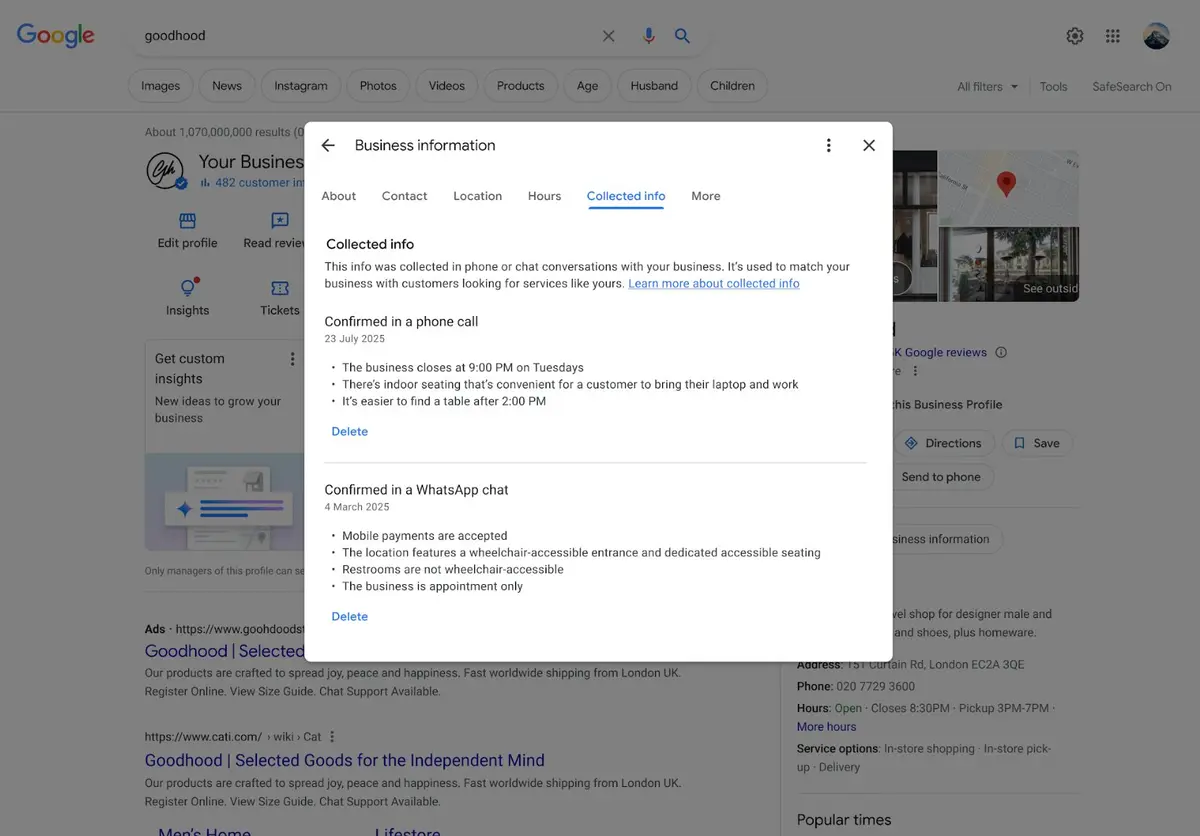
Consistency used to mean listing each location's name, address, phone and website uniformly across as many directories as possible. As the directory landscape contracted and Google grew dominant, those long-tail citations became largely irrelevant.
AI's need to ground answers in trusted sources renewed the importance of managing presence across platforms — not hundreds of directories, but the handful AI platforms actually cite for local queries. SOCi's research indicates Google Maps, business websites, Yelp and Facebook, in that order, are cited most often for local queries on ChatGPT, Gemini and Perplexity, though top sources vary by industry.
The same research found that while 98% of studied brand locations had claimed Google profiles, only 80% had claimed Yelp profiles and just 53% managed Facebook store pages — a likely driver of LLM citations for local brands being only about 79% accurate.
4. Trust
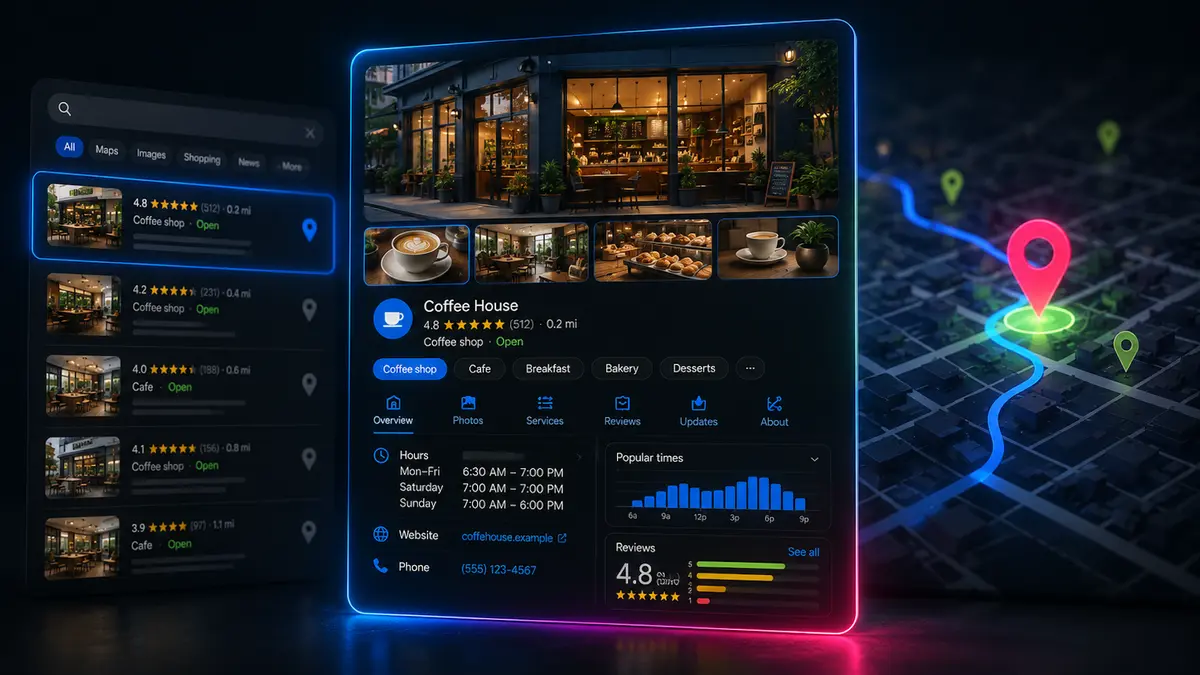
Signals from outside the brand reflecting approval from consumers and experts, conveyed in local search largely through ratings and reviews on Google and Yelp, which AI platforms use as a primary factor when recommending local businesses.
92% of consumers consult online reviews when choosing a local business. Reflecting that, businesses recommended by ChatGPT average 4.4 stars, compared with 4.2 on Google and 3.1 on Yelp — AI platforms are setting a higher bar for inclusion in a more selective result set.
5. Semantic relevance
One question summarizes it: across your website, local landing pages, profiles and posts, do you answer every question an ideal customer may have before choosing you over a competitor?
This matters more in an AI context. The average traditional search query is four words; the average AI query is 23, according to Orbit Media. Consumers using AI ask longer, more nuanced questions, so brands need detailed, useful content to avoid exclusion.
Using it as a priority filter
Most marketing teams cannot chase every algorithm rumor. Before investing in a new local tactic or content update, ask:
- Does it provide an immediate or ongoing freshness signal?
- Does it establish industry authority with clear evidence?
- Is it consistent with the brand's source of truth?
- Does it create an opportunity to strengthen trust signals?
- Is it semantically relevant to a specific local customer need?
Anything that fails those checks moves to the bottom of the list.
For connecting brands to concepts, see Entity SEO: AI Search Looks for the Source of a Concept; for public measurement standards, see IAB Publishes AI Visibility Measurement Standards.