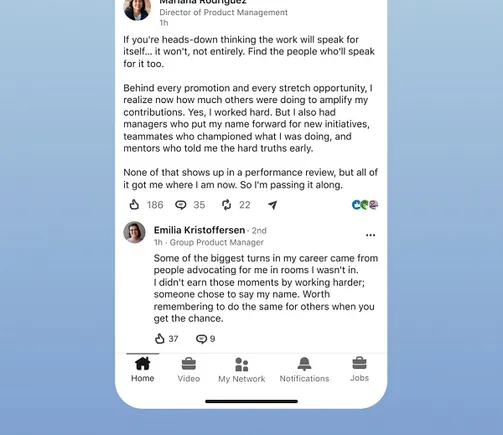
LinkedIn wants more in-app conversation and is pursuing it through two updates focused on comment relevance.
What is changing
As reported on Threads by creator economy expert Lindsey Gamble, LinkedIn announced a comment ranking update that displays post comments based on their relevance to each user. Signals like professional interests, connections, and engagement activity surface more personally relevant comments in the feed.
LinkedIn will also surface more timely and relevant discussions in the feed to encourage in-app conversation.
Why comments, why now
The numbers explain the priority. LinkedIn's Q2 performance report earlier this month showed an 18% year-over-year increase in time spent in post comments, alongside overall content consumption up 10% year over year.
That flagged an opportunity to drive more in-stream engagement. Improving comment relevance and showing more comments in the main feed is the natural next step.
But who generated that increase?
Here the story complicates. The strategy works only as long as AI bots and engagement farmers do not overwhelm comment streams.
LinkedIn is cracking down on engagement pods and AI spam, particularly in comment sections. It is possible that a significant portion of the reported rise in comment activity comes from exactly those tools.
LinkedIn has not provided definitive stats. But an analysis by AI detection startup Pangram Labs, based on 57,000 public LinkedIn posts, found that 30% of all comments posted on LinkedIn between April and June this year were entirely AI-generated.
That would account for a lot of the reported increase — and explains why LinkedIn is simultaneously exploring ways to drive authentic engagement and clamping down on inauthentic replies.
What marketers should take from it
Comments become a distribution asset. Once comments are ranked by personal relevance, a well-written comment generates reach independent of the original post. For B2B marketers, comment strategy starts to matter as much as posting.
Automated commenting has crossed into negative-return territory. A 30% AI share is not something a platform can ignore. Mass AI-generated commenting now carries both enforcement risk and brand risk.
Profile and activity history generate the relevance signal. If professional interests and connections determine display, consistency of topic over time effectively determines reach. Read alongside LinkedIn's own event marketing data when planning channel strategy.
Bottom line
LinkedIn is promoting comments into content. If 30% of that content is AI, genuine human comments become the scarce asset.