
GoogleSearch Engine Land
Google Is Auto-Expanding AI Overviews — Pushing Search Results Further Down
For some queries, AI Overviews now expand fully without a 'Show more' click. What that does to clicks and how to respond.

Google Discover has changed how personalization works. Users can now describe the topics they want in their own words, and the feed responds.
Google's description: "you'll be able to tap any three-dot menu in your feed to tell Google the exact topics or links you want to see more (or less) of, in your words."
Two mechanics matter here:
This is a different instrument from the binary "not interested" button. It allows instructions with nuance: more product reviews from this brand, fewer rumor pieces.
Discover has been a channel where an algorithm guesses and pushes. Conversational refinement increases the share of traffic driven by explicitly declared interest. Expect fewer accidental traffic spikes and more stable reach within specific topics.
For a site to match a request like "show me more of this," it has to be recognizable as a repeat source on that topic. Publishers with a narrow, consistent topical spine gain over publishers scattering across unrelated subjects.
Google made this point too. Content teams can enter varied requests themselves to see which niches are well covered and where the gaps sit. It is a cheap way to find under-served topics.
On measurement, pairing this with demand signals from other channels helps — see how Search Console reveals the search demand behind your social content.
Discover is moving from a feed you receive to a feed you edit. What brands should chase is not algorithmic favor but a topical position clear enough that a reader can name it out loud.
Through the three-dot menu on any item in the feed, where they can type the topics or links they want more or less of in their own words.
Google says it remembers the requests and applies them going forward. The feed adjusts immediately and the preference carries over.
Explicitly declared interest carries more weight, which favors sites with a clear topical focus and consistent publishing over generalist feeds.
Yes. Entering varied niche requests shows where content is plentiful and where gaps remain, making it a low-cost topic research method.
To apply what you just read to your own site, start with a free audit of where things are now.
A strategist replies within 24 hours on business days.
For some queries, AI Overviews now expand fully without a 'Show more' click. What that does to clicks and how to respond.
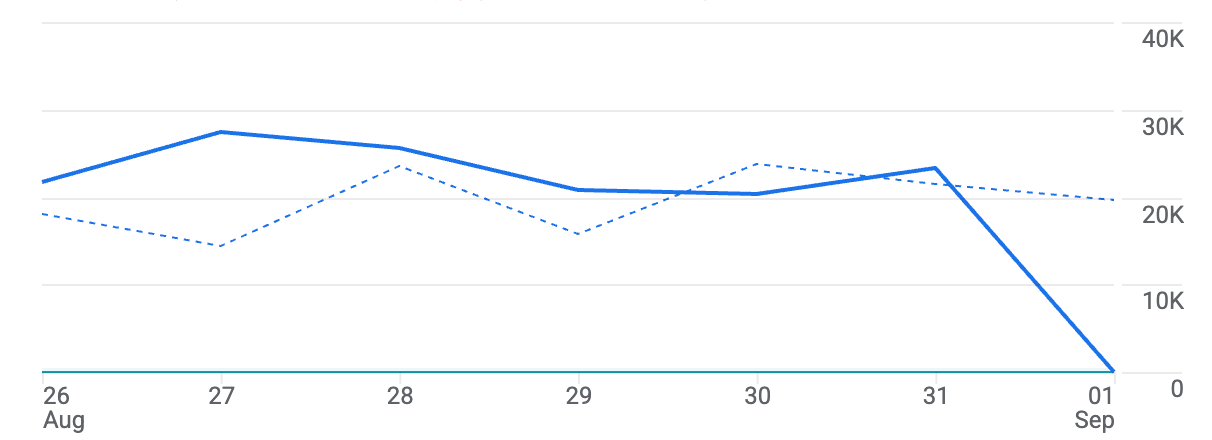
A widespread GA4 bug left Sept. 1, 2026 data missing across accounts. What to check and what not to do while Google Analytics data is missing.
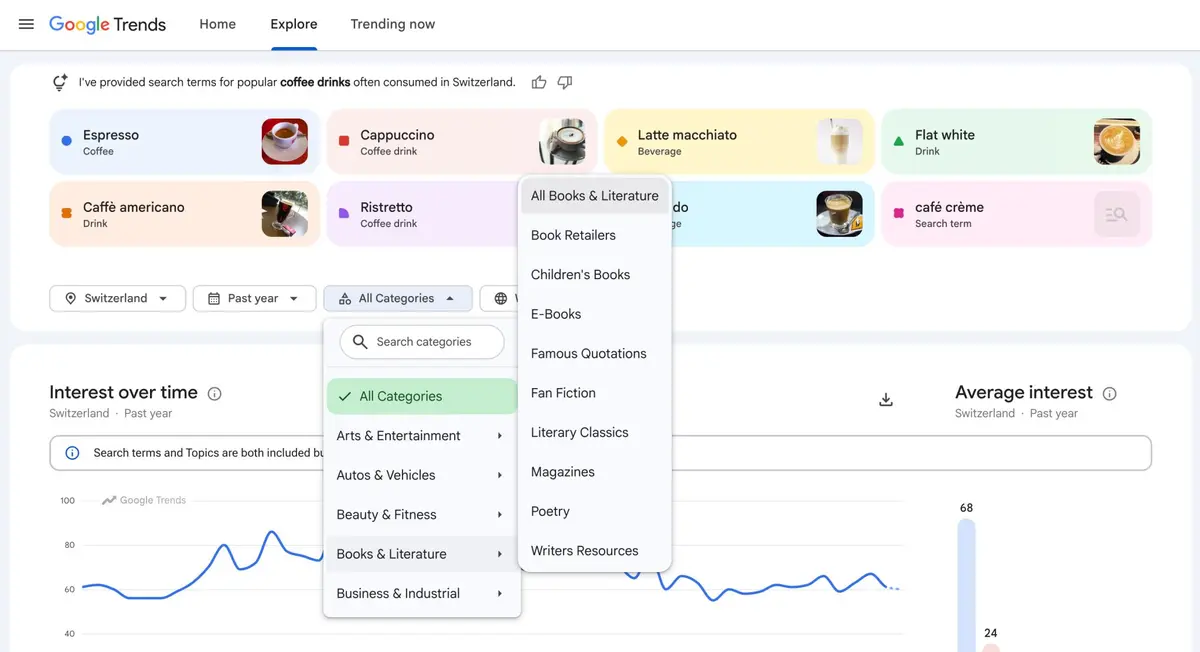
Google Trends can now filter the Explore page by category with no query entered. How to use it for topic discovery and, more usefully, for cutting noise.