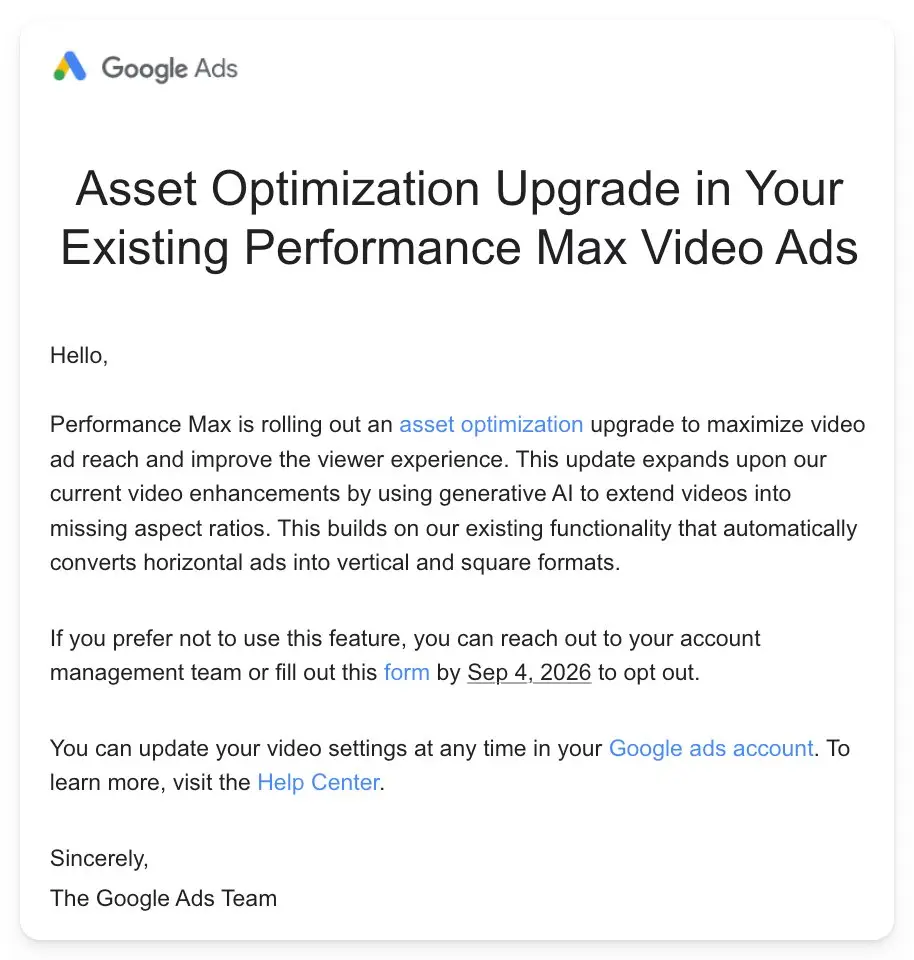
Google Ads is rolling out an asset optimization upgrade for existing Performance Max video ads. The update uses generative AI to extend videos into missing aspect ratios, letting Google create versions of an advertiser's creative that can appear across more inventory.
What's been added
The capability builds on Google's existing video enhancements, which already convert horizontal videos into vertical and square formats. What is different here is that this is not conversion but generative extension of the frame. Google's stated goal is maximizing video ad reach while improving the viewing experience.
Advertisers who don't want the optimization applied can contact their account management team or submit Google's opt-out form by September 4. Video settings can be changed at any time from within a Google Ads account afterward.
The update was first spotted by JXT Group founder Menachem Ani, who shared the communication he received on X.
Where the practical judgment splits
The upside is clear. For inventory that favors vertical or square creative, brands get more mileage from existing video assets without producing every format themselves. For teams with constrained production budgets, that is real value.
The counterweight is control. Automatically generated versions of brand creative won't be appropriate for every advertiser. Extending or adapting a video with generative AI adds another automation layer, and brands may want to review closely for visual consistency, product accuracy and brand guideline compliance. The possibility that an extended region invents elements the actual product doesn't have belongs in that review.
Which is why the September 4 deadline matters operationally: past that date, the default applies.
The bigger picture: from media automation to creative automation
Google has steadily expanded Performance Max from automated media buying into automated creative production. This update pushes further. It moves past choosing how and where an advertiser's assets run, to generative AI filling gaps in the assets the advertiser never provided.
The same current runs through Google's confirmed AI Max migration timeline on the search side. Both share a structural feature: absent an opt-out, they apply automatically.
What this means for marketers
Three distinct responses make sense.
Regulated industries and precision product categories should consider opting out first. In healthcare, finance and food, where product representation carries legal constraints, an AI-extended frame risks falling outside review standards — particularly if the generated region implies something about product performance.
General consumer categories can leave it on, with a review process. Where reach gains are large and risk is low, keep the default but build a recurring check on which variants are actually serving. Running auto-generated creative that nobody ever looks at is the risky configuration.
Revisit creative strategy itself. Automatic extension only works well when the source footage suits extension. Assets with critical elements pressed against the frame edge extend badly no matter the method. Video produced from here on benefits from being shot with headroom on the assumption of aspect ratio conversion.
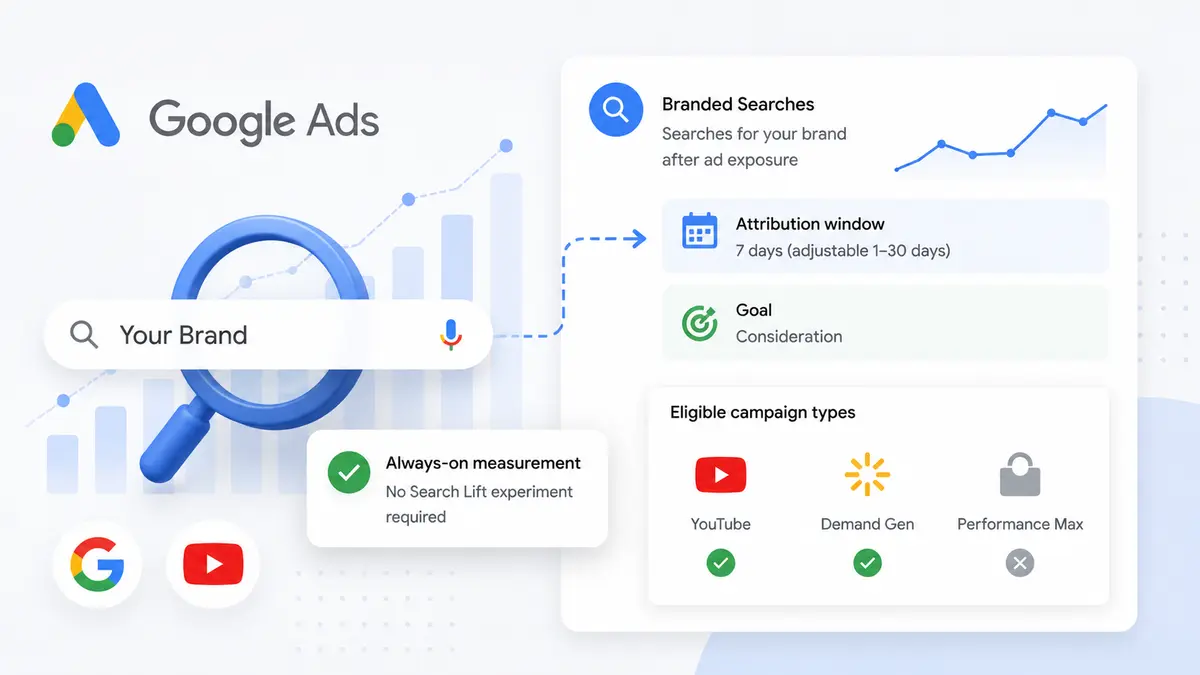
This lands on the same point raised in Demand Gen Shows Why PPC Can No Longer Hide Behind Intent: as targeting and bidding automate, the variables advertisers control shift toward creative. This update automates part of that creative too. What remains under advertiser control is source asset quality and the opt-out decision.