As marketers reassess social presence ahead of second-half promotions, TikTok is one of the most popular, albeit divisive platforms — and has emerged as a key connector for younger audiences.
Five steps to an effective brand presence.
1. Use TikTok Trends
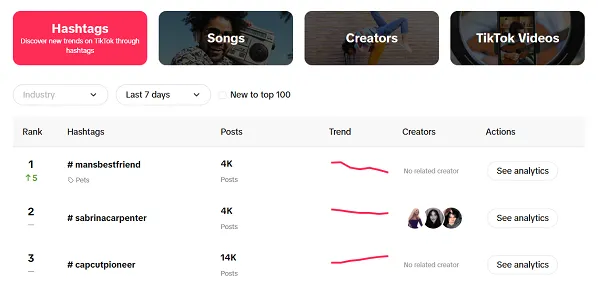
TikTok provides a range of trend insights options:
- TikTok Trends: a free tool allowing marketers to track trending topics by region and industry sector
- Top Ads listing: an overview of the best-performing TikTok ads by region, industry, objective and format
Marketers can tap through the various examples to soak in what's working on TikTok. They can also check out the comments to see what people are asking, which could provide further guidance about what users want to see from brands.
The insights gleaned can inform a TikTok ad strategy by showing not only what's being discussed in each business niche, but also how the most successful brands are tapping into this with their promotions.
2. Build a database of key themes and formats
Based on the data in TikTok Trends and Top Ads, build a list of the key themes and formats gaining traction with TikTok users.
This provides an overview of how to angle promotions to align with TikTok user interests, while also directly pointing to the video styles that are working for other brands.
3. Examine influencers
Influencer marketing on TikTok can be a powerful tool, with creators generally having a better grasp of the platform than most brands.
Brands can use TikTok Trends to find the most popular creators by topic, which then guides content approaches and offers a better understanding of what's working within a specific niche.
Brands that understand their niches will also have an easier time finding potential influencers to partner with on promotions.
4. Formulate a strategy
Using this research, build a strategic approach to TikTok that aligns with your industry's key trends and appeals to people engaging with related content.
Stay aware of trends, keep up to date on niche interests, and tap into opportunities as they arise by monitoring the evolution of broader conversations in the app.
5. Study analytics
Use TikTok insights to measure the response to your content and activity, doubling down on what's working and moving on from what's not.
The key thing with TikTok is understanding the app, and what TikTok users are responding to. Overt marketing will be less successful, but by digging into the major trends, marketers can get a better sense of what works and what doesn't.
They can also see what people are asking in the app and therefore know what answers their brand can deliver.
Practical takeaways
Start with the two free tools. TikTok Trends and Top Ads both need only an account, giving you niche terrain and competitive creative without paid research.
Read the comments under Top Ads. The practical detail the article flags: the ad tells you less than the comments beneath it about what users want from brands.
Manage creative as formats, not posts. That is what step 2's "database of themes and formats" means — the principle in The New Fundamentals of Social Brand Strategy.
Source influencers through the trends tool. There is a path to finding top creators by topic inside TikTok Trends without a separate casting platform — and the article is explicit about the order: niche understanding first, casting second.
Design around the failure of overt marketing. That is TikTok's baseline constraint; on relevance beating volume, see TikTok and WARC: In the AI Creative Era, Relevance Beats Volume.
Keep live formats in view — creator relationships extending into real time are covered in Why IRL Streamers Are Brands' Biggest Opportunity.