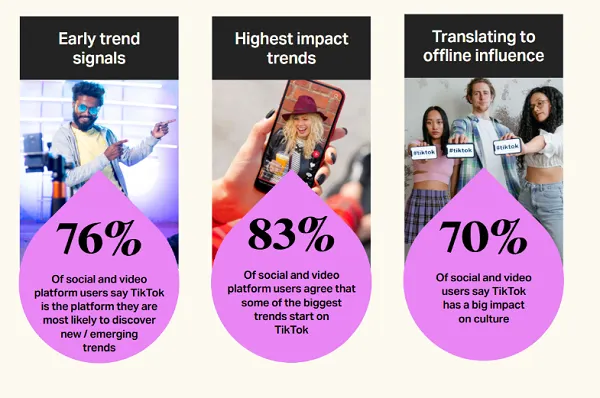
TikTok, working with marketing strategy research group WARC, has released a new report examining how AI tools are shaping marketing workflows and how marketers can combine insight with AI to lift campaign performance. The survey covered 400 marketers across the UK, US, Australia, and Brazil, and its core message speaks directly to AI creative marketing practice.
The Core Finding: Relevance Over Volume in AI Creative Marketing
The report's central message is clear: how much content you produce matters far less than how relevant it is. Brands that perform well prioritize quality and cultural fit over sheer content volume. Andy Yang, TikTok's Global Head of Creative and Brand Advertising, describes these brands as the ones that "learn fastest from the people they're speaking to," producing content that "feels like it was always there, not forced in."
Where AI Tools Fall Short
Most marketers surveyed rated AI tools as useful, and many agreed AI has already become essential to the creative process. But AI's value wasn't rated evenly across every task. For work like copywriting and script development, AI's perceived value was comparatively low, and marketers cited "lack of creative originality" as its key weakness.
The Human Layer AI Creative Marketing Still Needs
So what's the fix? Most marketers believe adding cultural insight can make AI output more relevant. In other words, AI alone cannot execute a complete creative strategy — human involvement remains essential. The report's recommendation is that platforms like TikTok supply the "cultural intelligence" needed to steer AI output in the right direction, and that combining community-sourced insight with AI tools produces more effective marketing strategies — a theme that connects to how content planners are evolving into AI content designers.
Implications for Marketers
This report directly names the "volume trap" that many brands have fallen into since adopting generative AI. As AI makes near-infinite content production possible, consumers are now seeing more ads that feel "forced in" than ever. What matters in practice isn't automation that increases output — it's reading the language and context of your target community and reflecting cultural signals from the brief stage onward. AI should remain a tool that accelerates drafts and iteration, while humans retain final judgment on originality and cultural fit — a division of labor visible too in platform guidance like YouTube's practical Shorts production tips.
In areas like copy and scripts, where brand voice and nuance are decisive, lowering AI dependence and building a process that folds platform-specific community insight concretely into the creative brief will be key to performance. It's time to redefine AI creative marketing maturity not as "how much you produce" but as "how relevant what you produce is." For help building an AI-assisted, culturally grounded creative process, see Best Partner's services.