OpenAI is bringing ChatGPT Ads to its biggest group of new markets yet, giving European advertisers access to an emerging ad channel built around conversations rather than traditional search queries or social feeds.
What's Opening
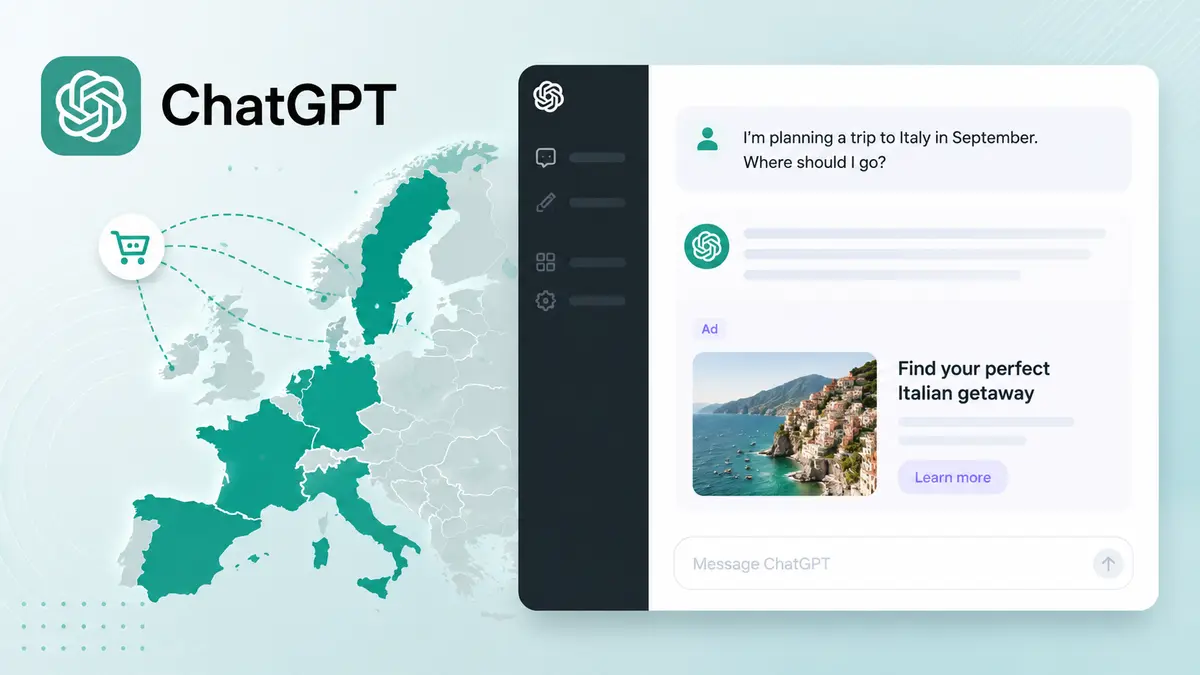
ChatGPT Ads will expand to 31 European countries next week, including Germany, France, Spain, Italy, Sweden, Norway, Denmark, the Netherlands, and Austria.
Advertisers will not initially get direct self-service access. Campaigns will be available through OpenAI's Ads Solutions team, agency partners, and technology partners, with self-service access through Ads Manager expected later this summer.
Where Ads Appear
- Ads continue to appear only for people on ChatGPT's Free and Go plans
- Plus, Pro, and Enterprise users remain ad-free
OpenAI says ads are clearly labeled and kept separate from ChatGPT's answers. Advertisers do not receive users' conversations, and advertising does not influence the answers ChatGPT generates.
Why It Matters
The European expansion significantly increases the potential scale of ChatGPT as an advertising channel. The more interesting proposition for marketers, though, is where those ads can appear in the customer journey.
People increasingly use ChatGPT to research products, compare alternatives, and work through purchasing decisions by explaining their goals, preferences, and constraints in natural language.
That creates an opportunity to reach users while they are actively evaluating what to do or buy — potentially a richer intent signal than a standalone keyword or a passive social impression.
By the Numbers
- OpenAI began testing ChatGPT Ads in the U.S. in February and has since expanded to eight additional markets
- Adding 31 European markets is its largest geographic expansion so far
- OpenAI says tens of thousands of marketers have now advertised on ChatGPT
The Platform Itself Is Maturing Fast
Per OpenAI, the ad platform has:
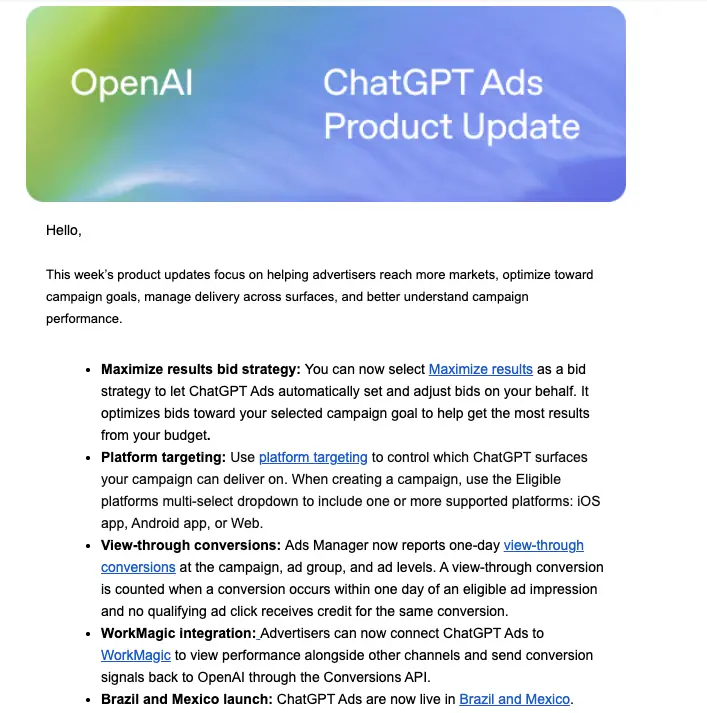
- Expanded beyond CPM and CPC bidding to include conversion optimization
- Added geo-targeting and custom audiences
- Introduced the OpenAI Pixel and Conversions API to measure outcomes beyond clicks
- Added third-party measurement integrations
Those additions move ChatGPT Ads closer to the targeting, optimization, and measurement infrastructure advertisers expect from established performance platforms.
Reading It Alongside the Demand Data
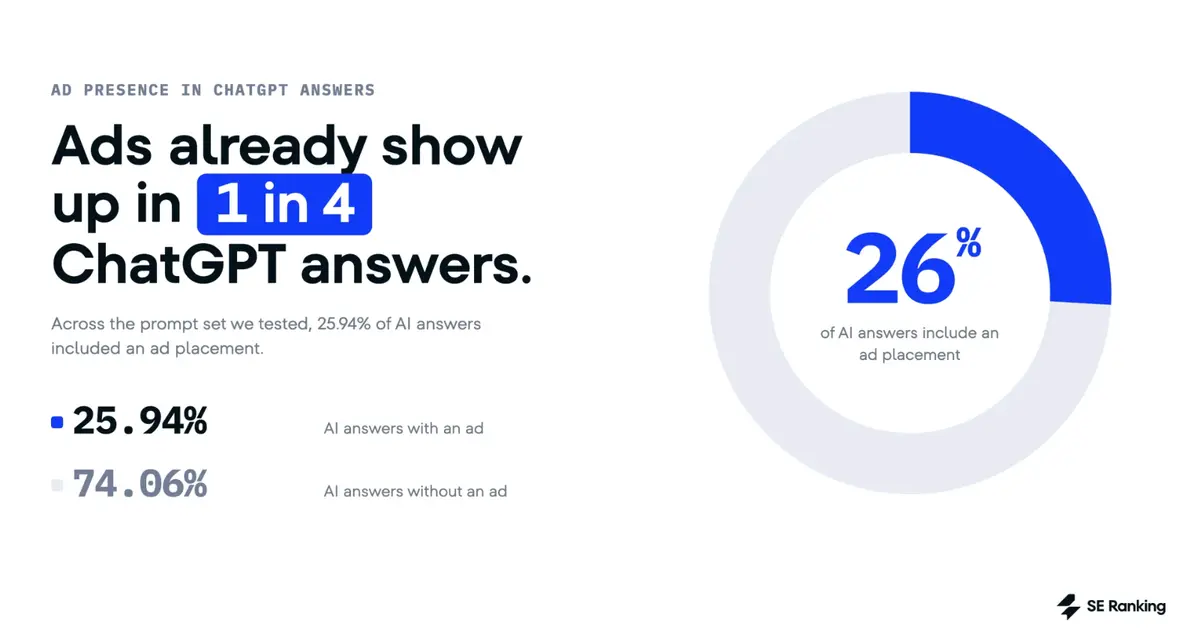
The demand side of this channel already has evidence. The analysis showing ChatGPT drew a higher share of paid clicks from Google than any other top destination across 13.1 billion searches gives a sense of the traffic underneath it. And the rollout pattern is visible in OpenAI's five-country ChatGPT Ads pilot, which set the same Free-and-Go constraint now carrying into Europe.
The Open Questions
The big picture is clear: OpenAI is moving rapidly from an experimental U.S. advertising product toward a global advertising platform, and Europe is a major step in that transition.
Two questions remain. Whether marketers can turn ChatGPT's conversational intent into measurable performance. And whether OpenAI can scale advertising without undermining the trust that makes those conversations valuable in the first place.
Bottom Line
The 31-market European expansion sharply increases geographic scale. Self-service is not open yet and exposure stays limited to Free and Go plans, but with a pixel, a Conversions API, and third-party measurement in place, the channel is acquiring the requirements of a performance channel rather than an experiment.