ChatGPT ads are already serving at Google-adjacent rates
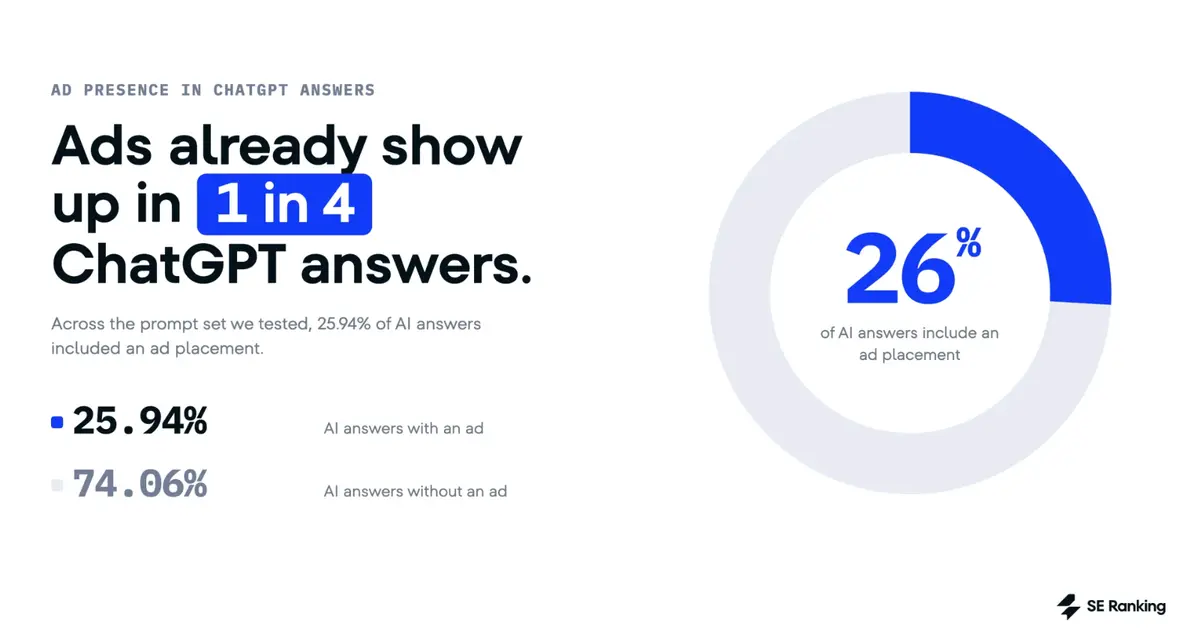
SE Ranking analyzed more than 50,000 commercial prompts across 20 niches to measure how often ChatGPT serves ads, where they appear and how relevant they are. Sponsored placements showed up on 25.94% of commercial prompts — close to the 29.45% the same team previously found on Google's AI Mode.
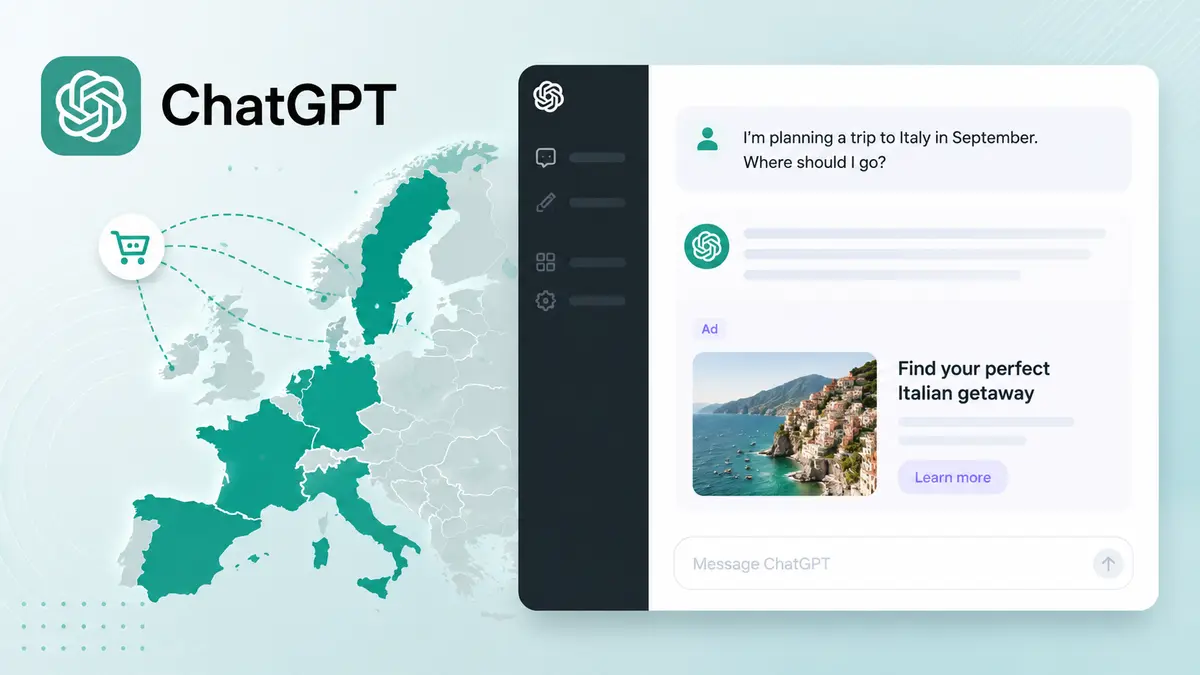
The ad experience itself remains uncluttered for now. Every ad observed appeared below the generated response and contained a single sponsored offer, with no competing advertiser alongside it.
Relevance is the weak point
By SE Ranking's semantic analysis, roughly 14.35% of ChatGPT ads were effectively unrelated to the prompt they appeared next to — about one in seven placements. The variance by category is large. Pets showed just 2.6% mismatched, while Relationships and News & Politics exceeded half. In one example, a prompt about dating apps carried an ad for a clothing and lifestyle retailer; a newspaper subscription query triggered an electricity provider ad.
Why it happens
ChatGPT Ads does not rely on conventional keyword targeting. Advertisers supply natural-language "context hints" describing the conversations where they want to appear, alongside keyword-style phrases. Those signals guide the matching system rather than acting as hard rules. Advertisers also cannot currently see the individual queries or conversations that triggered their ads, which makes diagnosing bad placements difficult.
Buying an ad does not buy a citation
The most striking finding is how separated the ad layer is from the generated answer. Only 3.63% of advertisers were also cited as a source in the answer above their ad. The exact advertised URL appeared in citations just 0.09% of the time, and advertiser brands were mentioned in 4.44% of responses. Paid visibility is not AI visibility.
Sensitive categories diverge sharply
ChatGPT showed considerably more ads around some YMYL topics than Google's AI Mode. Healthcare prompts carried ads 28.69% of the time versus 2.64% in AI Mode; News & Politics ran 28.76% versus 6.8%. That does not prove weaker safeguards, but it does show the two platforms surface advertising very differently.
What advertisers should do
ChatGPT Ads is becoming a real paid channel, but it will not behave like Google Search. Conversational targeting creates different problems, particularly around relevance and reporting. With trigger conversations hidden, precise context hints, audience targeting and continuous experimentation carry more weight than usual.
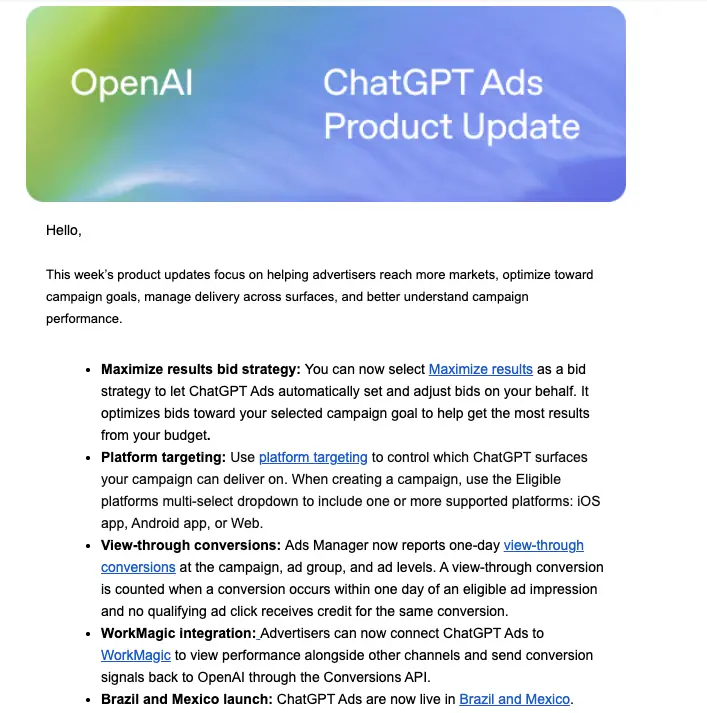
For CPCs and measurement observed in early campaigns, see How to Run ChatGPT Ads; for the newer bidding and format changes, ChatGPT Ads Adds oCPC, Product Carousels, and an August 17 AAM Deadline. The opportunity is real, and so is the risk of paying to appear in conversations that have nothing to do with you.
FAQ