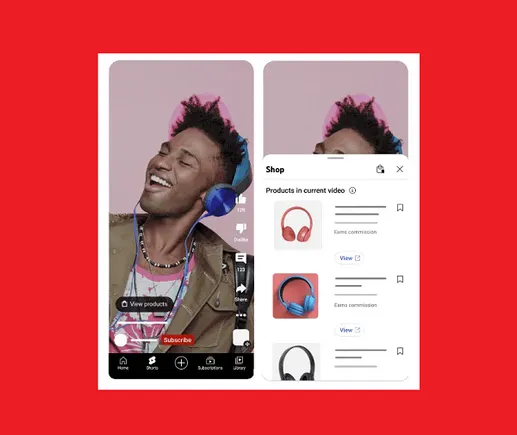
YouTube has adjusted the rules around branded content and affiliate shopping in one update. If a creator fails to disclose a paid partnership, YouTube may now apply the label itself. New settings let creators restrict branded content by age and location to comply with country-specific ad rules. And a small experiment shows creator-tagged affiliate products sourced from a different local retailer. Brands and creators are both affected.
Affiliate tags: same product, different local retailer
YouTube is testing whether it can show the exact same creator-tagged affiliate product but sourced from a different eligible local retailer. In YouTube's words, the test measures whether shopping performance improves when the platform auto-optimizes which local merchant to serve for a product.
The scope is narrow. Product tags on videos where the creator has enabled the Paid Product Placement setting are not affected. The test applies only to affiliate product tags placed through the Shopping Affiliate program, which lets eligible creators tag products and earn commissions on resulting sales. The program recently expanded significantly with Amazon products joining the affiliate listings, as covered in YouTube Adds Amazon Product Tags — 110% More Clicks Than Description Links.
The logic is that a nearby retailer means shorter delivery, more completed purchases and more commission. If the test works, local sourcing could become the default behavior for affiliate tags.
Three changes to branded content disclosure
Clearer labels
YouTube is updating its branded content labels so viewers get the context they need at a glance. The new disclosure label rolls out progressively.
Age and location restrictions
Creators gain settings to restrict who can see their branded content by age and location. That lets them meet specific legal requirements for sponsored content in different countries. YouTube says this should also unlock more brand deals, because creators will no longer have to reject proposals "because of strict demographic or regional constraints."
Automatic labeling of undisclosed content
This is the biggest shift. YouTube is rolling out automated detection to enforce its disclosure policies. If its systems detect that a newly uploaded video includes branded content the creator did not disclose, YouTube may automatically apply the disclosure label to ensure policy compliance and viewer transparency.
Finally, YouTube updated its paid product placement policy with new terminology aligned to industry standards for branded content.
What this means for brands and creators
Asking a creator to keep a sponsorship "subtle" and unlabeled no longer works as a strategy. If the creator omits the label, the platform can add it. Brands are better off writing the disclosure into the contract and planning creative with the label as a given. Most markets already require disclosure of paid promotion by law, so platform policy and regulation now point the same way.
The age and location controls matter most in categories where rules differ by country, such as alcohol, finance and health supplements. Locking a video to a single market means only that market's rules need review, which lowers the barrier to working with creators whose audience spans several countries. Automated disclosure enforcement is spreading across platforms, and YouTube's move fits a broader pattern of platforms taking labeling out of creators' hands. Instagram is doing the same with AI-generated accounts, as we covered in Instagram Renames 'AI Creator' to 'AI Generated Profile' — Unlabeled Accounts Get Less Reach.