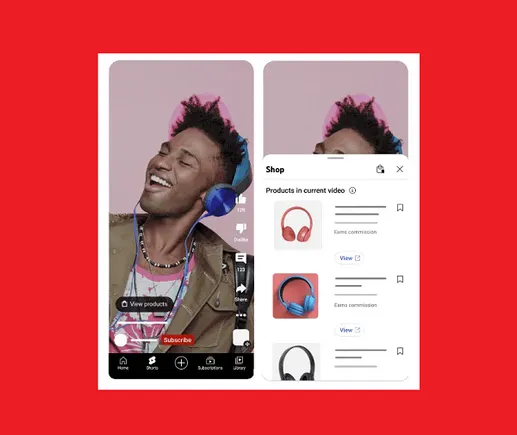
YouTube announced a significant expansion of its U.S. shopping affiliate program: creators can now tag Amazon products in their videos and earn commissions from resulting sales.
Amazon Joins YouTube's Shopping Affiliate Program
The shopping affiliate program lets eligible creators tag products in video clips and earn commissions on sales that follow. YouTube launched it in the U.S. in 2022, expanded to Thailand and India, and opened it to U.K. creators earlier this month. Amazon products are now part of it.
Per YouTube: "You can tag products from Amazon directly in your videos, Shorts, and livestreams. When you tag your favorite Amazon items, your audience can discover and purchase them directly from Amazon. This helps you maximize your channel earning potential compared to description links."
Eligibility and Catalog Scope
To tag Amazon products and earn commissions, creators must be enrolled in both YouTube's shopping affiliate program and Amazon's influencer program, and must link their YouTube channel to their Amazon profile for earnings to register.
Amazon supplies YouTube creators with a curated catalog of products eligible for tagging. Participants can request additions for products not included, and can enable auto-tagging of eligible Amazon products.
The 110% Gap Against Description Links
The number YouTube published is the important part: "In a July 2026 experiment, videos using YouTube Shopping product tags alone saw over 110% more clicks on products than using description links alone, helping you maximize your earning potential from every video."
Same product, same video — where the link sits more than doubled the clicks. Descriptions are a collapsed area behind a "show more" tap; product tags surface inside the playback experience. It is a clean demonstration of how much removing a single unit of friction is worth in commerce.
What Brands and Marketers Should Watch
First, the economics of influencer collaboration shift. When creators can select products from Amazon's catalog and earn commissions directly, brands gain exposure paths that do not run through a negotiated contract. Checking whether your products sit inside Amazon's curated catalog becomes a practical task.
Second, auto-tagging creates a control problem. If creators enable automatic tagging of eligible products, a brand's items can appear in contexts the brand never chose. Brand safety monitoring has to widen accordingly.
Third, this is a U.S. expansion for now. Given how steadily the program has added countries, commerce brands would do well to settle their allocation logic for creator commerce budgets before the rollout reaches them.