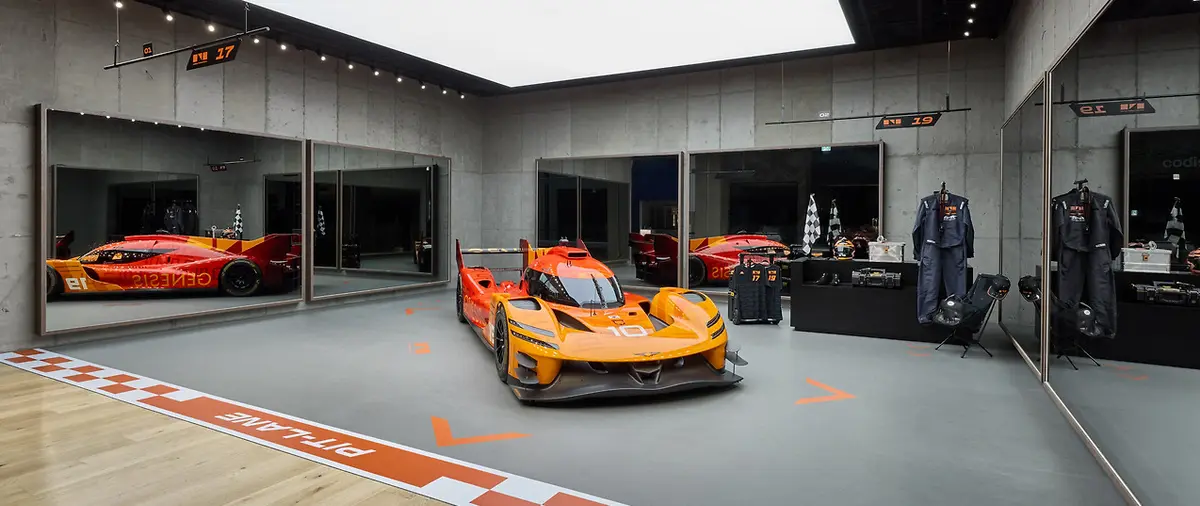
A red hypercar in a shopping mall
In the Genesis showroom at Starfield Hanam, near Seoul, sits a blazing red car: the GMR-001 hypercar design model from Genesis Magma Racing, a full-size replica of the team’s World Endurance Championship racer. Genesis, long associated with quiet comfort, has created a separate high-performance line called Magma, formed a racing team and entered global endurance racing. Korean columnist Gwanghwamun Duck asks why now — and finds the answer in luxury brand strategy.
What ‘building cars well’ means is changing
EVs: carmakers become system integrators
As PCs standardized, specialist firms made CPUs, motherboards and memory, and PC makers’ advantage shifted from making everything to integrating the best parts. EVs show a similar pattern, with batteries, motors, inverters, power chips and software rising in importance. Automaker expertise doesn’t vanish; its role changes — and the window for differentiating on technology alone shrinks.
AI and robots: scale barriers loosen
If AI forecasts demand, robots assemble and digital twins test processes, micro factories producing many models at smaller sites become more realistic. Running giant plants may no longer be as decisive an advantage.
Autonomy: the car becomes a service
With full autonomy, the car shifts from a driving machine to a moving space — and then to a service, with AI, chip, cloud, mapping and mobility platform companies as competitors.
Cars of need, cars of desire
Here’s the paradox: the better cars get at transport, the less reason to own one. The market may split into “cars of need” — safe, cheap transport where brand matters less — and “cars of desire,” owned not out of necessity but because people want them. The question shifts from “why is this car better?” to “why do I want this car?” Just as Rolex survived smartwatches, products freed from function become symbols.
Magma builds a past; the GV90 builds a symbol
Ferrari and Porsche performance cars carry decades of racing memory — heritage Genesis lacks and can’t buy. The only option is to start building a “future past” now: races lost, finished and eventually won become history. Magma’s intended desire: wanting to drive the car yourself even when you no longer need to.
The GV90 is about creating an icon. Maybach, Rolls-Royce, Range Rover and the G-Class each summon a clear image; function has become symbol. Rather than imitate them, Genesis must define its own grammar of Korean luxury — restraint, space, negative space and hospitality. The GV90’s question: even when you don’t need to own a car, don’t you want to be the person who rides in this one?
Takeaways for brand strategists
Luxury’s power isn’t high prices but pricing power — getting customers to accept the price. The author sees this as Korean manufacturing’s next threshold: France makes bags but sells Louis Vuitton; Switzerland makes watches but sells Rolex. Any category where function is converging faces the same question. Heritage can also be revived, as in recession-era retro replacing new-product risk and Columbia reclaiming its quirky 88-year heritage. What remains after every technology becomes common is the ability to create desire.