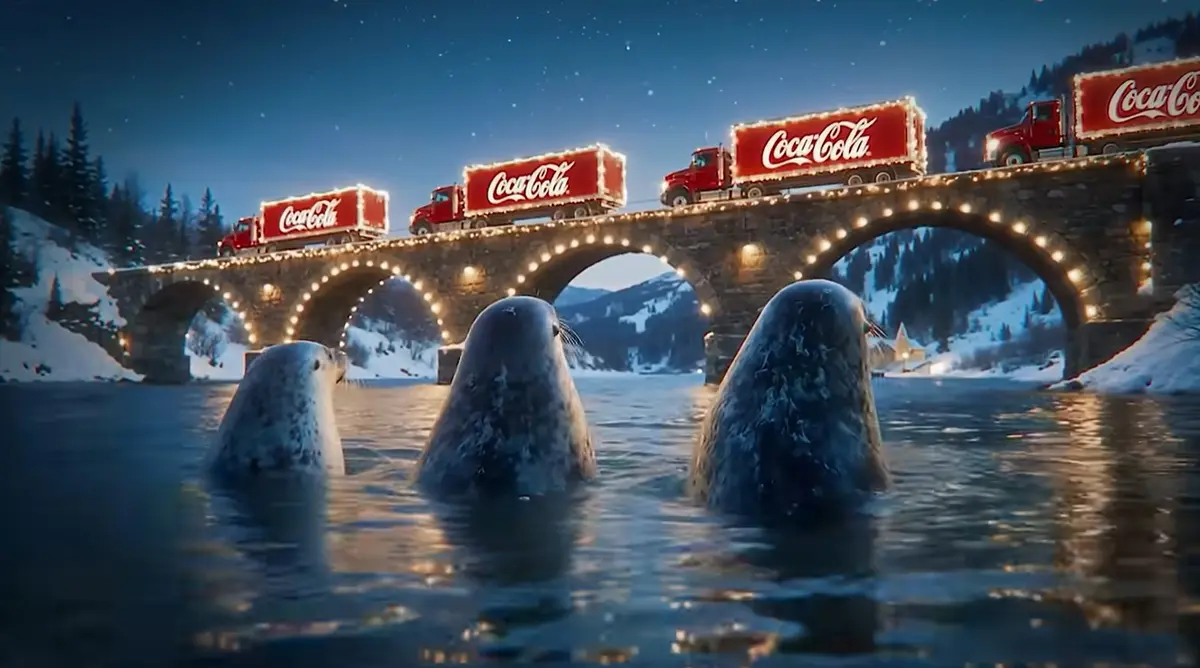
One of the most beloved Christmas ads in the world is Coca-Cola's "Holidays Are Coming" — red trucks glittering through a snow-covered town, running since 1995 and iconic enough that in many countries its appearance signals the season has arrived.
In 2024, Coca-Cola remade it with AI. No actors, no real trucks. The reaction was brutal: soulless, cheap-looking. It remains the clearest case of what happens when AI-generated content is used to replace a brand asset rather than support one.
Why the case keeps getting cited
This is not really about rendering quality. What the ad accumulated over nearly three decades was not image fidelity but repetition. Returning every year in the same form was itself the asset, and audiences read that repetition as a seasonal signal.
What the AI version damaged was not the picture but the credibility of that signal. The moment it became evident the same scene could be produced faster and cheaper, the meaning that effort had lent the scene drained out with it.
Defining what a prompt cannot make
The useful question for any brand is simple: what in our brand cannot be produced by a prompt?
Some candidates: records with real people in them, formats repeated long enough to attach to a season or event, assets where the physical process of making them is itself the story, and traces of actual customer participation. These get scarcer, not cheaper, as generation costs fall.
The opposite is equally clear. Mass variants of banners, localized subtitles, product detail images — repetitive work where generation is straightforwardly better. The failure mode is choosing "all AI" without making the distinction.
A practical test
Split your brand asset list into two columns: assets whose value comes from repetition and authenticity, and assets whose value comes from efficiency. Before applying generative tools to anything in the left column, calculate the trust you could lose against the cost you would save.
For how platforms started filtering AI content, see Can the Apps Stop AI Slop?; for policies favoring human-made work, see Snapchat Stops Recommending AI Slop.