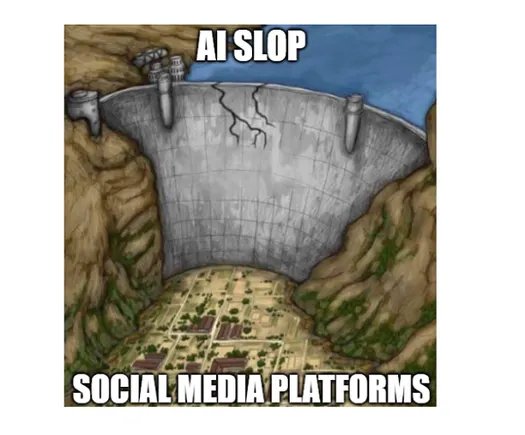
AI-generated content is steadily overwhelming human-created posts across social apps, and almost every platform is now weighing restrictions on AI slop to preserve meaningful connection between users.
What each platform has done
- Pinterest added an option to limit AI-generated content in user feeds
- YouTube limited monetization of AI-generated rip-offs of other creators' content
- TikTok expanded content labeling and user education programs
- Reddit increased enforcement against AI-generated spam
- X implemented measures limiting monetization of AI-generated deepfakes
- Snapchat announced it will no longer recommend wholly AI-generated videos in Spotlight
- LinkedIn lets users report AI slop comments
- Instagram added an opt-out from AI remixes of your content and removed the option to generate AI images of other users via @mention
What the platforms misjudged
On balance, social platforms appear to have overestimated audience enthusiasm for AI options. A platform banning AI-generated content outright now looks inevitable — Mashable reported that MySpace is considering a relaunch on exactly that premise, positioned as an antidote to feeds inundated with AI.
The backlash makes sense. Social media is, in name and in process, built on human social engagement. The rise of AI chatbots may have shifted the definition somewhat, but conceptually these apps gave people a way to connect and to celebrate human creativity. What happens when most of that content is generated by bots?
A bot is still a bot
Statistically, most social media users dislike bots and have complained for years about bot activity. Platforms have battled inauthentic engagement for decades amid complaints about manipulation and spam — one core tenet of Elon Musk's Twitter purchase was that he would "defeat the spam bots or die trying," which reflected exactly that community concern.
Yet with the latest AI tools, bots have been reframed as a positive, with platforms showcasing how smart and human-like their systems have become. But this is still inauthentic engagement, repackaged as creative assistance or expanded creativity through visual generation. It is the same junk people have railed against for years.
The most surprising part is that the platforms themselves seem to believe people want more bots. Social media has drifted from social engagement toward entertainment, but people still want to see human creativity and relate to moments of human experience.
What it means for marketers
The backlash may dent broader enthusiasm for AI development and slow tool adoption. Two practical implications for brand content.
First, generative assets carry platform policy risk. Recommendation exclusion (Snapchat), monetization limits (YouTube, X) and labeling (TikTok) are already live, and the scope is widening. If your production pipeline does not record which assets are AI-generated, responding later gets hard.
Second, the relative value of human-made content rises. On-location footage, real employees and customers on camera, and documented handmade process are expensive to fake and become differentiating assets. For platform specifics, see Snapchat Stops Recommending AI Slop and LinkedIn Lets Members Report AI Slop.