Prompts have become business assets
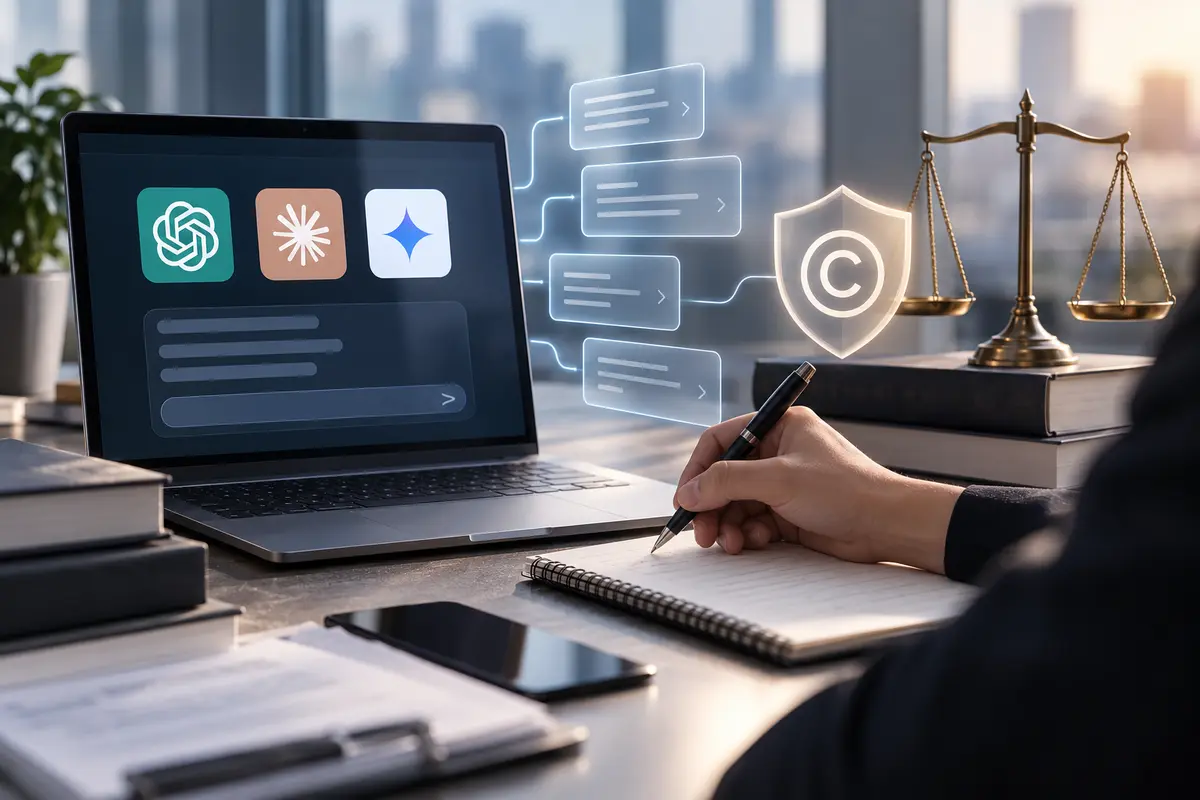
As generative AI enters daily work, a new question has emerged: who owns the prompts employees write on the job? Output quality increasingly depends on the prompt, and prompt libraries built through trial and error in law, tax, accounting, marketing and software can be valuable assets. Whether an employee can take them when they leave is now a practical issue. This summary draws on an article by a U.S. attorney, republished by Korean outlet Mobiinside, on AI prompt ownership; as the original notes, it is general information, not legal advice.
Bottom line: companies likely have a strong claim
U.S. case law on prompt ownership is still thin, and not every prompt is protected by copyright. But under work-made-for-hire, invention assignment, confidentiality and trade secret principles, a company is likely to claim ownership or control of prompts an employee created within the scope of employment using company time, equipment, materials, customer information and internal processes.
Three legal frameworks
Work made for hire
Works created by employees within the scope of employment can belong to the employer. Prompts with enough creative expression could fall under the same principle. Short commands, simple questions and content close to procedures or ideas are unlikely to be protected, because U.S. copyright law doesn’t protect ideas, procedures, processes, systems or methods of operation.
Trade secrets
In practice, trade secret law may matter more. A prompt system built over years can qualify if it’s non-public, has economic value and the company takes reasonable steps to keep it secret — access controls, confidentiality obligations, internal policies and return-or-delete duties on departure. If those conditions are met, an ex-employee reusing the library at a new employer could face trade secret claims.
AI-generated output
The U.S. Copyright Office requires human authorship. Output generated without meaningful human involvement is hard to protect, but when an employee selects, arranges, edits and supplements AI output, the human contribution may be protectable — and, within the scope of employment, likely belongs to the employer. Typing a prompt doesn’t make someone the author of the entire output.
Watch-outs when employees leave
Many employees see prompts as personal know-how and store them in personal Notion, Google Drive or email accounts. Companies may treat taking them like taking internal manuals, contract templates, customer databases or source code. Using general skills and experience at a new job is fine; the problem is taking specific company-managed libraries, client-specific analysis frameworks or prompts that embed internal data.
What companies should prepare
Employment and invention assignment agreements often focus on software, documents and data without mentioning prompts or AI output. Build these into policy:
- Ownership of prompts and AI output created at work.
- What data may be entered into AI platforms, and what is prohibited (customer and personal data, contracts, source code).
- Separation of company and personal accounts.
- How prompt libraries are managed and who can access them.
- Return-and-delete obligations on departure.
Marketing teams are no exception: brand voice prompts, ad copy prompts and analysis prompts built on customer data are core assets. But as research on why employees hide their AI use shows, tightening ownership alone can chill sharing, so pair policy with a culture that rewards contribution. Keeping records of AI-assisted work also supports the copyright practices described in artist-supervised AI marketing agents. Rules differ outside the U.S., so check local law.