A purchase made with a camera
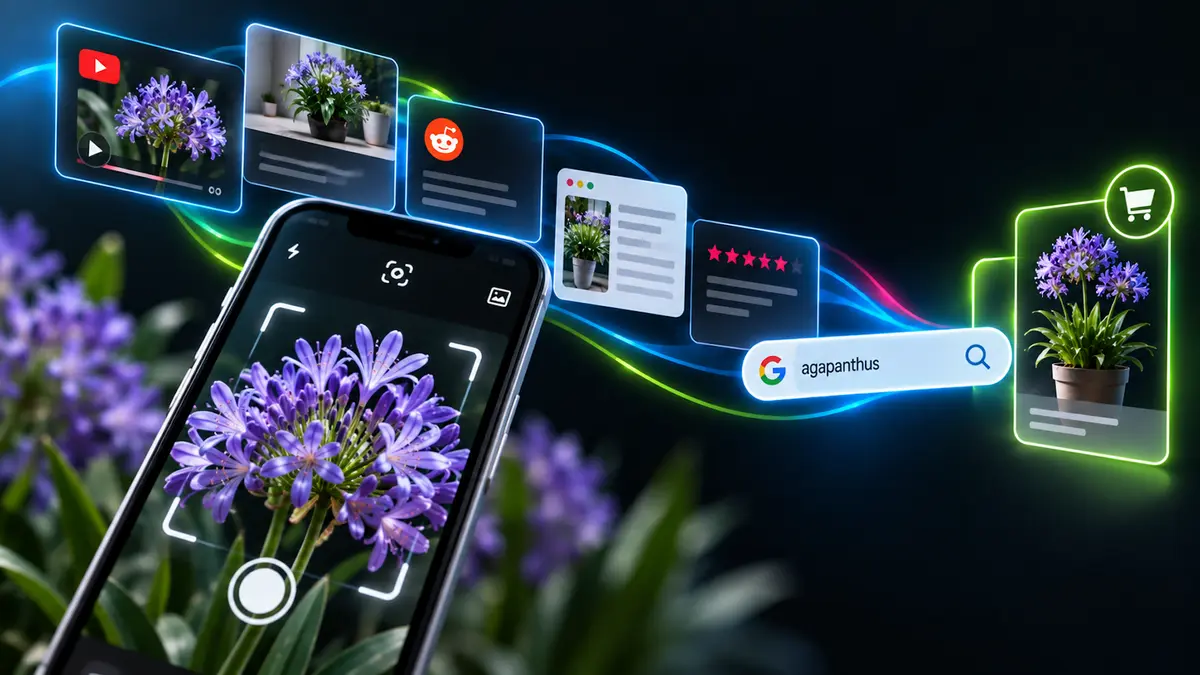
On a neighborhood walk, Karly Scott of Logical Position spotted a plant she loved but couldn’t name. Years ago she would have typed something like “purple flower Northwest beautiful” and scrolled through images. This time she pointed Google Lens at it, got the name and bought one at a local nursery the next day. No ad, no search bar. That ordinary experience, she argues, should change how marketers think about search in the purchase funnel.
The new funnel: exposure → preference → confirmation → purchase
The classic funnel ran from awareness to interest to desire to action, with search doing most of its work in the interest stage. Today it looks more like passive exposure → preference development → confirmation searches → purchase. Discovery has shifted to recommendation engines that predict intent and curate content before the first query. By the time people search, they’re often confirming a decision — which is why near-purchase queries look like “brand name product model.”
The catch is that the first two stages are hard to observe. If someone watches several social videos, forms an interest and then searches on Google before buying, it shows up as a branded search conversion. The content that shaped the decision never appears in the path, so many marketers still budget as if search does the discovery work.
Why YouTube sits at the center of discovery
Machine trust and human trust
A study of more than 100 million AI citations found YouTube was the second most-cited social platform after Reddit, helped by transcripts that give models structured text. More than two-thirds of consumers find YouTube somewhat or very trustworthy for purchase decisions. Up to 70% of Gen Z follow an influencer, and 44% have bought something based on an influencer’s recommendation.
Only part of it is measured
In January, Google introduced the Attributed Branded Search metric, linking YouTube ad exposure to branded searches within a set window. It captures only paid exposure; the organic layer of reviews, unboxings and comparisons stays invisible — the kind of YouTube search visibility few teams measure.
Discovery happens outside your channels
AI tools repeat what the whole web says about a brand, not the brand’s own version. A Muck Rack review of 25 million ChatGPT, Claude and Gemini responses found earned media drove 84% of AI citations. Third-party mentions, YouTube reviews and Reddit threads are the raw material for AI answers and feed recommendations, so brand reputation management and search visibility have merged into one job.
Three ways to influence discovery
- Build a video library that answers questions about your products and brand, whether or not you run YouTube ads. It becomes a database AI answers draw from.
- Treat data health as non-negotiable: algorithms only know what you tell them, so give product feeds complete information and keep brand details consistent across owned channels.
- Show up in conversations you don’t own: Reddit threads about your brand feed AI Overviews whether you participate or not.
Don’t abandon search
Google query volume reached an all-time high in early 2026. The mistake isn’t overinvesting in search; it’s expecting search to do a job it no longer does. If search now sits later in the funnel, rethink how you fund upper-funnel work. When reading branded conversions, also factor in Google’s updated branded search measurement rules, and plan for the questions that follow confirmation searches with conversational search SEO.