PPCSearch Engine Land
DV360 Is Dropping Content Exclusion Options — Two October Deadlines
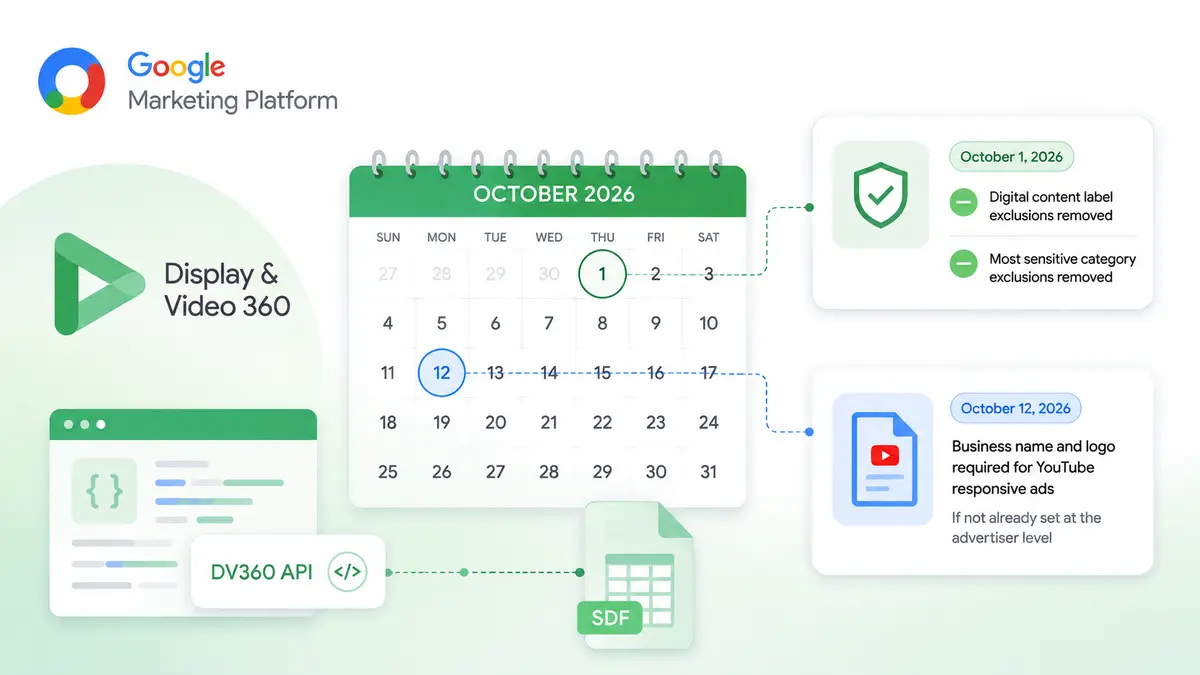
Google is removing digital content label and sensitive category exclusions from the DV360 API and requiring business identity for YouTube responsive ads.
Cypress North co-founder Greg Finn has spent more than two decades watching search marketing evolve from a hands-on, highly granular discipline into an industry increasingly shaped by automation, AI and algorithms. Here's his account of what PPC automation changed, and what it left behind.
Finn believes PPC was easier for highly skilled practitioners in its early years because there was a much wider gap between advertisers who knew what they were doing and those who didn't.
Advertisers could tightly control keywords, ads and landing pages. Exact match behaved much more like its name suggested, allowing marketers to construct extremely specific experiences around individual searches. Teams could obsessively test everything from ad copy to tiny landing-page design changes.
"If you were good, it was easier," Finn said.
Today, automation has narrowed some of that expertise gap. Google can make less sophisticated advertisers more competitive, while products such as Performance Max and AI Max can also cause advertisers to compete in auctions they may not have deliberately selected.
For Finn, one of PPC's biggest turning points arrived in 2014 when Google required campaigns to use close variants for exact match.
Until then, skilled advertisers could exercise extremely precise control over matching, negatives, ads and landing pages. Once "exact" stopped necessarily meaning exact, Finn saw where Google Ads was heading. "That was the beginning of automation," he said.
Expanded text ads were another major milestone, but the changing definition of exact match represented something bigger: advertisers were beginning to surrender some of the control that had defined paid search.
His takeaway from the years since is simple: marketers can object to automation, but eventually they have to learn how to succeed within it.
Few examples illustrate PPC's transformation better than broad match. Finn once helped write a book effectively warning advertisers not to use it. Today, he uses broad match across his accounts.
The reason is that broad match itself has changed. Modern matching can consider signals beyond the literal keyword, including previous searches and landing-page context. Combined with Smart Bidding, Finn believes advertisers should increasingly evaluate the outcome rather than obsess over whether every individual search term appears perfect.
"You're not doing keywords, you're doing intent," he said.
There are still obvious negatives to manage. But if a query looks unusual while the campaign is generating profitable results, marketers need to consider that Google may be using context they cannot see from that individual search alone.
Asked to identify the best PPC innovation of the past 20 years, Finn eventually landed on Smart Bidding.
Its value is partly the removal of tedious manual bid management. Instead of repeatedly adjusting individual keywords, advertisers can communicate the business result they want — a target CPA or target ROAS — and let the system determine auction-level bids.
That doesn't mean blindly trusting Google. Finn remains conscious that advertisers and their competitors are effectively telling the same advertising platform what they are willing to pay. But when the underlying measurement is sound, he sees automated bidding as a major improvement over manually managing thousands of bids.
Finn misses the period when Google was much stricter about advertisers bidding on competitors' brand terms. Today, competitive bidding — whether deliberate or emerging through automated campaign types — means many advertisers feel they need to spend money protecting searches for their own brands.
He cautioned against agencies celebrating huge amounts of revenue attributed to branded search without acknowledging that those customers were already looking for the company. Yet the competitive environment means advertisers can't simply pretend brand bidding doesn't exist.
Finn recalled some painful PPC mistakes. Early in his career, a campaign intended to spend roughly $30,000 in a month was accidentally configured around that figure as a daily budget. Years later, an issue transferring Google campaign data into Microsoft Advertising resulted in ads and keywords from one client appearing in another client's account; his agency reimbursed the affected client.
The experiences reinforced the importance of checking automated imports, account structures and campaign settings carefully. Automation may remove manual work, but it doesn't remove accountability.
Finn's prediction is stark: marketers don't get to decide whether AI search happens. "You don't have any say. You can whine all you want. It's the future for sure," he said.
He sees AI Overviews as a transitional product and AI Mode as a much clearer indication of where Google is ultimately heading. His prediction: the familiar Google experience built around traditional blue links won't exist in its current form five years from now. Google auto-expanding AI Overviews points the same direction.
That doesn't mean links can disappear completely. Google and other AI platforms still depend on an ecosystem of publishers and websites producing information. The challenge will be finding an economic model that keeps that ecosystem sustainable while search interfaces increasingly answer questions themselves.
If AI makes competent content cheap and ubiquitous, Finn believes human authenticity becomes a bigger differentiator. People can already recognize formulaic AI-generated LinkedIn posts and other content.
So the question for marketers isn't whether AI can produce something "good." It's how humans produce something great enough to stand out from an endless supply of good-enough machine-generated material. That means having a recognizable voice, expressing genuine opinions and creating things audiences deliberately want to consume.
The same principle applies inside paid media. Complex businesses still require marketers to understand different conversion types, business economics, measurement and how those signals should inform bidding. AI can accelerate execution; Finn doesn't believe it replaces the thinking behind it.
If you want to write, start writing. If you want a podcast, make one. If you want to participate in the industry, reach out to people. Don't spend forever perfecting the logo or planning every possible outcome.
Some projects will fail, Finn said, but failure provides information that makes the next attempt better.
Broad match itself changed. Modern matching considers signals beyond the literal keyword, including previous searches and landing page context, and combined with Smart Bidding it makes more sense to evaluate outcomes than individual query strings.
Finn chose Smart Bidding. Rather than adjusting individual keyword bids, advertisers communicate a business outcome like target CPA or ROAS and the system sets auction-level bids — valid only when the underlying measurement is sound.
Understanding conversion types, business economics, measurement, and how those signals should inform bidding. AI accelerates execution but doesn't replace the thinking behind it.
To apply what you just read to your own site, start with a free audit of where things are now.
A strategist replies within 24 hours on business days.
Google is removing digital content label and sensitive category exclusions from the DV360 API and requiring business identity for YouTube responsive ads.

Google's new YouTube creative guidance puts numbers on ad elements: 12% for human voice, 3% for text overlays, 4% for early branding.
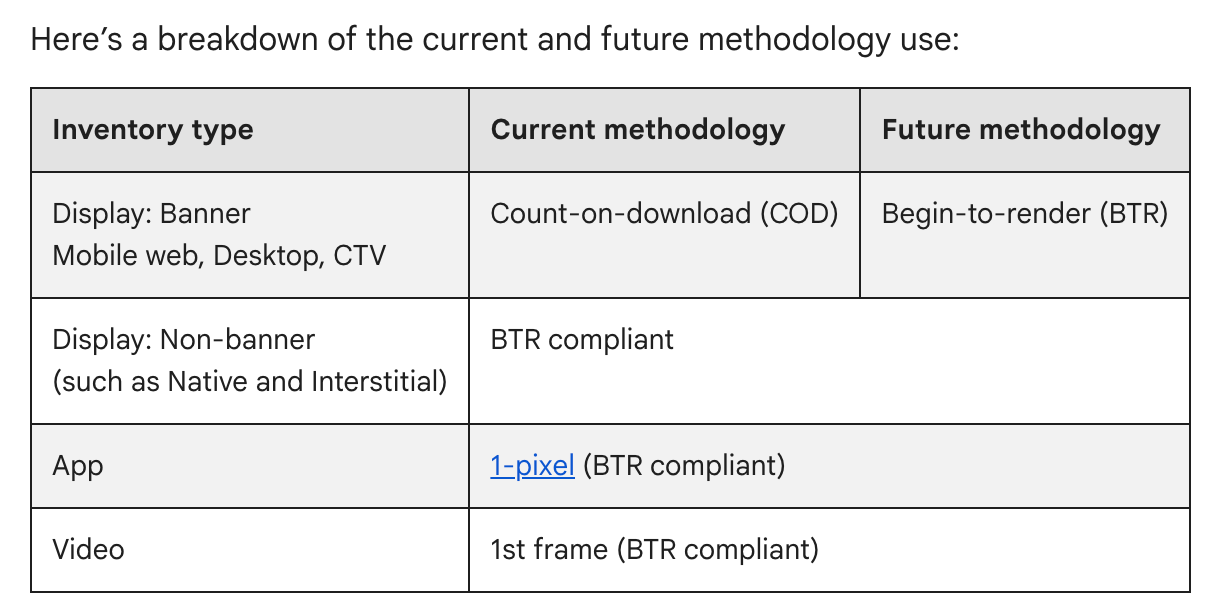
Google is moving AdSense display impression counting from download start to begin-to-render. What changes for publisher revenue and advertiser metrics.