PPCSearch Engine Land
DV360 Is Dropping Content Exclusion Options — Two October Deadlines
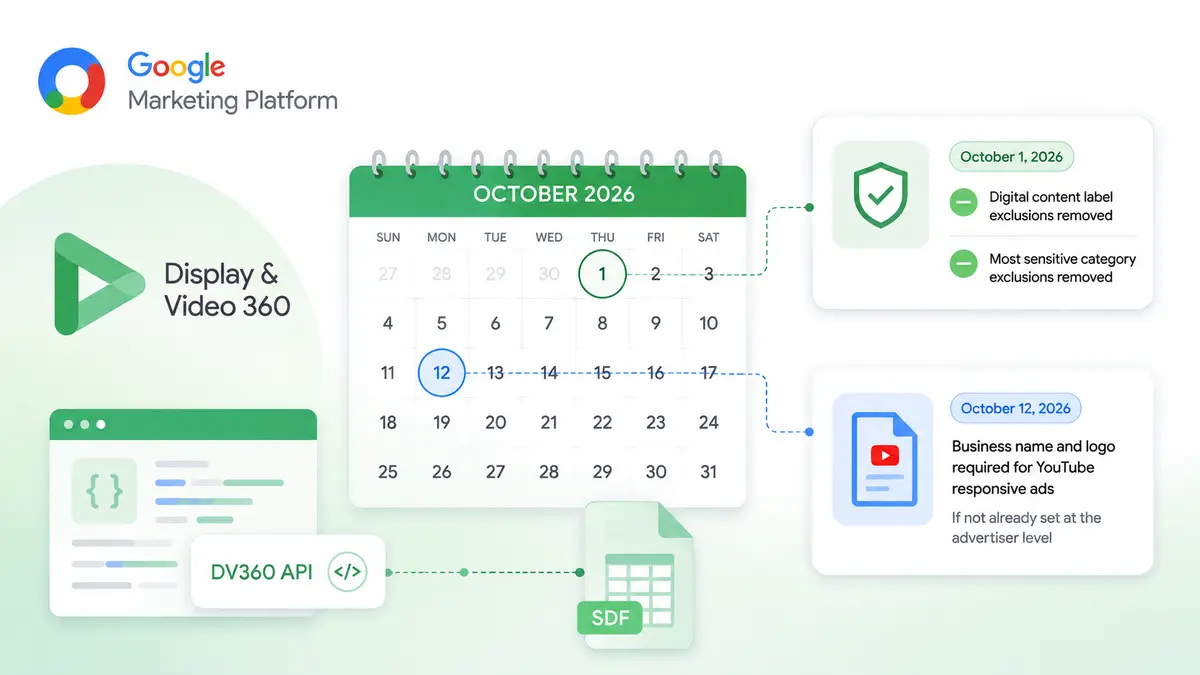
Google is removing digital content label and sensitive category exclusions from the DV360 API and requiring business identity for YouTube responsive ads.
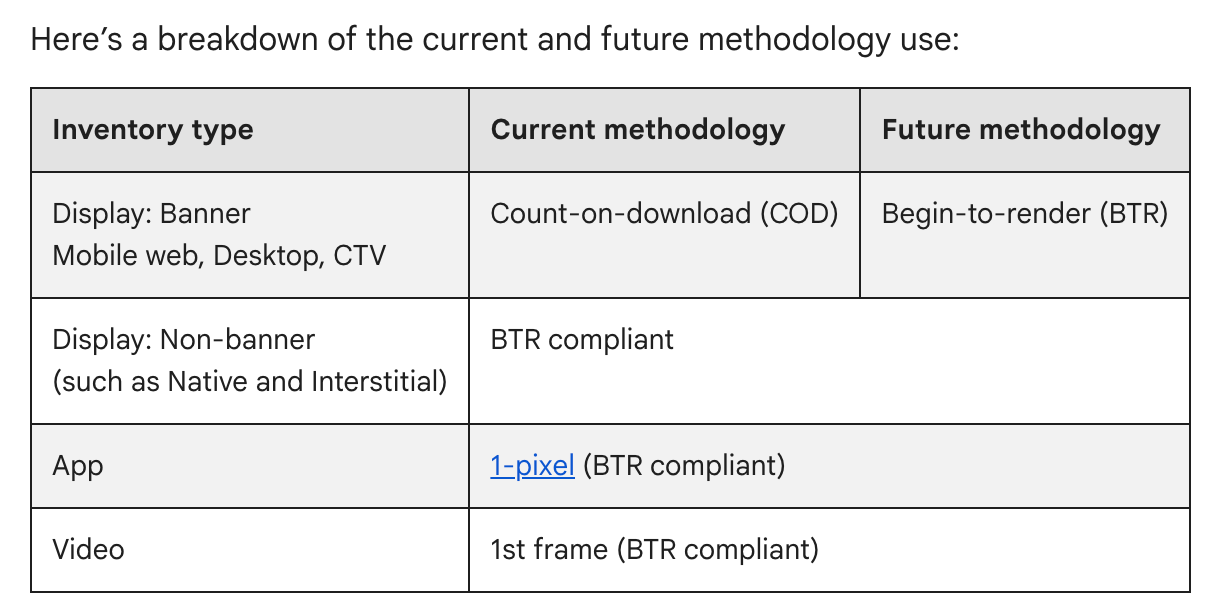
Google notified AdSense publishers that it is switching how it counts impressions for display ads. AdSense impression counting moves to a Begin-to-Render (BTR) methodology, counting an impression only once the ad has loaded and started to render on the user's device.
Google wrote: "Currently, AdSense counts an impression when an ad starts to download to a user's device. Beginning on February 17, 2027, we will move to the Begin-to-Render methodology. This means an impression will only be counted once the ad has successfully loaded and has started to render on the user's device."
In short, the impression only counts when the ad fully loads.
Google said that when the change goes live, "you may see a change in total impressions." That's because "impressions that started to download but never actually rendered will no longer be counted (e.g., if a user left the page before the ad began to render)."
Google's help document adds: "Currently, Ad Manager and AdSense already use or are compliant with begin-to-render for native, app, and video inventory impression counting. The shift to count display ads via BTR unifies our impression counting methodologies."
If you run AdSense on your site, expect impressions and possibly earnings to be lower after Feb. 17, 2027.
But this decline is a measurement change, not a performance decline. What drops out are impressions the user never had a chance to see. Mark the date as a baseline in your reporting so year-over-year comparisons stay readable.
Advertisers may see more engagement for the same money. Removing non-rendered impressions from the denominator naturally improves metrics like CTR.
That's a definitional change too, not a performance improvement. The gap between platform-reported numbers and actual business outcomes is the same issue behind platforms grading their own homework. And as the recent day of Google Analytics data that vanished entirely showed, it's safest to design reporting on the assumption that measurement can wobble at any time.
The change lands Feb. 17, 2027 — a big shift for AdSense display ads, but several months out. The useful thing to do now is record current-methodology impression figures separately so you can compare across the transition.
An impression counts only once the ad has successfully loaded and started rendering on the user's device, rather than when the download begins.
February 17, 2027. Ad Manager and AdSense already apply BTR to native, app and video inventory, so this unifies display counting with the rest.
Impressions and possibly earnings may fall. It's a measurement change rather than a performance decline — impressions that never rendered stop being counted.
To apply what you just read to your own site, start with a free audit of where things are now.
A strategist replies within 24 hours on business days.
Google is removing digital content label and sensitive category exclusions from the DV360 API and requiring business identity for YouTube responsive ads.
Greg Finn reflects on the road from exact match close variants to AI Mode: what automation took away, what it left, and why authenticity now matters more.

Google's new YouTube creative guidance puts numbers on ad elements: 12% for human voice, 3% for text overlays, 4% for early branding.