Fear of leftover stock puts words like "plenty," "anytime" and "at every location" in every piece of copy. Nothing is scarier than not selling.
Some brands went the opposite way. They deliberately released too little, deliberately made people queue, and made shoppers anxious with "now or never." And they sold more.
This isn't a trick for hiding inventory. It's demand design. Abundance gives the consumer permission to buy later; scarcity marketing revokes that permission.
1. Starbucks' Summer Ready Bag — It Sold "17 Cups," Not a Bag
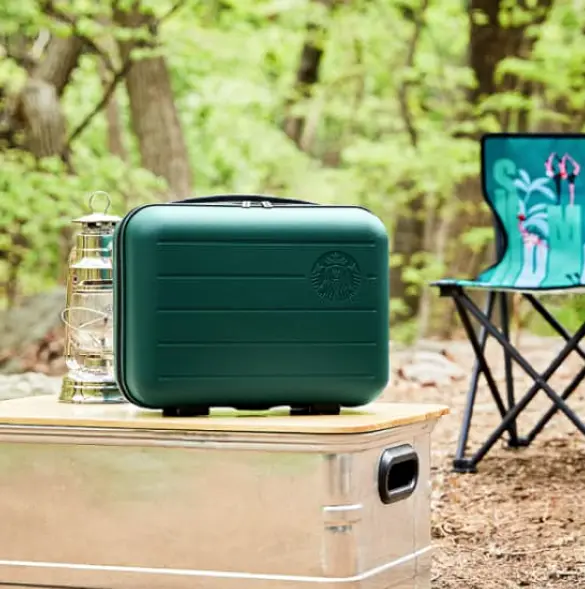
In summer 2020, lines formed outside Starbucks stores in Korea in the morning — for a bag, not coffee. The summer e-Frequency event gave away a "Summer Ready Bag" to anyone who drank 17 beverages, including three specified mission drinks. Stores sold out within 30 minutes of opening, and new stock cleared the same day it arrived.
What matters here isn't the bag design but the progress structure of "17 cups." You have to fill stamps, the event has a deadline, and the gift quantity is limited. That switches on a gauge in the consumer's head: how many left? Someone with 12 stamps feels that abandoning the last five is a loss. Sunk cost does the work.
The other side matters too. One customer reportedly paid about ₩1.3 million for 300 cups of coffee at a Yeouido store, took only the bag, and left 299 cups to be discarded. When scarcity overheats, a brand loses as much control as it gained desire. The moment the reward's value overwhelms the product itself, the headline goes to the waste controversy rather than the brand story.
Application: A progress gauge is the cheapest scarcity device available today — stamp cards, tier progress, a "2 of 3 complete" badge. Set the target where effort can reach it. Seventeen cups worked because it was just barely achievable; an unreachable target is only a quit button.
2. Pokémon Bread — An Incomplete Set Won't Let Go
In February 2022, SPC Samlip reissued Pokémon bread in Korea. It sold 1.5 million units in the first week, and "Pokémon runs" — queuing outside stores timed to restocking — entered the vocabulary. Sales later ran into the hundreds of millions of units. Products vanished on arrival at convenience stores, so the search term became "when does it restock" rather than the bread itself.
The bread hadn't improved. The driver was the sticker inside — a randomized collectible. Many varieties, and you only learn which one by opening the package. So consumers weren't buying one item, they were completing a set. Randomness and collection instinct compound, and an incomplete set doesn't release you until it's finished.
In marketer's terms: first, the purchase unit shifted from "one" to "a set," creating a rationale for repeat purchase. Second, randomness manufactured a story with every purchase. Third, people posted their results, so sell-outs became advertising. Here a stockout wasn't an inventory failure — it was a reach metric.
Application: Don't imagine scarcity only as quantity. Split a lineup into variants and make some random or limited, and collection psychology generates the repeat purchases. Merch, stickers, badges, seasonal colors — the starting question is what your brand's smallest collectible unit would be.
3. Supreme — Small Volume, Every Thursday
Streetwear brand Supreme built scarcity into its sales method itself. Rather than stacking new product, it releases small quantities every Thursday in "drops." It operates roughly a dozen stores worldwide, and around 60% of revenue came from online. Thursday morning brings a traffic surge, popular items vanish instantly, and those items immediately carry a premium on the resale market.
Two lessons. First, predictable rhythm: consumers know when things drop, so they put themselves in a waiting state every Thursday — the opposite of irregular flash sales. Second, structural supply constraint: stock isn't accidentally short, it's manufactured short by design so demand always exceeds supply.
The ending is instructive too. VF Corporation acquired Supreme for about $2.1 billion in 2020, then sold it to EssilorLuxottica a few years later for roughly $1.5 billion. Inside a large portfolio, the pressure to sell more and wider collides with the restricted release that made Supreme what it was. Increase volume and the very device that made the brand special dissolves.
Application: Run scarcity as a rhythm rather than a one-off event and consumers queue on their own. But success brings pressure to release more volume. Deciding in advance how far you'll go — the ceiling that protects the scarcity — is where the real skill lives.
Summary
What these three sold wasn't product but the feeling that it's now or never: pushed by progress (Starbucks), held by an incomplete set (Pokémon bread), queued by rhythm (Supreme). All three removed the reassurance of abundance and put deadlines, limits and sequence in its place.
- Scarcity comes from progress and rhythm, not only limited quantity
- Split the lineup and make part of it random or limited, and collection psychology drives repeat purchase
- Put the deadline, the limit and the current progress into the creative itself
- Overheated scarcity costs control and collides with expansion, so set the ceiling in advance
Just as not hiding the price becomes the hook, reading this alongside the P.I.C.K. formula for short-form commerce sharpens what actually creates a reason to buy now.