Snapchat’s midterm pitch
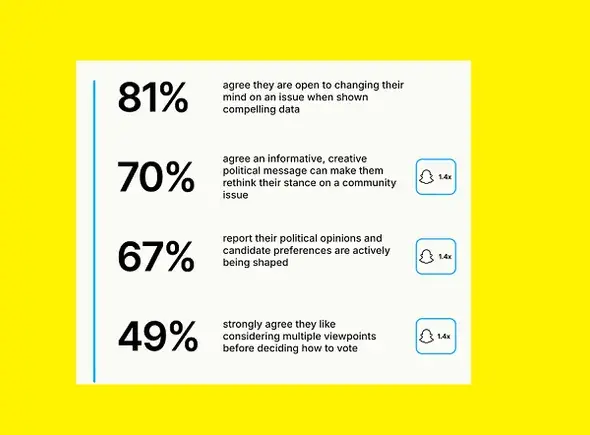
With the U.S. midterm elections coming in November, Snapchat released a report on civic engagement in the app and how users are influenced in voting decisions. Alter Agents surveyed more than 1,000 Snapchat users aged 18 to 45 earlier this year. It’s Snap’s pitch for Snapchat political advertising budgets. “Snapchatters are uniquely open-minded in their political approach, seeking out viewpoints before choosing how to vote and open to changing their positions,” Snap said.
Key numbers
- 78% plan to vote in the midterms, making Snapchat users 1.2 times more likely to vote than non-users.
- 80% say political promotions introduced them to candidates and causes they didn’t know.
- 74% are more likely to look up candidates after seeing ads on the platform.
- 66% discover political and social information through direct conversations in close circles.
- 64% trust peer and community perspectives more than traditional news networks.
- 83% are likely to pay attention to ads about social causes, candidates or voter initiatives — 1.4 times higher than non-Snapchatters.
Snapchat has long emphasized civic participation: it says it drove more than 450,000 voter registrations in 2018 and 1.2 million in 2020 through in-app prompts.
Numbers worth noting beyond politics
This is a sales document, so read it accordingly. Still, some findings matter for brands.
Trust within close circles
Two-thirds learn about issues through conversations with people close to them, and most trust peers over traditional news — reinforcing Snapchat’s strength as a friend-to-friend messaging platform. Brand messages gain power when they’re shareable in conversation, the same logic behind Snapchat’s Commerce Power Pack putting product ads in Chat.
Attention to social causes
With 83% saying they pay attention to cause-related ads, brands with purpose-driven or ESG messaging have an opening — but younger audiences quickly spot messaging that isn’t backed by action.
For advertisers outside the U.S.
Election advertising rules vary widely by country, so treat these as U.S.-midterm-specific findings. For Snapchat’s audience trends more broadly, see Snap’s Q2 user numbers.