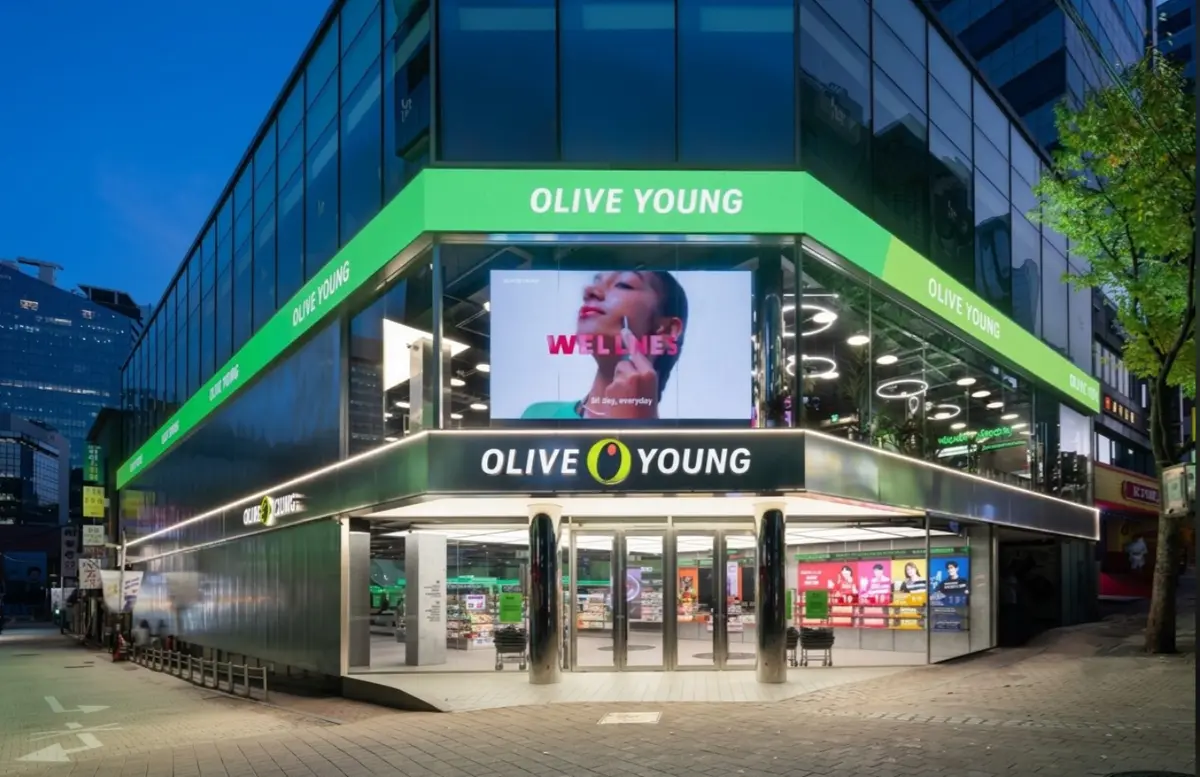
At MAX SUMMIT on August 4, 2026, two Olive Young executives presented the company's retail media business — the head of online and offline retail media, and the lead on ad product planning and first-party data measurement. Olive Young is Korea's dominant health and beauty retail chain. The numbers on the slides were clean.
- 10 million monthly active users
- 1,390 offline stores
- 20 million first-party data records covering purchase, search, and behavior
- 1,000% on-site advertising ROAS as of end-2025
- Retail-media-mediated order value: ₩230B in 2025 → ₩600B target for 2026
Last year was proof of concept; this year is expansion and sophistication.
The Line That Framed the Talk — and Its Inverse
The presentation's organizing statement: "A medium you cannot measure, however good, makes you hesitate from the second buy onward." Hence integrated attribution being treated as equal in importance to adding inventory.
That is a correct diagnosis. It also inverts cleanly: once measurement starts, brands find it hard to stop buying.
Four Pieces of Advice for Other Retailers
The most valuable part of the session was not the product pitch but the advice offered to retailers building similar businesses — less a textbook list than one assembled by someone who has already made the mistakes.
1. Balance. Retail's core is that the products customers want and the brands they like are actually on the shelf — that is what makes an ad business possible at all. Merchandising-driven placement advertising and monetization-driven RMN advertising are different animals, and their ratio is a strategic decision to make first.
2. Data. Twenty million member records does not mean twenty million usable records. Advertising use requires appropriate terms of service, and even within those terms, separate consent processes.
3. Sequence. Even with the prerequisites in place, starting on internal capability alone is difficult. Begin with an external partner, validate quantitative metrics, run a PoC, then bring it in-house.
4. Organization. It is easy to picture only tech and consulting teams, but information security and legal matter just as much. Build the cross-functional structure before the business launches, not after.
All four are immediately usable — from the seller's perspective. A brand paying the invoice has a different list of questions.
Growing the Pie, or Redividing It
In-store media's strengths are real: dwell time, purchase proximity, product trial, trade-area data. A path that runs from pre-purchase impression straight to checkout is an extraordinarily attractive media proposition.
It is also the limitation. When visitor count and spending capacity are already fixed, advertising at the point of purchase changes brand-level allocation, not total market size. If brand A secures the placement, brand B's share shrinks; when B buys offsetting placement, the board resets. The only change is that both spent more.
Delivery platforms already demonstrated this. Once visibility ranking was rebuilt around advertising, merchants had to buy ads simply to avoid disappearing. Whether the advertiser is a small business or a corporate brand, the moment visibility becomes contingent on ad spend, advertising stops being growth investment and becomes defensive cost.
Selling Placements to Non-Stocked Brands
The executive floated an unplanned point: selling in-store advertising to brands that do not sell through Olive Young at all — Samsung Electronics, LG Electronics, Netflix. Bringing outside money in sounds like an escape from the zero-sum problem.
It collides directly with another claim made on the same stage. The premium of this business, they said, comes from being a channel visited by customers with purchase intent. The core slide read: not a place to run ads, but a place where people who will buy see them.
The moment a customer who came for beauty and health products is shown a refrigerator or a streaming subscription, the basis for that premium disappears. What remains is foot traffic past a well-placed screen — which is precisely the logic of conventional out-of-home that the company itself identified as a limitation.
Measurement hits the same wall. Olive Young's stated DOOH differentiator was using member data to define store- and time-level audiences and measure from impression through POS purchase. For products Olive Young does not sell, that measurement cannot exist. Inventory sold to non-stocked brands is inventory stripped of the one differentiator the business rests on.
Where the inventory comes from is another question. Screens and customer attention inside a store are finite. External brand advertising reduces what stocked brands can use. Growing the pie outside means tighter competition inside, and pressure on stocked brands rises rather than falls.
1,000% ROAS: Attribution vs. Incrementality
A 1,000% ROAS is a strong number. But the question it answers is how much did people who saw the ad buy — not how much would not have been bought without the ad. The first is attribution; the second is incrementality.
The gap between them widens most in retail media for exactly the reason the medium promotes itself. If the strength is "a channel visited by customers with purchase intent," then those customers would largely have bought anyway. Show a product to someone who opened the app to buy it, attribute the sale, and ROAS runs high — not because the medium is honest, but because the measurement point sits close to checkout.
This is structural across retail media, not specific to Olive Young. It is why the third stated priority, MMM (media mix modeling), matters: it separates channel contribution statistically instead of chasing individual clicks, narrowing the attribution–incrementality gap. In the presentation, MMM was marked planned. Integrated attribution and offline purchase conversion were marked in progress.
The Parenthesis on the DOOH Comparison Slide
The comparison slide was candid. Conventional out-of-home charges on estimated foot traffic, cannot identify who saw it, cannot connect to purchase, and runs fixed creative. Olive Young, by contrast, would define audiences via member data and measure from impression to POS purchase.
With one parenthetical: planned.
What is being sold today, in other words, is not measured performance but a plan to measure. In-store and out-of-home bundles are already selling; programmatic conversion is next year's target. The brand-side question is simple: on what basis was this inventory priced before the measurement exists?
There is also the cost of the screens themselves. More in-store displays mean power draw, heat, additional cooling load, and maintenance. That burden falls on neither the advertiser nor the brand but on the store. Flagship locations in prime districts absorb it; not every location is in that position.
Three Questions for Brand Marketers
There is no reason to doubt the direction of the business. Customers move between online and offline while advertising and measurement stay trapped on one side — that is an old defect, and Olive Young is confronting it directly. The remark about producing half-complete performance reports as a performance marketer is a feeling every practitioner recognizes.
Still, the closing slide deserves a second reading: "Bring a good brand and a good product; Olive Young's RMN does the rest." It expresses confidence, and it returns to the brand as a question about how much of "the rest" to hand over. When one operator holds the channel, the data, and the measurement, where does the independent standard for verifying that measurement live?
Three questions, then:
- How much revenue would not have existed without this advertising?
- Is this a structure where a competitor takes the position if we don't buy it, or one where the market itself grows?
- When the party measuring performance is the party selling the advertising, what do we check the numbers against?
The four pieces of advice went to retailers. The side paying the invoice has its own list to prepare.
For the parallel shift in platform ad serving toward performance and trust signals, see Google Expands Limited Ad Serving Across All Ads.