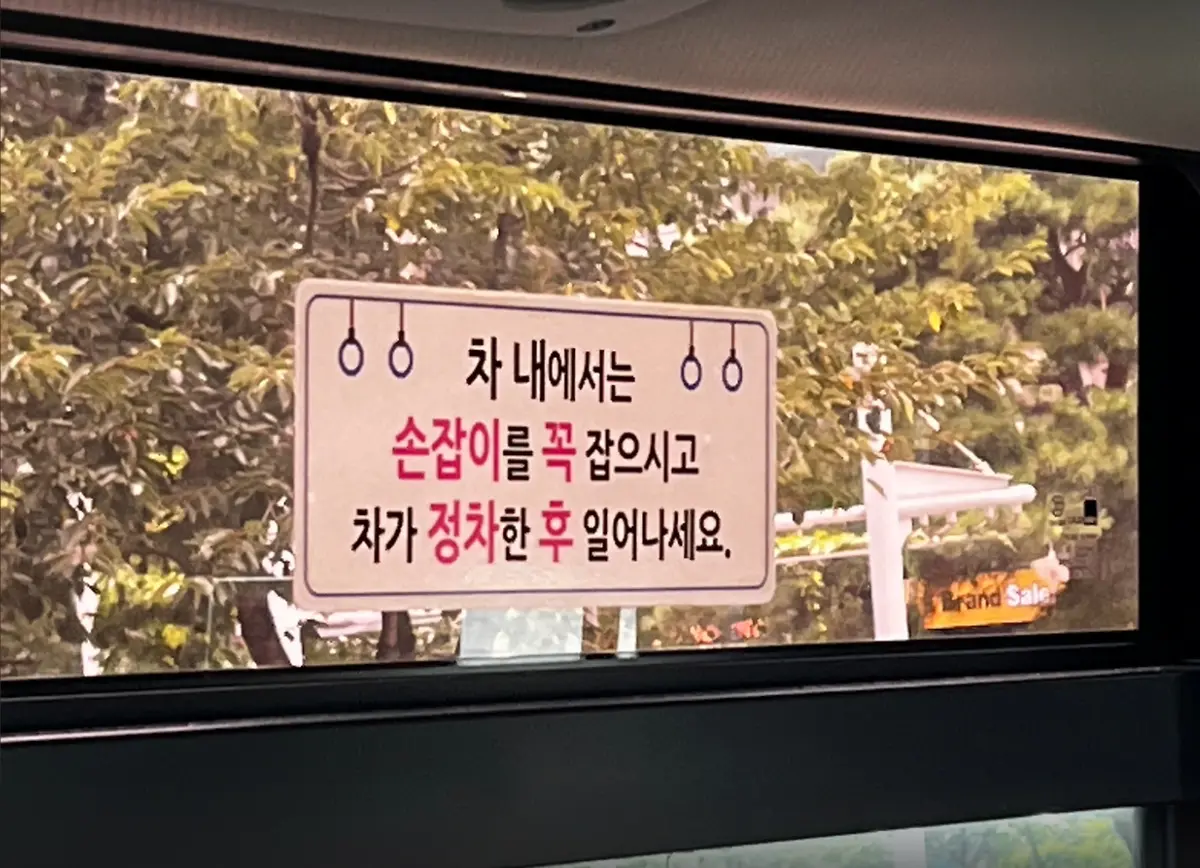
Seoul city buses broadcast the same announcement every day: "For your safety, please wait until the bus has come to a complete stop before alighting." The same notice is posted throughout the vehicle.
But follow it — actually wait until the bus stops before rising — and the exit door starts closing, and you catch looks that say why didn't you come forward earlier?
The passenger who faithfully followed the guideline instantly becomes the one delaying the route.
The Most Damaging Error in UX
From a user experience standpoint, the most damaging error is a mismatch between the system's stated guideline (UI) and its actual behavior (actual feedback).
When following the system's stated correct action produces a penalty for the user, the user stops trusting the system.
This cannot be reduced to individual driver behavior. Passengers have also built a long habit of moving toward the exit before the bus stops.
- Drivers read a passenger not already standing as having no intention to alight, and open doors early
- Passengers, fearing the door will close, move through a moving bus
Distrust among system, user, and operator combined to forcibly train a behavior pattern: hurried movement inside a moving bus.
The Data on Risk
This hurry moves beyond inconvenience into direct safety risk.
Per the Korea Consumer Agency, analysis of 428 bus-related injury cases reported to the Consumer Injury Surveillance System between 2019 and November 2023 found:
- More than half — 219 cases (51.0%) — involved people aged 60 and over
- The leading cause was slipping and falling, at 282 cases (65.9%)
The numbers establish that standing and moving inside a moving bus is an interaction that imposes daily injury risk on the least mobile passengers.
The Difference Is Backend Systems, Not National Character
Anyone who has ridden a Japanese city bus has seen passengers rise only after a complete stop, with drivers waiting patiently. Fare-on-exit payment is part of it, but the core difference is the backend system governing operations.
1. Driver KPIs
- Korea: on-time performance and headway adherence are the top evaluation criteria. With traffic congestion leaving boarding and alighting time as the only compressible segment, "passengers moving after the stop" reads as an obstacle to schedule adherence.
- Japan: passenger falls and safety-duty violations are treated as far more severe penalty items than schedule delay.
2. Where Responsibility Sits
- Korea: the driver absorbs responsibility for schedule disruption caused by slow alighting
- Japan: if a passenger moves before the stop, it is processed as the driver's fault for neglecting a safety warning
In Japan, the "move after the stop" behavior is structurally protected from the driver's side too.
Surface UI Fixes Won't Solve It
Changing stickers or softening the announcement tone cannot resolve this. It requires redesigning the operating algorithm, the hardware, and the boarding culture together.
1. Redesign Operating KPIs
Introduce AI dynamic dispatch reflecting real-time traffic to reduce schedule pressure, and convert "securing sufficient alighting time" into a safe-operation indicator. Service quality improves only when drivers can afford to wait.
2. Door Interlock and Safety Timer
Before the bus reaches 0 km/h, pressing the door button should deliver visual and audio feedback saying the door opens after the stop. Once open at a complete stop, a hardware safety timer should prevent automatic closing for at least five seconds.
3. Spatial UX and Boarding Culture
LED safety guidelines on the aisle floor that change color with stop status provide intuitive visual affordance. Beyond that, establishing staggered boarding — all alighting passengers exit before boarding begins — creates spatial and temporal slack for everyone.
What Marketers Should Take From It
This is a transit story, but it applies directly to service design.
When a guideline isn't followed, examine the incentive structure before blaming users. Check whether customers who follow your instructions lose out anywhere. It happens routinely in return policies, support processes, and subscription cancellation flows.
KPIs create behavior. Rank on-time performance first and safety slips. Whatever metric an organization puts at number one determines what actually happens on the ground.
Distinguish surface copy edits from system redesign. Rewording a notice is cheap and fast, but if the root cause sits in the backend, nothing changes. This is the same order of diagnosis as why customer journeys built for an average customer fail.
Bottom Line
Public transit is the most intuitive public interface proving how a city treats its citizens. Posting a guideline that cannot be followed while pushing accident liability onto individuals erodes trust.
Passengers move after the stop; drivers wait without pressure. That experience arrives only when a culture ranking safety above speed spreads, and backend policy is redesigned to support it.