Adapted from a guest perspective by Kaitlyn McInnis, executive director and integrated investment lead at Crossmedia, published by Marketing Dive.
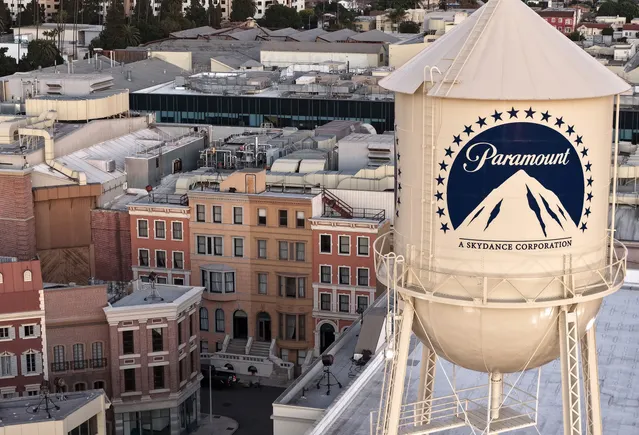
Recent years in media have been defined by consolidation: Disney's acquisition of 21st Century Fox, the WarnerMedia–Discovery merger, and most recently Skydance's acquisition of Paramount. At the same time, platform players like Google, Amazon, and Netflix keep capturing a larger share of consumer attention and ad investment, reshaping the industry's power dynamics.
For legacy media companies the race is no longer about content and efficiency. It is about assembling the scale, distribution, data, technology infrastructure, and financial foundation required to compete in a fragmenting marketplace.
Where the Deal Stands
Paramount's proposed $110 billion acquisition of Warner Bros. Discovery currently sits here:
- A federal judge set a March 2027 trial date.
- WBD shareholders approved the deal in April.
- The DOJ closed its investigation in June.
- The EU's antitrust authority backed the merger in late July.
- Still outstanding: litigation from a coalition of state attorneys general, a Writers Guild of America motion, and UK scrutiny.
The operative conclusion for planners: expect Paramount and Warner Bros. Discovery to keep operating as separate companies for the foreseeable future.
Five Ways to Prepare
1. Decide on What You Know Today
Upfront commitments are still being finalized. Plan on current facts rather than a best guess about the future. Until the transaction closes, evaluate the two as independent organizations — while watching for potential synergies in content, audience, and pricing.
2. Prepare for Multiple Scenarios
With the legal process ongoing, do not assume a single path. WBD could remain independent or engage other buyers, which would put more partnership alternatives on the table. Lock in today's investments while keeping flexibility at the center of the plan.
3. Evaluate Through a Client-Specific Lens
No two advertisers experience this merger the same way. CNN is the clearest example: its future remains an open question that could reshape long-term strategy for categories where news plays an outsized role. Rather than broad assumptions, assess each implication against objectives, priorities, competitive concerns, and measurement needs.
4. Assume a Different Competitive Landscape
Advertisers and agencies are not the only ones preparing. Media companies are readying their own responses through new partnerships, offerings, and capabilities. Watching only the merging parties misses the point — how surrounding outlets reposition themselves is what changes actual negotiating terms.
5. Partner Instead of Transact
Consolidation is intimidating, but it produces larger, more sophisticated ecosystems with opportunity beyond the 30-second spot. This is a moment where strategic partnerships built on integrated content, technology advances, and commerce solutions outperform transactional buying.
The Takeaway
This merger is one of many the industry has faced and will keep facing. It is less about a specific transaction than about how the industry prepares for consolidation as a standing condition. The organizations that thrive will be the ones that accept the uncertainty and build media partnerships grounded in flexibility, integration, and future potential.
For a case of separating distribution rights from IP ownership in negotiation, see Why 'Kim Bujang' Matters to SBS.