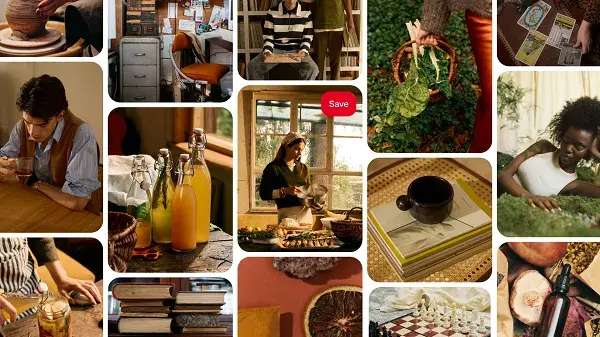
Pinterest has published a hobby trends report built on search activity, and its core diagnosis is sharp: after years of always-on feeds, people aren't just unplugging — they're choosing hands-on pastimes that command attention, reduce stress, and make free time feel more satisfying. 51% of Gen Z say having a hobby contributes to their joy, and eight in ten Pinterest users say the platform encouraged them to try something new offline. Online search has become the planning tool for offline life.
The nine rising clusters
- Kitchen Witch: herbal apothecary (+595%), how to make beeswax wraps (+250%) — creative kitchen projects and old-world crafts. Pinterest notes the September release of "Practical Magic 2" as a tie-in moment.
- Cosmic Reset: learn astrology (+733%), crystals and meanings (+606%), tarot cards for beginners (+558%).
- Home Café Engineering: banana syrup recipe for coffee (+916%), vintage coffee corner (+430%), Biscoff latte recipe (+359%).
- Backyard Botanist: dried and pressed flowers (+457%), bird drawing sketch (+232%), nature meditation (+146%).
- Weekend Equestrian: rosette ribbon (+3,816%), barn jacket outfit women (+1,109%), equestrian aesthetic outfit (+219%).
- Secondhand Sidequest: 1990s–2000s revival — pleated skirts outfits (+427%), uniform shirts (+341%), wool leg warmers (+62%).
- Handmade Hacker: birthday magazines (+1,713%), digital zine design (+433%), dream journaling (+128%).
- Curated Clutter: Pokémon cards (+570%), figure display shelf (+79%), DVD collection display (+41%).
- Casual Crafter: clay bag charms (+1,499%), hand embroidery art (+1,351%), beaded bag charms DIY (+965%).
How to read it
More useful than the individual spikes are the three axes running through all nine clusters: hands-on immersion (crafts, home café), taste made physical (collecting, display, vintage), and personal ritual (astrology, meditation, journaling). All three are reactions to digital fatigue — and all three produce artifacts. Hobbies that leave something behind turn back into content and return to the platform, and that loop is where brands can ride along.
Our take: hobby trends are a chance to sell routines, not products
What brands should take from this report isn't the keyword list — it's the change in the unit of consumption. People aren't buying coffee syrup; they're building a home café routine. They aren't buying an embroidery kit; they're buying an evening spent using their hands. Positioning the product as a component of a routine is exactly the frame we explored in Korea's Supplement Market Stalled at 6 Trillion Won — the Next Product Isn't a Bottle. And the underlying insight — that consumers want decision-free immersion more than they want objects — connects to Daiso Didn't Sell Cheap Goods — It Sold Five Minutes Without a Decision. When planning seasonal campaigns, deciding which hobby routine your product belongs to — and which step of it you are — will outlast chasing whatever keyword spiked this quarter.