You walk into Daiso for one thing. Batteries, wet wipes. At the checkout your basket holds five or six items you never planned on: kitchen tongs you don't use, memo pads, a $2 serum, an organizer you might need someday. The receipt reads 1,000 won, 3,000 won, 5,000 won all the way down. None of it was planned, and somehow none of it stings.
This is not an accident. It is a precisely engineered outcome, and the core of the design is not "people buy because it's cheap."
A 4.5 trillion won store that barely advertises
Start with scale. Daiso revenue rose from roughly 2.9 trillion won in 2022, growing about 14% a year, to more than 4.5363 trillion won in 2025, with operating profit of 442.4 billion won.
The margin is the surprising part. Selling nothing above 5,000 won (roughly $3.60), the operating margin approaches 10% — higher than most large supermarket chains.
And here is the oddity: the goods are cheap, yet the chain barely advertises. Few Koreans can recall a Daiso TV spot. Still, the store count passed 1,600 nationally and revenue climbs double digits every year.
What was removed is the weighing, not the price
Daiso's real weapon is not that prices are low. It is that the process of deliberating about price was removed. Those are entirely different things.
The tiring part of shopping is not spending money — it is judging. Pick up a pair of kitchen tongs at a supermarket and this runs: "3,800 won, is that expensive? The one beside it is 4,500. Isn't Daiso cheaper? Is this worth it?" That small weighing attaches to every single item. You leave exhausted not by the money but by the decisions.
Daiso deleted the weighing. With only a handful of fixed prices from 500 to 5,000 won, there is no "expensive or cheap" to settle. The friction of checking and comparing a price tag is near zero.
One more thing layers on: 5,000 won as a psychological safety line. For most people, anything under that sits in "it's fine if this fails" territory. Buy it, never use it, and it barely registers. So "do I need this?" slides easily into "it's a few thousand won."
The contrast:
- Other stores: check price → judge whether it's expensive → compare elsewhere → decide (four layers of friction)
- Daiso: it's under 5,000 won anyway → into the basket (almost none)
Why cheap prices produce better margins
Three operational pieces sit under the 10% margin.
Direct sourcing. Buying straight from manufacturers removes the distribution margin in between.
Volume ordering. With more than 1,600 stores, single orders are enormous, which drives supply prices down.
Stripped-out extras. Almost no elaborate packaging, almost no advertising. That cost returns to the price.
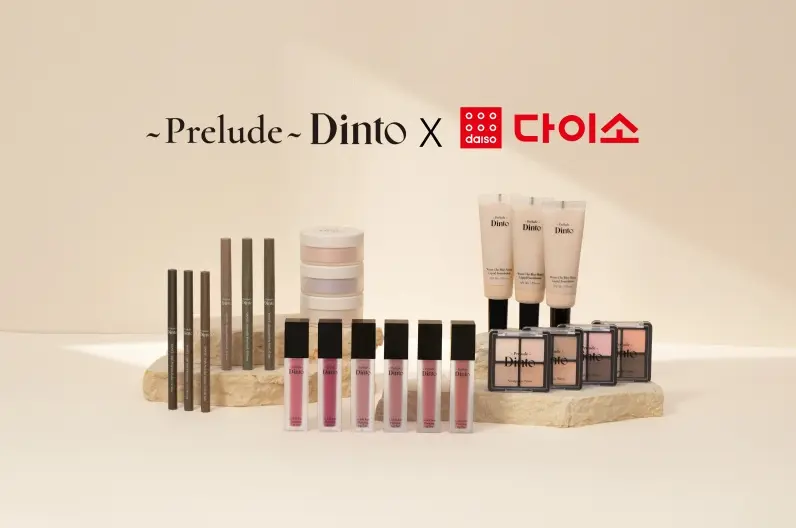
How much bargaining power this created shows in which companies now come to Daiso. Amorepacific launched "Memo by Mamonde" exclusively for Daiso, Aekyung launched "2ndit," and LG Household & Health Care launched "By ODTD" carrying technology from its derma brand CNP. Meeting the fixed price means restructuring their cost base for Daiso — and they come anyway, for the volume.
The critical point is that this low-cost structure detonates when it meets the frictionless psychology above. Low stakes means people add items often and in quantity. Margin per item is thin, but turnover is fast, so the total is large. Low price is not the cause of low margin here; it is the engine of volume.
Cosmetics is where it landed hardest
The clearest recent expression of low-risk consumption is beauty.
The signature case is Son&Park's Arty Spread Color Balm. Word spread that its payoff resembled Chanel's lip-and-cheek balm — Chanel at 63,000 won, this at 3,000. "I can't afford Chanel, and if this fails it's only 3,000 won" sold it out repeatedly. VT Cosmetics' Daiso-exclusive Reedle Shot ampoule did the same, moving a premium-priced technology into a 3,000-won product that cleared shelves as fast as it landed.
The corporate exclusives performed even better:
- Amorepacific's Memo by Mamonde — 1 million units in four months
- Aekyung's 2ndit — 1.3 million units in seven months, with one eyeliner alone passing 230,000
- LG's By ODTD — past 1 million units in nine months
Skincare and color cosmetics normally ran 10,000 to 30,000 won, the kind of purchase you deliberate over. Once 1,000-won sheet masks and 3,000-won serums arrived, a deliberated purchase became a low-stakes trial. Good result, repurchase. Bad result, it cost 3,000 won. Daiso cosmetics revenue grew 85% in 2023, 144% in 2024, and 70% in 2025.
For a category where the barrier is the reasoning behind a choice rather than its price, see Korea's Supplement Market Stalled at 6 Trillion Won.
Not just cosmetics
In spring 2026 a 5,000-won nylon windbreaker sold out nationwide on release. People weighing a brand windbreaker at ten times the price simply grabbed one for a season.
Character collaborations hit hard too. A Toy Story line dropped roughly 40 items at once — passport cases, pouches, keyrings — and the popular characters cleared on arrival day. 1,000-won highlighter sets, masking tape at half a stationery store's price, blemish patches people stockpile: all of it sits in the "add it without thinking" price band.
The strangest signal is that popular items now generate queues. People set restock alerts in the Daiso app, check store inventory every morning, and show up on delivery day. They line up early for a 5,000-won item.
Three things to move onto a product page
1. Cut decision friction before you cut price. People don't abandon because something is expensive; they abandon because judging is tiring. Complex pricing structures, too many options, and anything that makes a visitor keep re-asking "is this right for me" costs conversions. Reduce choices and make price legible at a glance.
2. Design a first step where failure is cheap. The color balm sold because 3,000 won is not a loss worth regretting. Free trials, small first purchases, samples, and refund guarantees do the same job. "Try it lightly" clears a lower bar than "commit to this."
3. Sell "it's fine if this doesn't work out," not "it's cheap." Reassurance that the price makes it worth attempting beats shouting lowest-price, especially for first-time buyers.
For the related problem of customers acquired but never activated, see One in Seven Credit Cards Is Dormant.
But friction is not always the enemy
Balance matters, and the Daiso model has shadows. Items above 5,000 won are hard to sell, which caps growth. Holding the price line means continually pressing supplier costs, which burdens partners. And once a brand hardens into "the cheap place," raising prices later becomes difficult. Expanding into higher-margin categories like cosmetics is itself an attempt to clear that ceiling.
More importantly, for expensive and long-lived purchases, deliberation time builds trust. Buying a car, a luxury good, or a high-priced service, people want to weigh it properly. Removing friction there triggers suspicion — why is this so easy to buy? Luxury brands make stores deliberately inconvenient and leave prices off displays precisely because the friction is the value.
So Daiso's method fits low-involvement, low-price, repeat-purchase goods. It does not transplant to everything. Decide first whether your product belongs in "toss it in the basket" or "think it through."
The question to ask before selling is not how to look cheaper. It is what the customer is deliberating about here, and how to take that deliberation away.