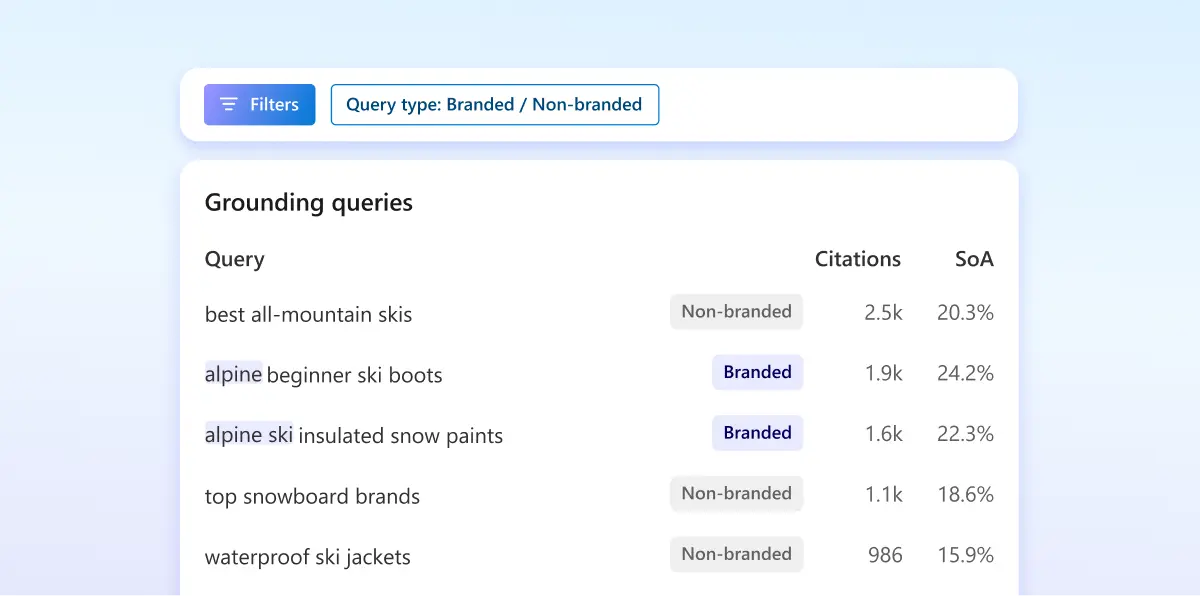
Microsoft has updated Clarity, its free analytics tool, to break the AI Citations dashboard into branded and non-branded queries. You can now see which grounding queries AI systems used to look up supporting information for a response, split by whether the query named your brand.
What changed
"To make that analysis easier, Microsoft Clarity now adds branded query segmentation to the AI Citations dashboard," Microsoft wrote. Four things are new across the reports.
Branded labels in the queries card
Individual queries are marked as branded, so you can tell at a glance what the AI actually looked up.
Share of Authority by query type
The Share of Authority card now breaks out results by branded and non-branded queries, showing whether your authority is strongest where people already name you or across broader topics.
Filters and more precise citation analysis
Dashboard data can be filtered by query type. Separating brand-led demand from generic discovery makes changes in citation performance far easier to interpret.
Why it matters
This fixes the most common illusion in AI search reporting. Being cited when someone already searches your product name is not the same event as being cited when someone asks a category question with no brand in it. The first confirms demand you already had; the second creates demand. Reported as one number, rising brand awareness looks like content performance.
The practical move is to track two curves. If total citations climb while non-branded citations stay flat, your content did not bring in new demand — existing demand simply moved channels. This is the same measurement gap discussed in 82% of AI Citations Point to Earned Media.
What to do first
Pull the non-branded query list and look at which concepts your content is being used to support. Those repeated concepts are what AI systems believe you are an authority on. For a structured way to check that, see AI Halftime Report H1 2026.