What Meta ad exclusion audiences change
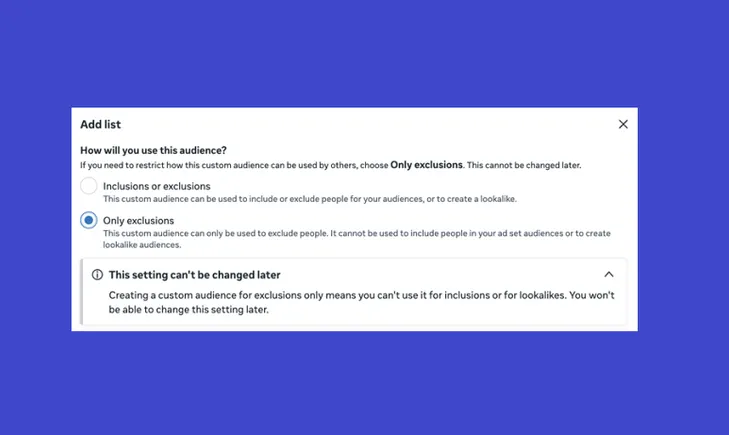
Meta added exclusion-only custom audiences for ad sets. In Meta's words: "An exclusion-only custom audience is a type of customer list custom audience that can only be used to exclude people from your ad audience. Unlike a regular custom audience, an exclusion-only custom audience cannot be used to include people in your audience."
The restriction runs one way and is permanent. A regular custom audience can include or exclude; an exclusion-only audience can only exclude, and it cannot be converted into a regular custom audience after creation.
Why build an audience you never want to reach
Meta names three uses. It keeps people who opted out of a business's products or services from continuing to see those promotions, reducing wasted spend. It excludes people a business has "a legal or regulatory obligation not to target." And it acts as a permanent guardrail against accidental inclusion when working with custom audiences.
Facebook ads expert Jon Loomer added another: excluding employees, so the account stops paying for impressions with no value. Most other cases can already be handled through standard custom audience exclusions.
The actual problem it solves
Exclusions existed before. What changes is the nature of the safeguard. A regular audience can be dropped into the include field by mistake; an exclusion-only audience makes that mistake structurally impossible. That matters most in regulated categories — finance, healthcare, alcohol — and in accounts several people touch.
Before you set one up
First, decide the list's purpose up front, because the choice is irreversible. If there is any chance you will want to retarget that list later, do not build it as exclusion-only. Second, set a refresh cadence: exclusion lists tend to be created once and forgotten, and a stale list is a poor compliance control. Third, document the rule at account level so every operator applies it.
For related operational shifts in ad policy handling, see Microsoft Advertising Adds Bulk Editing for Disapproved Assets, and for how account trust signals now shape delivery, Google Expands Limited Ad Serving Across All Ads.
FAQ