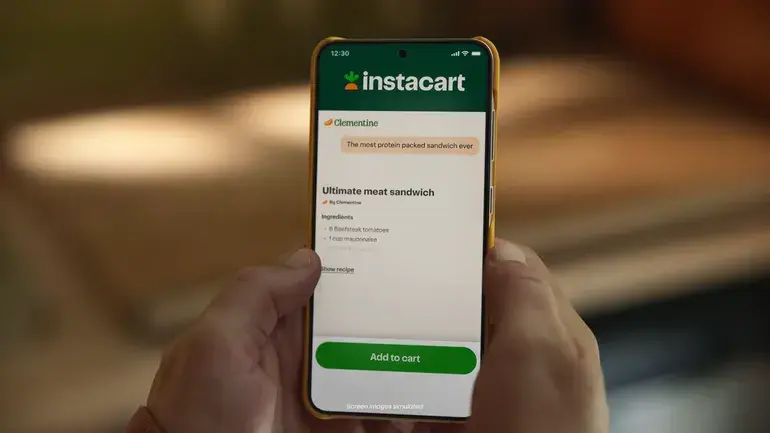
Instacart is marketing its AI shopping assistant, Clementine, with familiar scenes from Shrek, Scooby-Doo and other entertainment properties. A viewer sees food on screen, asks Clementine for an idea and receives help building a grocery order. The campaign translates an abstract AI proposition into a recurring household question: what should we make for dinner?
Pop culture becomes a path to purchase
The four-ad ‘Turn any idea into an order’ campaign begins with references audiences already understand. A solo meal in ‘Shrek’ inspires a one-pan dinner, while Scooby-Doo’s towering sandwiches prompt another shopper to recreate the idea. Ads drawing on ‘The Office’ and ‘A Charlie Brown Thanksgiving’ are scheduled to follow later in the fall.
The work debuted during NBC’s ‘Sunday Night Football’ and extends across linear and connected TV, YouTube, audio, social and Instacart’s own app. Packaged-goods brands including Hormel and Hillshire appear in the creative. The media plan repeats one product promise across channels while letting entertainment supply the initial attention.
The product promise rests on 1.6 billion orders
Instacart says Clementine is informed by data from more than 1.6 billion lifetime orders. Its capabilities include suggesting meals, finding promotions and lower-cost alternatives, reordering pantry staples and turning handwritten or digital lists into a basket. The assistant is available to most users in the United States and Canada through Instacart’s app and website.
The strategic goal is not simply to demonstrate what AI can do. It is to teach customers when to reach for it. By linking Clementine to moments of meal indecision or sudden inspiration, Instacart is trying to create a repeatable cue. Much as KFC created one global brand role to unify a fragmented portfolio, Instacart is organizing many characters and partner brands around one behavioral promise.
What marketers should measure
Nostalgia can earn attention, but recall of the entertainment property is not the same as recall of the product. Measurement should test whether viewers remember the intended action—turning an idea into an order—and whether that memory drives assistant use, completed baskets and repeat behavior. For AI products, a clear usage occasion can be more valuable than a long feature list.