"If AI Does Everything, What Should I Prepare?"
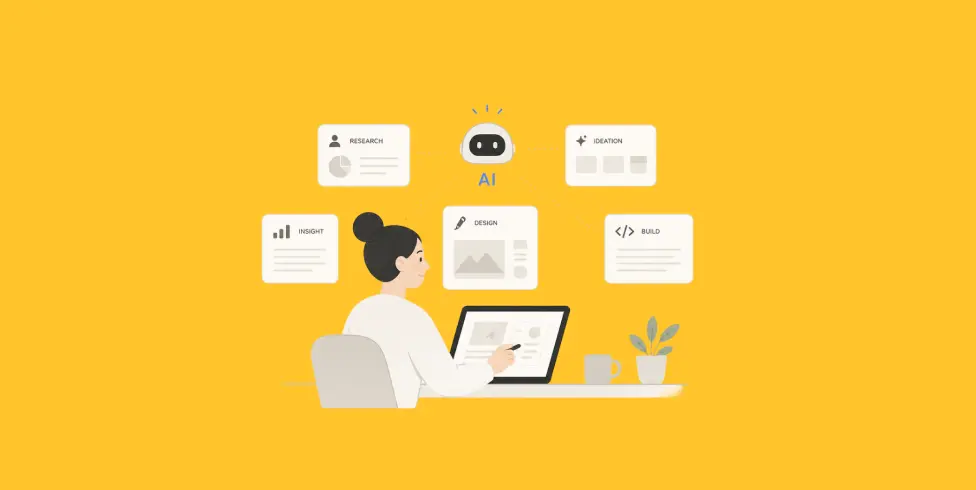
"If AI does everything, what should I prepare?" As an 11-year designer and career coach, the author says there isn't a week that goes by without hearing this question in coaching sessions — from job seekers and juniors, and sometimes even from people more senior than the author. Rather than claiming to have the answer, the author shares what's actually been observed on the ground over the past year. The interesting finding: as AI started churning out drafts, some design work actually got more expensive.
10 Drafts in an Hour, No Answer for Days
Take one mentee's case. Using AI, they generated 10 onboarding-screen drafts in a single hour. But when asked, "which one are you going to push?", the mentee couldn't answer for days. Production was instant, but choosing which output to move forward with remained entirely a human task. Setting the actual criteria — weighing constraints, the product's stage, development resources, and the metric owned by the team — is exactly the part AI can't do instead of you.
Production Costs Fall; Judgment Costs Don't
The author frames this as a cost-structure shift. Thanks to AI, the production cost of generating drafts has collapsed. But the selection and responsibility cost — picking one option among many and owning that choice — stays exactly where it was. What gets priced is no longer "how much, how fast can you draw," but "what did you choose, and why."
What Hiring Managers Are Actually Looking For
This shows up in hiring, too. The common thread across portfolios that got offers wasn't polished screens — it was documents that showed good decisions: which problem was chosen and why, what was given up and on what grounds, and the logic behind picking option B over option A. Pixel precision and tool mastery used to be the entry-level bar; the author notes that value is dropping fast. What's rising instead is the ability to define a problem, interpret constraints, and choose — and explain — among competing options.
What This Means for Marketers
This insight isn't limited to design. As generative AI mass-produces copy, banners, and content drafts, marketers are in exactly the same position. In an era where you can generate 30 ad lines or 20 creative variants in an hour, a practitioner's value no longer comes from "the hand that produces more" — it comes from "the head that decides what to push, and why." The judgment to select the best option within brand tone, target, budget, and metric constraints — and to convince stakeholders it's the right one — is the competitive edge that can't be automated away.
So the more valuable move isn't picking up one more AI tool — it's documenting your own decision trail on the project you're already running: why you chose this option, and what you gave up to do it. That habit is itself a portfolio and a practical skill, and a genuine point of differentiation in the AI era. As production approaches free, judgment is what still gets priced.
If your team needs help defining creative direction and decision frameworks, explore Best Partner's services or get in touch.