Deals and discounts are the common tactic for drawing shoppers during back-to-school season. But what about a promise that prices won't rise over the next few weeks?
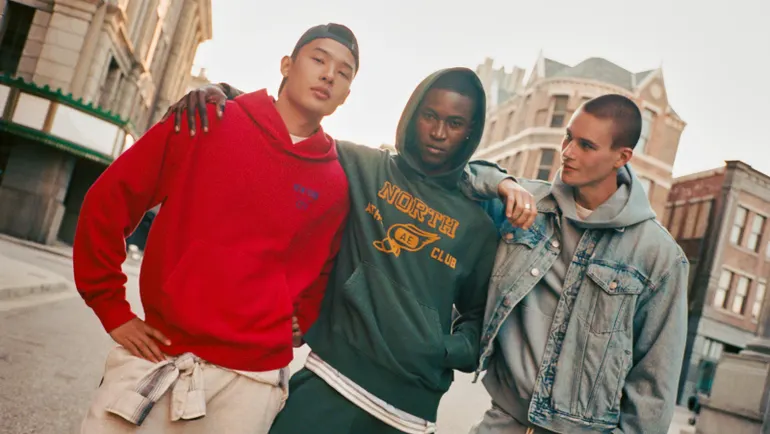
That's the premise of JCPenney's Price Lock guarantee, running through August 27 on select items with help from comedian Zarna Garg, who appears in social posts and in a "leaked" group text explaining the deal to a cohort of other moms.
Price locks aren't unheard of. What's amplified is the sense that consumers are seeking assurances around cost, during a period of intense economic shocks from inflation and the Iran war. "It's not like [affordability] hasn't always been important, but there are macroeconomic realities that are making constraints on real American families, I would say, even harder than ever," said Marisa Thalberg, chief customer and marketing officer at JCPenney parent Catalyst Brands.
The 2026 numbers
From Deloitte's 2026 Back-to-School Survey:
- 6% — forecasted decline in back-to-school spending among families, adjusted for inflation
- 57% — share of consumers who believe the economy will worsen in the next six months, the highest since 2020
- 31% — share of parents who are "hyper value-seekers" employing four or more cost-saving behaviors
Deloitte's Brian McCarthy frames the decline plainly: "For every $100 that you were spending last year, you'll get 6% less for that $100 this year."
Payment behavior is shifting too. A separate Omnisend report found 45% of households planning to use buy now, pay later tools, up six percentage points from 2025.
McCarthy notes sour sentiment doesn't always translate into a material pullback — the 2025 holidays proved relatively resilient in the face of headwinds.
The season keeps moving earlier
Retailers again tried to kickstart activity earlier this year, producing the jarring effect of back-to-school messaging appearing almost immediately after classes let out, or while kids were still taking final exams.
Amazon moved Prime Day to late June for the first time and has been tighter-lipped about performance. Kohl's began rolling out its campaign on July 5 with Ellie Kemper reprising her Kohl's Mom character. Target shifted some media investment earlier than usual.
Some of this reflects varying public school return dates across the U.S. — JCPenney is bolstering marketing support around that rotating timing. But there's also a sense the moves target a bigger cohort of bargain hunters.
"From a brand and retailer perspective, we still continue to see this season pull forward. This year, a lot of those promotional events that kick off the back-to-school season actually started at the end of June," McCarthy said. "For retailers and brands, the earlier they can start, the higher likelihood they're going to capture their fair share or more than their fair share of a controlled spend."
Creator marketing's canvas expands
Economics is one piece of the puzzle. The moment requires many retailers to do double duty — courting parents buying big-ticket essentials and students seeking discretionary items like backpack charms or cosmetics.
Young consumers' access to TikTok and YouTube, where get-ready-with-me videos run rampant, is propelling new entrants into categories like self-care. "We're seeing skincare as a new category that's a part of the essential back-to-school set," said Chris Konya, chief strategy officer at strategy and design company Sylvain.
Among global marketers, 61% plan to increase creator spending in 2026, per Kantar research published last month.
American Eagle's push shows the range of levers. At the center is Lamine Yamal, the soccer prodigy who helped carry Spain to World Cup victory and signed as an ambassador in January. Alongside that, the brand works with a small army of online personalities to capitalize on niche interests like #RushTok, the TikTok trend tracking sorority rush.
American Eagle CMO Craig Brommers put the scale plainly: "The real need for a brand like American Eagle [is] to work not just with hundreds of creators anymore, but we have to work with thousands of creators in order to cut through the noise."
Target, mid-turnaround, is optimizing its media mix toward social, short-form video and creators, partnering with both students and educators who have built followings. The aim is to showcase the influence teens and tweens wield over back-to-school decisions while highlighting an assortment where half the items are new this year.
Some retailers are tying creator collaborations closer to physical experiences. Aéropostale, marketed by Catalyst, extended its "Intern Diaries" platform with a social content series starring Déjà Clark and a Y2K-inspired fashion line. Clark's appearance at the Manhattan flagship surpassed both fan attendance and single-day store sales versus a similar event last year.
JCPenney partnered with Garg for her candor — and had to relinquish some control over its advertising to make the tie-up feel genuine. "It's brand advertising, don't get me wrong, but the way she talks was largely unscripted," Thalberg said.
"For us, it doesn't always have to be 'influencer' with a capital 'I.' It can be micro-influencers, too — people who just feel real and authentic and credible and can extend our story."
What's overlooked with AI
On the flip side of human-led genuineness is AI. Retailers moved fast to strike deals with leading AI developers in 2026, and more brands launched their own chatbots around back to school. Kohl's debuted an AI assistant powered by Google Gemini in July offering personalized style inspiration, product comparisons and shopping answers.
Consumers who leverage the full range of channels — brick and mortar, search, social and AI — intend to spend about $737 per student, a figure Deloitte's McCarthy called "significantly higher" than other groups. And 46% of U.S. parents surveyed by Epsilon are turning to AI tools to compare prices, identify deals and research products.
AI still has growing pains. Figuring out how to stand out and measure performance on ChatGPT, Claude and Google AI Overviews is an uphill battle compared with traditional search, where a query, a results page and a click made up most of the journey.
Lauren Taylor, global leader of BCG's Center for Customer Insight, identified the gap: "Retailers are overlooking how AI represents them. Very few know whether AI systems recommend them, to whom or what value proposition gets presented on their behalf."
What this means for marketers
Three takeaways.
First, certainty is the new discount appeal. A price lock works because it sells predictability, not a lower absolute price. When inflation anxiety is high, how predictable something is lowers the purchase barrier more than how cheap it is. It is the same psychology as buying peace of mind cheaply, described in Mood Value-for-Money Is Reshaping Consumption.
Second, the unit of creator strategy has changed. Going from hundreds to thousands isn't a scale increase — it's an operating model change. Thousands of creators cannot be handled by planning each collaboration individually. Without systematized selection, briefing and payment, the strategy doesn't execute.
Third, separate the decider from the consumer. Parents pay, students choose — and as Mom Outranks Every Creator in Gen Alpha Brand Choice showed, the direction of influence isn't always what you'd expect. Two audiences need two messages, which is exactly why retailers must do double duty this season.
Taylor's closing point is worth keeping: "Behavior shows what happened. It doesn't show what a shopper wished they could have done instead, or why, and that gap is where the next wave of growth sits." However granular AI and signal-driven marketing become, the qualitative methods rooted in person-to-person conversation still matter.