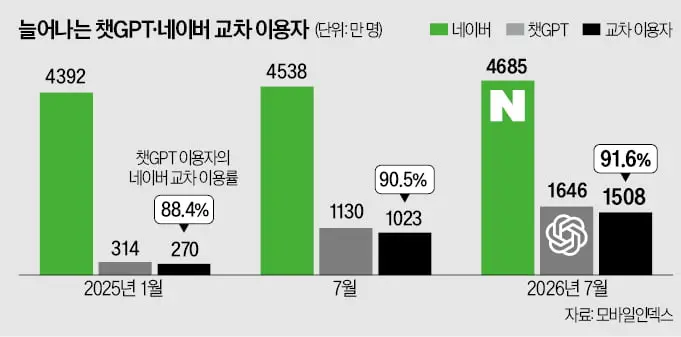
Hybrid search is challenging the idea that consumers must choose between AI and a portal. The number of people using both ChatGPT and Naver reached 15.08 million in July 2026, 5.6 times the January 2025 level. The data also indicates that 91.6% of ChatGPT users use Naver.
Hybrid search divides the job between tools
People use AI to summarize complex questions and organize options, then move to a portal for recent reviews and on-the-ground information. Generative AI is convenient for conversational and scenario-based queries, while portals retain value for freshness, local context and lived experience.
Naver responded with an AI tab that exceeded 10 million monthly active users shortly after launch. The product treats search results and generated answers as connected parts of one journey instead of mutually exclusive destinations.
Brands need to plan for cross-checking
An AI citation may not create purchase confidence if current information is missing from the portal. A large volume of reviews may also fail to create initial consideration if AI systems cannot understand the core facts. Naver's AI Tab, Explained — How It Differs From Google AI Mode and What Brands Should Do provides more context on the product structure.
Divide content into two layers
Maintain structured facts such as prices, specifications and policies on official pages, while keeping current cases, reviews and local details visible in portal ecosystems. Measurement should connect AI visibility, branded searches, review views and conversion. Hybrid search optimization is less about winning one channel than keeping information consistent across them.