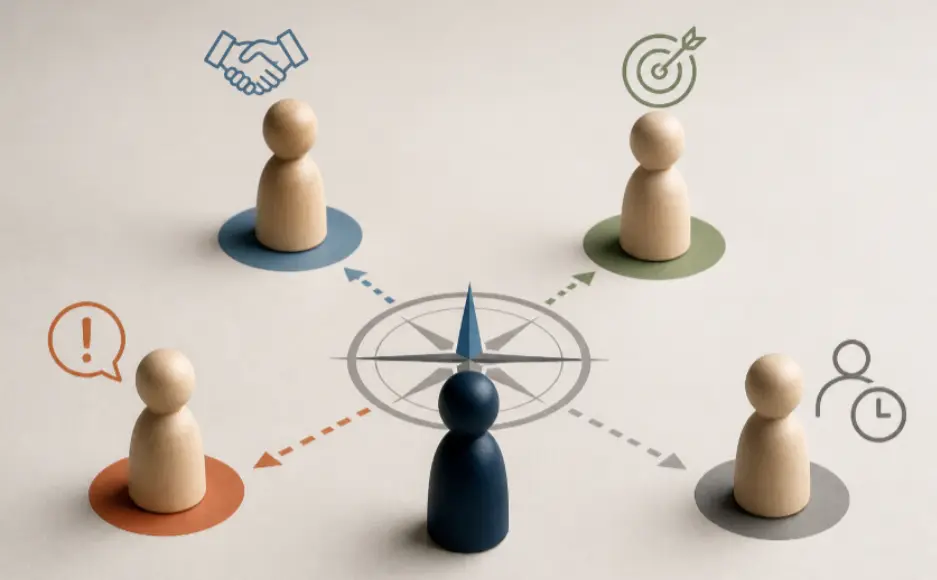
The person who originates a project, makes its key decisions, and shields it from outside pressure is the sponsor — a client-side PM on an SI project, a product manager for product development, or a process-improvement lead for an internal initiative. How a project manager should respond depends entirely on the type of project sponsor involved.
Four sponsor types
Sponsors can be mapped along two axes — their capability and their level of involvement — producing four types: collaborative, strategic, interfering, and hands-off. Responding to every type the same way tends to create conflict or delay decisions.
PM strategy by sponsor type
A collaborative sponsor is a PM's best partner. Meet their expectations reasonably well and the project usually finishes smoothly — but over-relying on them can weaken a PM's own control and blur accountability for decisions.
A strategic sponsor rarely engages day-to-day but carries significant influence, setting broad direction and stepping in only at critical decision points. What matters is timing: bring them concise, distilled updates and don't miss the moment to request a decision, or direction can reverse late and painfully.
An interfering sponsor gets involved in details and clashes with the PM's own judgment, creating frequent conflict. Trying to win them over with logic tends to make things worse. It's better to negotiate and formalize project processes up front — communication, roles, decision rights, change control — and hold to them.
A hands-off sponsor can feel like a relief since there's no interference, but this is actually the riskiest type. Problems seem absent early on, only for the sponsor to ask late in the project why things were done a certain way. The fix is institutionalizing regular stakeholder reviews at each stage and escalating issues immediately when they arise.
What marketers can take from this
This framework maps directly onto the agency-client relationship. Failing to identify what type of sponsor (the campaign approver) you're working with early on invites conflict or late direction changes. A hands-off client in particular tends to surface pointed questions late in a campaign — "why did we go with this creative?" — so building regular reporting and mid-campaign reviews from day one is the safer path. With an interfering client, formalizing an approval process and communication rules reduces friction more effectively than logical persuasion.
Identifying a sponsor's type at project kickoff and building a response strategy around it largely determines whether the project succeeds or fails. To design a project or campaign operating structure, explore Best Partner's services or get in touch.