GoogleSearch Engine Land
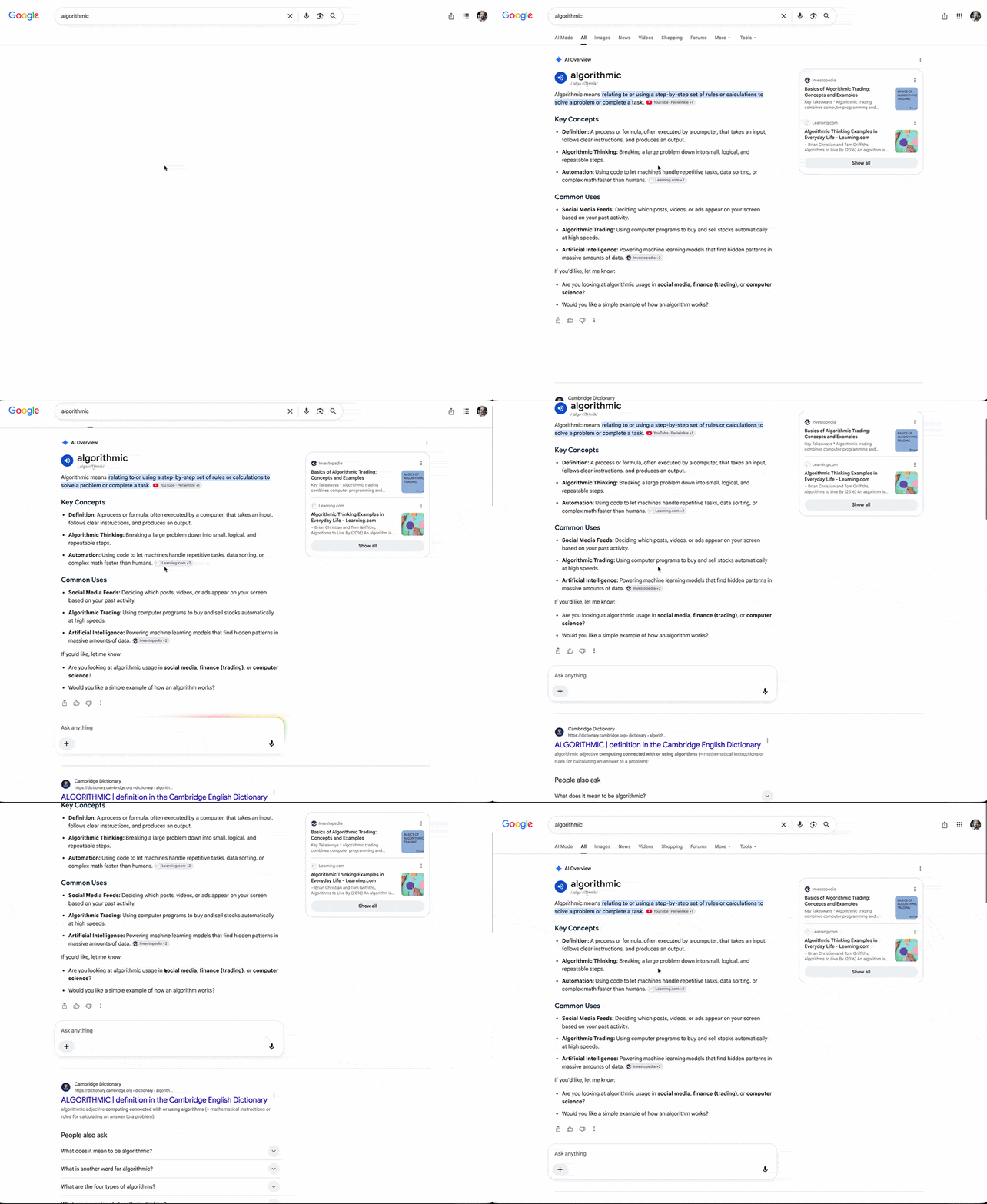
Google Is Auto-Expanding AI Overviews — Pushing Search Results Further Down
For some queries, AI Overviews now expand fully without a 'Show more' click. What that does to clicks and how to respond.
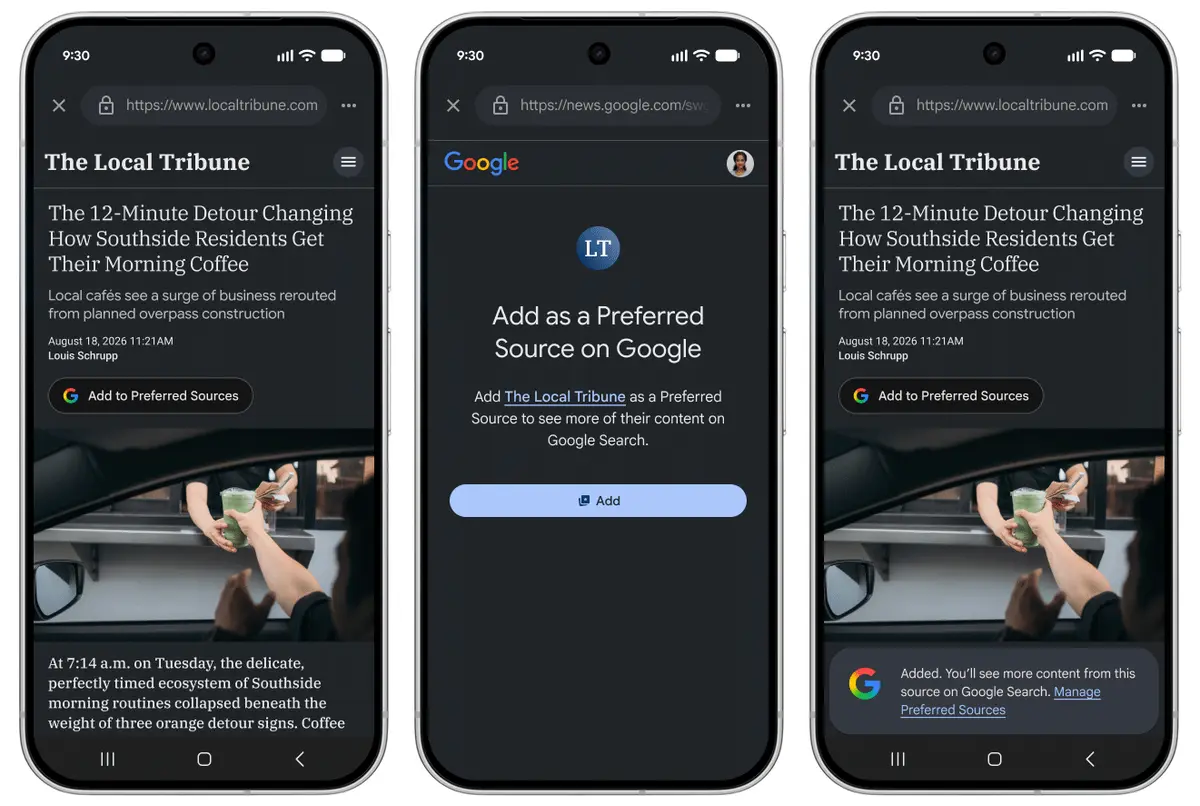
Google has released a new Preferred Source button for publishers. Only one thing changed: readers no longer leave your page to complete the subscription. It is a small change of the kind that decides conversion rates.
Previously, clicking the button sent readers to a Google page and left them to navigate back on their own. The new flow works like this:
The new embed code is available in Google's help documentation.
Preferred Sources lets searchers star publications in the Top Stories section of Google Search. Google uses that signal to surface more stories from the starred outlets.
The rollout timeline:
Google says more than 600,000 unique sources have been selected so far — up from 200,000 in May 2026, a 200% increase. The feature is being used.
The behavioral number matters more: Google says users who set a preferred source are twice as likely to click.
In an environment where search traffic keeps getting harder, Preferred Sources functions as a distribution channel that sits outside ranking competition. It runs on an explicit reader declaration rather than an algorithmic contest. As AI summaries absorb clicks, "I want to keep seeing this outlet" becomes a defensive asset.
The implementation order is straightforward. Add the embed button in a fixed position near the top or bottom of articles. Do not leave it unexplained — give readers one line on why it is worth clicking. Then drive adoption through channels where loyal readers already are: newsletters and owned social.
One caveat: Preferred Sources operates on news-style queries where Top Stories appears. Sites publishing only evergreen reference content will feel a smaller effect. Read this alongside Google lowering its search profile threshold to 35,000 followers — both moves hand brands a more permanent seat in results.
Google removed the friction from Preferred Source signup, and selections tripled in under a year. If you publish news-adjacent content, installing the embed button is a low-cost priority.
Google's help documentation hosts the new embed code. Once installed, clicking it registers the source and returns the reader to their place on your page.
It does not change core ranking. It acts as a personalization signal so that starred outlets appear more often in a user's Top Stories section.
Google reports more than 600,000 unique sources, up from 200,000 in May 2026 — a 200% increase.
Publishers covering news-style queries where Top Stories appears. Sites focused purely on evergreen reference content will see less impact.
To apply what you just read to your own site, start with a free audit of where things are now.
A strategist replies within 24 hours on business days.
For some queries, AI Overviews now expand fully without a 'Show more' click. What that does to clicks and how to respond.
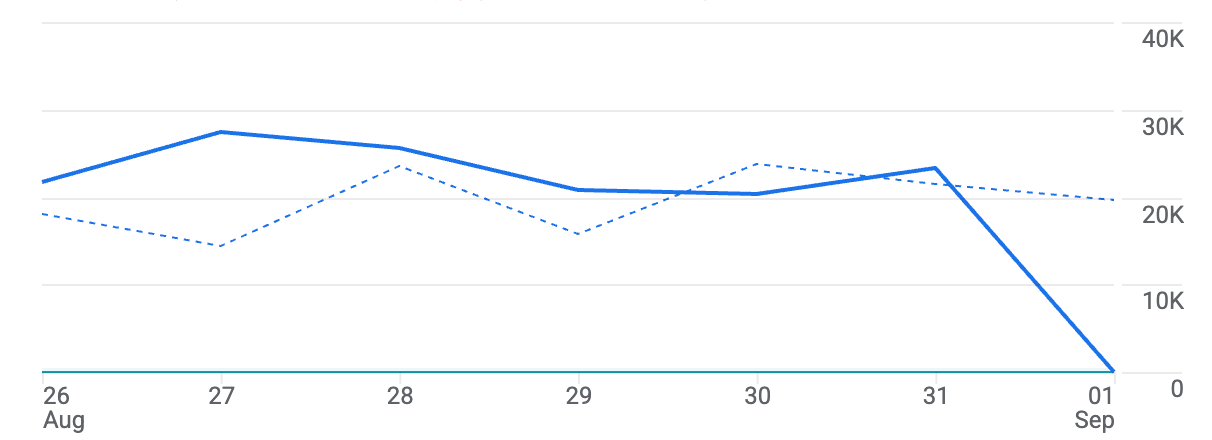
A widespread GA4 bug left Sept. 1, 2026 data missing across accounts. What to check and what not to do while Google Analytics data is missing.
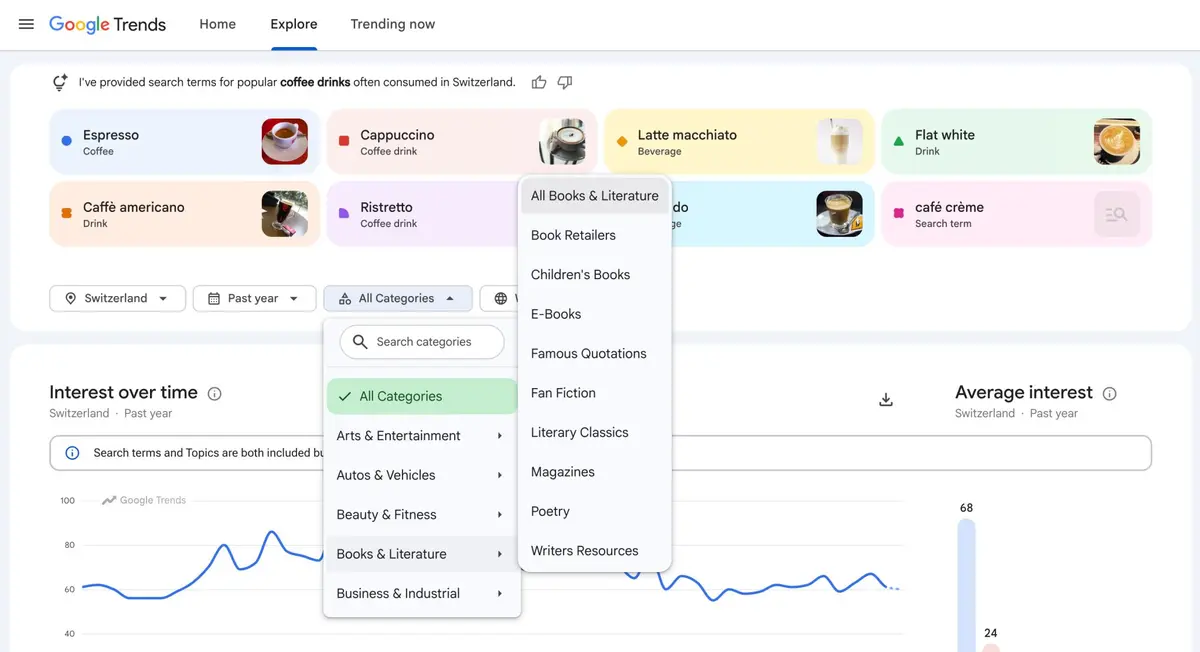
Google Trends can now filter the Explore page by category with no query entered. How to use it for topic discovery and, more usefully, for cutting noise.