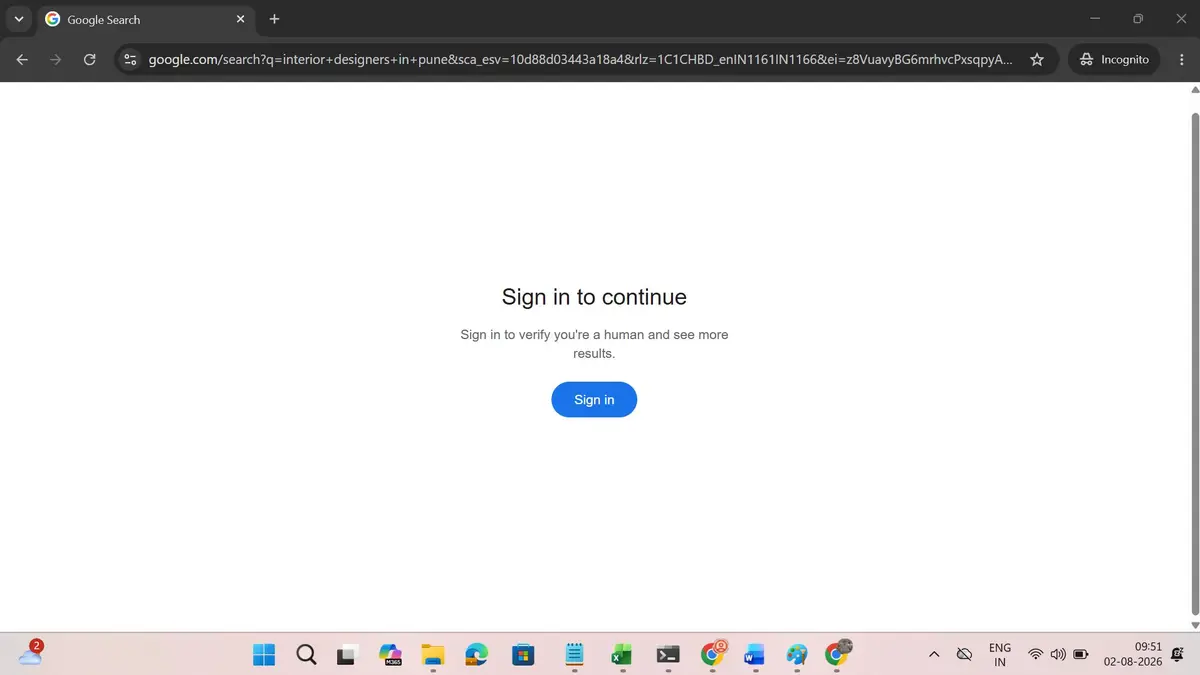
Google appears to be running a limited test asking searchers to sign in to their Google account to "verify you're a human and see more results." Normally the same situation would produce a captcha — here Google asks for an actual account login, which would change a basic condition of search accessibility.
What it looks like
Per a screenshot shared on X, Google displays "Sign in to continue" with the message: "Sign in to verify you're a human and see more results." It appeared after the searcher ran a query and paged past the first few pages of results. Most people never click past page one or two, but that position would normally serve a captcha rather than a login prompt.
Why it matters
It is a new way of verifying human activity. If rolled out widely, it could cause problems for many SEO tracking tools and for tools like SerpAPI — which Google sued over scraping its search results, and lost in court.
This looks like a limited test for now, and it is unclear whether Google will release it more broadly.
What to watch
Rank tracking continuity. If login requirements expand, automated collection could produce gaps or distortions in ranking data. Agencies should confirm how the data sources behind their reports actually collect results.
Logged-in versus logged-out results. If more results become available only to signed-in users, personalization signals carry more weight, and the gap between measured rankings and what real users see widens.
Data dependency. If Google moves toward account-authenticated search access, third-party search data becomes more tightly bound to Google's policy decisions. Increasing the share of first-party data — your own traffic and Search Console — is the hedge.
For how the layer machines read is shifting, see AI Agents Read Your Accessibility Tree; for how results get assembled now, see Query Fan-Out Is Rewriting Google SEO.