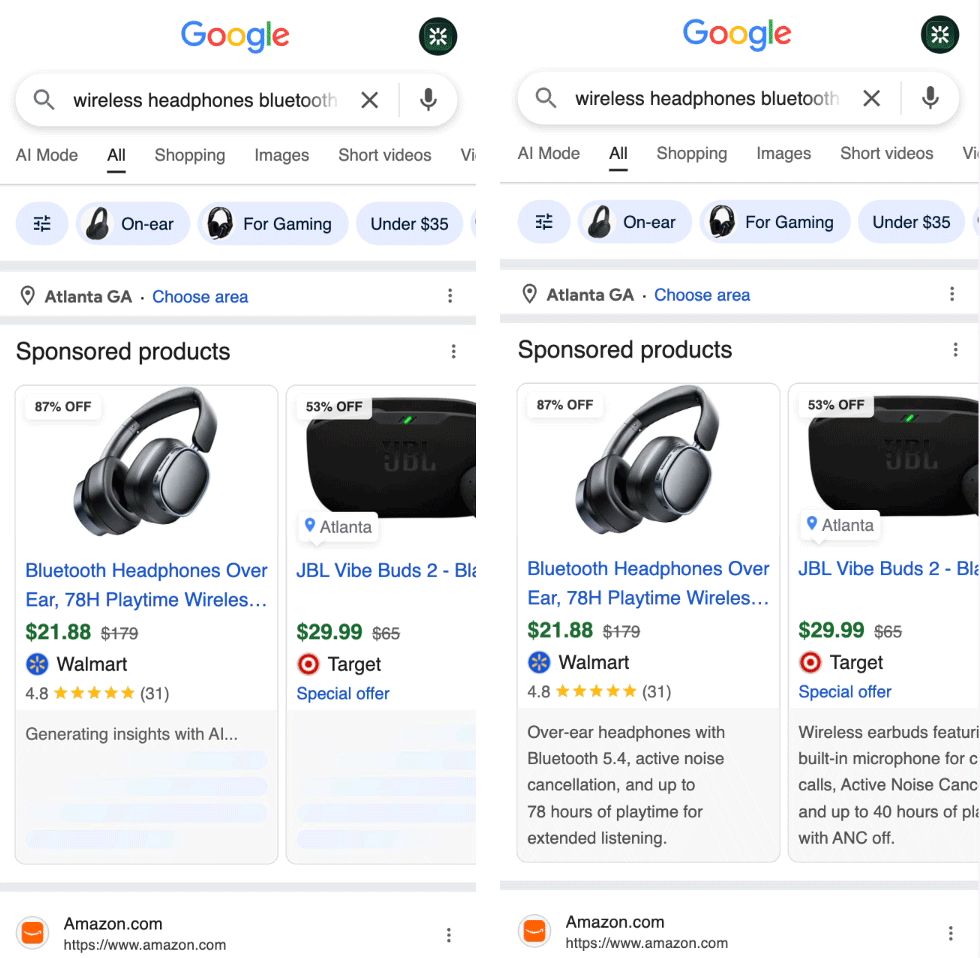
Google appears to be expanding its test of AI-generated descriptions to Shopping and Product ads, potentially changing how sponsored listings are presented on Search.
The experiment follows a similar test on standard Search ads earlier this month and could influence how shoppers interact with paid listings.
What's happening
PPC expert Brodie Clark has spotted AI-generated descriptions appearing alongside Shopping and Product ads, suggesting Google is extending an existing Search ads experiment to additional ad formats.
Earlier in July, Google confirmed it was testing AI-generated summaries on sponsored Search results:
"This is a small experiment to see if adding AI-generated context to Search ads helps people make more informed decisions."
The latest sightings indicate the experiment is no longer limited to traditional text ads and now includes Shopping placements. Google has not announced whether the feature will expand beyond the current test.
Why we care
Shopping advertisers invest heavily in optimising product titles, descriptions and images to influence click-through rates and conversions.
AI-generated descriptions introduce another layer that advertisers don't directly control, raising questions about:
- Whether Google's summaries accurately represent products
- How they could affect user engagement
Bottom line
Google is testing AI-generated descriptions in Shopping ads, extending an earlier experiment on Search ads.
While the feature aims to help shoppers make more informed decisions, advertisers will be watching closely to see how Google's AI-generated messaging affects click-through rates and campaign performance.
First spotted by Brodie Clark and posted on his SERP Alert page.
Practical takeaways
"A layer you don't control" is the point. Advertisers invest in titles, descriptions and images — and text they didn't write now sits on top of it. The object of optimisation itself changes.
Feed accuracy becomes risk management. The AI summary is most likely generated from data you supplied, so an inaccurate feed gets amplified by the summary.
Check exposure before blaming CTR shifts on the experiment. It remains a small test, so presence varies by account — but unexplained CTR movement makes it a candidate cause.
Track it alongside the Search ads experiment. The same test began on text ads first; separating the two formats reveals any difference in effect.
Group it with AI labelling. Expanding AI content disclosure across ad platforms is covered in Google Rolls Out AI Content Labels — the distinction between advertiser-authored and Google-authored content is becoming a regulatory question.
Reclassify the feed as ad creative. If auto-generated copy and AI summaries both derive from it, feed management is creative work — see AI Shopping Starts With Your Product Feed.
Plan alongside the parallel automation in AI Max Spotted in Standard Shopping Campaigns.