Google has added new AI-powered creation tools to its AI Pro subscription package: Google Pics, which provides advanced image generation, and agentic video understanding, which offers in-depth analysis of video content.
Pics — Built on Nano Banana
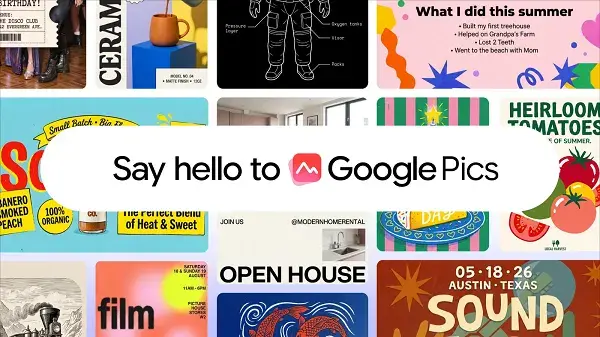
Google Pics is the latest advance in Google's image generation tools. Powered by its Nano Banana image generation model, Pics provides next-level generation capacity including advanced editing and customization tools.
As shown in the demo video, Pics offers a range of advanced options including language translation and the capacity to add and edit elements within a generated image. That could make creating promotional material for a range of purposes much easier — and enable a higher level of customization to help avoid the sometimes tacky AI-generated look.
Agentic Video Understanding — What Was Shown, and by Whom
Google's agentic video understanding tool processes video inputs and provides information on what was presented and who presented it. It can also offer specific details on elements shown within the clip.
The advanced video processing tool makes it easier to extract insights and information from video clips, with improved response accuracy and speed as well as lower token usage. That opens up a range of use cases for building contextual understanding and learning from video presentations.
Google said the agentic video understanding model is rolling out to all users in the Gemini app across Flash and Flash-Lite models soon.
It's Coming to 'Ask YouTube' Too
Pics will also soon power YouTube's "Ask YouTube" feature on the video watch page, "leveraging Gemini to deliver higher-quality answers grounded in the visuals," the company said.
The Marketer's Read
The two tools work in opposite directions: one makes assets, one reads them.
On production, the editing and customization matter most. The practical blocker with AI imagery has been that you get a decent image but can't bend it to brand specifications. Being able to edit elements inside a generated image narrows that gap.
On analysis, the tool can be pointed at competitor videos and creator content at volume. Extracting what was shown and who said it removes work people currently do by watching and summarizing manually.
What doesn't change is that generated assets alone aren't enough. The principle that video of real experts and real product becomes the primary source in AI search holds regardless of tooling. And since images have a new job in AI search, it's worth checking how the images you generate actually read to a machine.