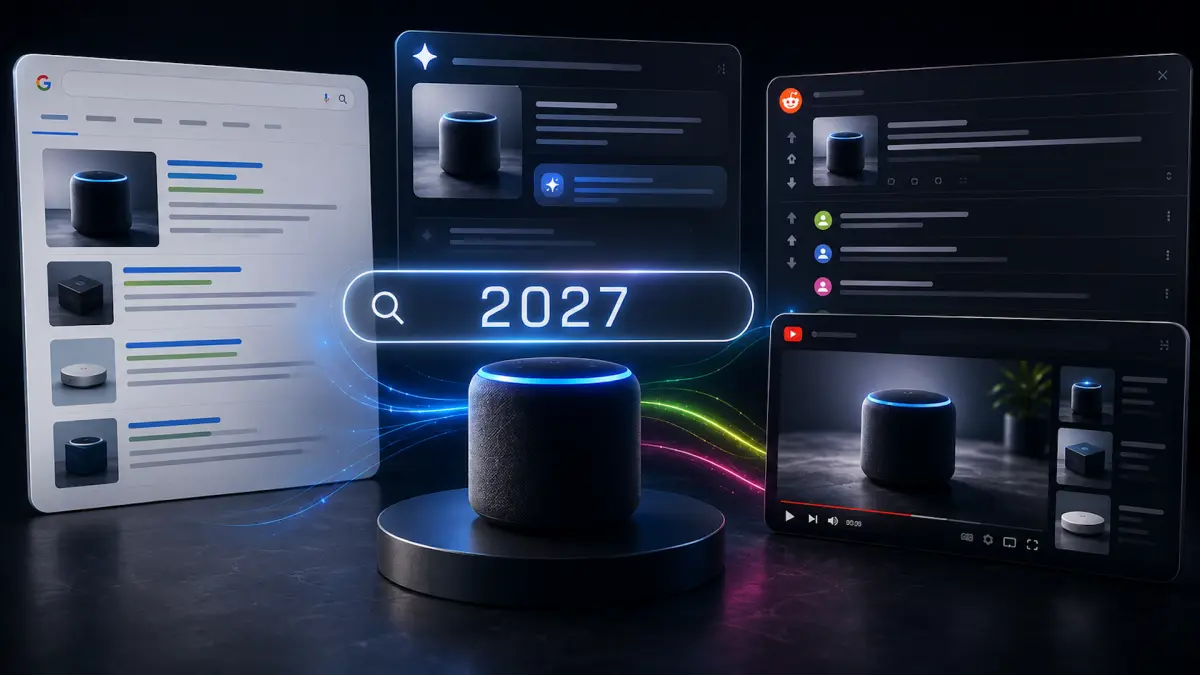
SEO is becoming less about optimizing for a channel and more about understanding the user, wherever they look. That changes the starting point for SEO strategy in 2027.
The Surface Already Widened
AI Overviews are no longer the experiment we were all watching. They launched in the U.S. in May 2024, got messy in public, and Google tightened the triggers. Google has since added AI Mode, a conversational layer on Search itself, with Gemini sitting inside that layer rather than beside it.
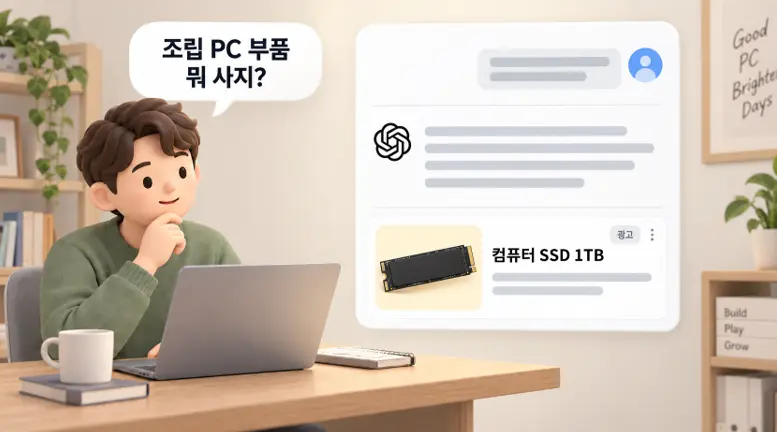
Off Google, people ask ChatGPT, Grok, Claude and Perplexity the questions they used to type into a search box. You can have clean rankings, a tidy content calendar and a keyword map that still "works" in Ahrefs or Semrush, and still lose the moment. The synthesized answer that never sends the click, or the random Reddit thread the model trusts more than your blog, beats you on the referral metric.
Where the Numbers Stand
An August analysis from Shopify found AI-referred sessions to merchant storefronts grew 197% year over year in Q2, and those shoppers converted at roughly twice the rate of organic visitors in research-heavy categories. Organic search still sent more traffic than all tracked AI platforms combined, while growing 12% on a much larger base.
Shopify CTO Mikhail Parakhin said AI-referred sessions roughly tripled while organic search continued growing on a larger base. AI is a faster-growing, higher-intent slice; Google organic remains the lead engine. In taste-led categories, AI brought about 1.3x more first-time customers. Shopify didn't disclose the number of merchants in the dataset, so treat the findings as directional.
Answer Engine Optimization Isn't a Separate Project
Treat it as the same user understanding job, deployed on more surfaces: Google, LLMs, and the human platforms those models digest — Reddit, YouTube, LinkedIn.
Rather than chase every undefined ranking factor inside every model, start with three questions:
- What does the user need to know?
- What can only we say (data, a method, a point of view)?
- Where do people, and the models, go to believe it?
LLM Answers and Social Search Do Opposite Jobs
LLMs compress many sources into one answer. Social and community search do the reverse — they surface a specific human, with a point of view, in a thread or a video.
Users take both. They'll take the synthesized answer when they want orientation, and a Reddit thread, a TikTok or a YouTube walkthrough when they want to know what it feels like, what breaks, or who actually ships.
That's why brand SEO and community presence aren't a comms side quest. They're how you stay in the answer when the click never happens. If the model can assemble a fine summary from 10 generic posts, the thing it still can't fake is a named person who used the product and will say what broke.
Sort the Keyword List Into Three Buckets
Take the Semrush or Ahrefs list you built for the quarter and sort it:
- Still a click: comparison, pricing, implementation
- Answer-only: definitions, "what is"
- Community-owned: Reddit "has anyone used X"
Stop writing thin articles for the middle bucket. Show up as a person in the last one. Spend production time on the first.
When you go deep on a topic instead of spraying thin pages at head terms, the same cluster tends to get cited across related prompts. That's the version of topic authority that still pays; a 2,000-word "what is" that AI Overviews resolve is not. It's the case for building a content hub.
What the Past Year Clarified
AI search gained traction beyond Google. ChatGPT is still the default consumer habit. Gemini grew as part of the Google ecosystem and Grok is growing as its models advance, while Perplexity stayed a research tool rather than the platform that reordered the market.
Community engagement drives growth. As AI content got better and more common, authentic, specific human voices became more valuable. The mentions reused in answers are the ones where someone with a name answered a real question. Unlinked mentions in trusted communities are an SEO-adjacent job, not a brand-marketing leftover — and imperfect but real brand discourse beats astroturfing a soulless Quora thread with your marketing copy.
Video remains a way to stand out. Search systems increasingly treat video and transcripts as source material. YouTube shows up in classic results and, more often, as a cited source in AI Overviews. The brands winning on video record real experts, real product and real walkthroughs, then give those assets titles, transcripts and chapters a model can retrieve. A generated clip with a stock voiceover doesn't make you the primary source.
The Job Is Still the User
More surfaces, more algorithms, more ways to get the answer without a click — but user understanding is still the driving force. It's also why shortcuts keep failing, the pattern Lily Ray traced from Penguin to GEO.