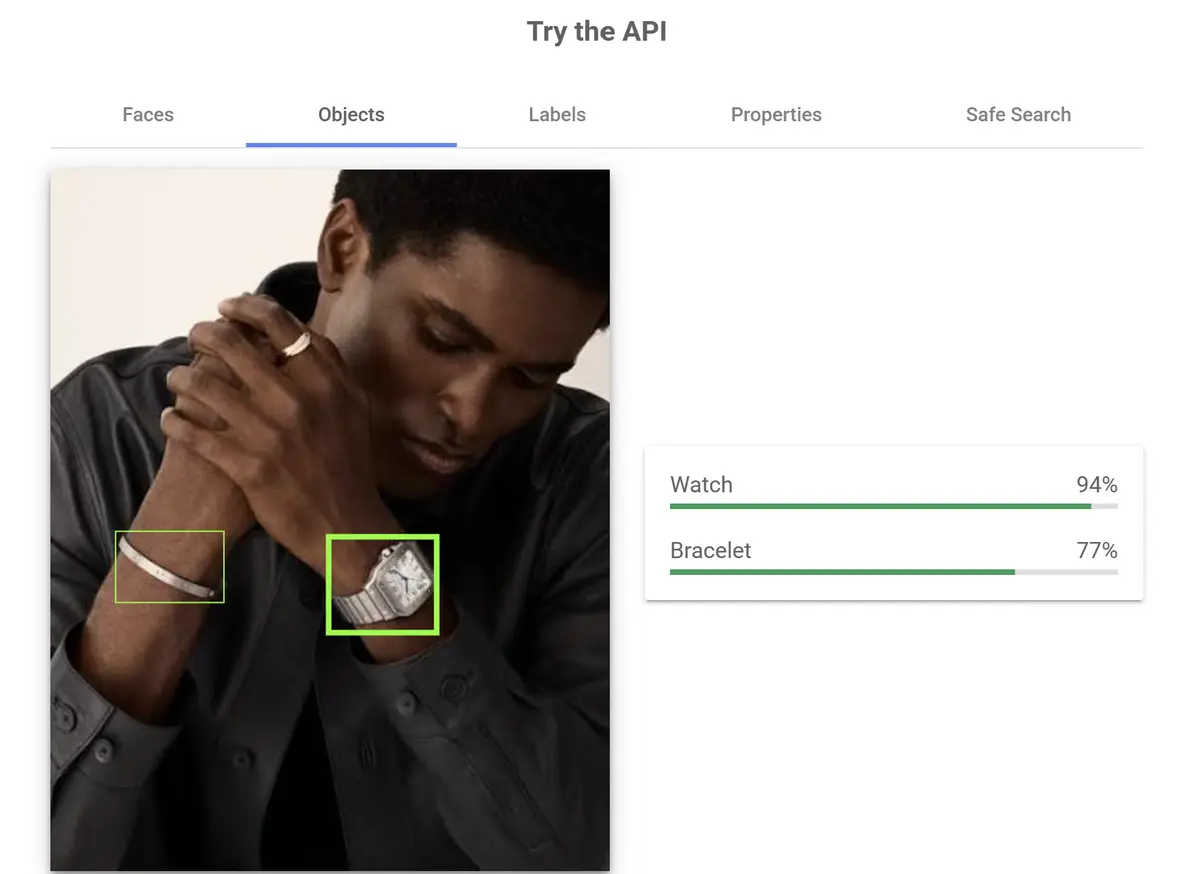
Images have sold products sight-unseen since the Sears catalog promised 1897 shoppers they could "order intelligently… as well as if you were in our store." What's changed is the audience. As Myriam Jessier argues in Search Engine Land, an image now has to communicate clearly to a machine as well as a person: an AI answer engine breaks your photo into mathematical tokens and interprets what's in the frame, what it means, and whether the surrounding page supports that meaning. That changes the job description of image SEO.
The search bar grew a camera
The scale first: Google Lens handles roughly 20 billion visual searches a month. On Pinterest, visual search is 30% of all searches and converts 62% better than text; Pinterest Lens alone processes 1.5 billion monthly searches. Alibaba's camera-first shopping in China has exceeded 10 million visual searches per day for years. Camera-to-cart is built, monetized, and mainstream.
The sharper signal is a Google patent filed in 2023 and published in April 2026, describing an answer flow where the cited source is chosen by image match first, with surrounding text pulled in afterward to build the answer. Andy Chadwick, who surfaced it, is careful: it's a patent application, not confirmed production behavior. But directionally, it's the clearest public signal yet that the picture — not the paragraph — can be what pulls your page into an answer.
One image, two audits
Auditing splits into two questions. First, did the AI correctly detect what's factually in the image? A stainless steel coffee maker with a thermal carafe: is it in the shot, and does the page copy name it? This is the denotation layer, and most brands fail it — copy written for a mood, photo picked for a different vibe. Second, what does the image imply? "A professional office setup for a team" isn't an object; it's a meaning the composition carries or fails to carry once the machine strips the image to its semantic residue. What you intended and what the model detects can diverge — the bracelet and watch get recognized, the ring doesn't.
The multimodal image GEO scorecard
The piece proposes five metrics. Ownership rate: the share of hero images that are genuinely yours rather than stock half your category also uses — measurable with Cloud Vision's Web Detection (full matches, partial matches, visually similar images). Context match: whether what sits next to your product in frame tells the brand story you approved, via object localization. Sentiment alignment: whether the emotion a vision model reads from lifestyle photography matches your creative brief, via face detection with confidence gates. Legibility rate: whether OCR correctly reads packaging copy and product attributes — failure thresholds include character heights under ~30px, low contrast, stylized fonts, and glare on reflective packaging. And fan-out coverage: the share of what your image shows or implies that your on-page text never confirms — one buyer question fans out into a dozen sub-questions.
Where to start
The priorities are clear. Shoot your own photos — replacing stock heroes with photography only you have fixes ownership and dedup survival in one move. Put the answer next to the picture — the text adjacent to a retrieved image is what gets pulled into the answer, so caption and label the fact the buyer needs directly under the image, not three scrolls away. And cover the fan-out, not the keyword: several plain images answering several sub-questions on one page beat one beautiful image answering none.
This is ultimately a sub-task of AI visibility strategy — read it with Being Cited by AI and Being Recommended Are Different Problems — the Two Jobs of AI Visibility, and for the same principle applied to text surfaces, Instagram Published Its Caption Playbook — Captions Are Search Text Now. The old job was an image a human would stop and look at. The new job is an image a machine can read, tell apart from everyone else's, and carry into an answer.