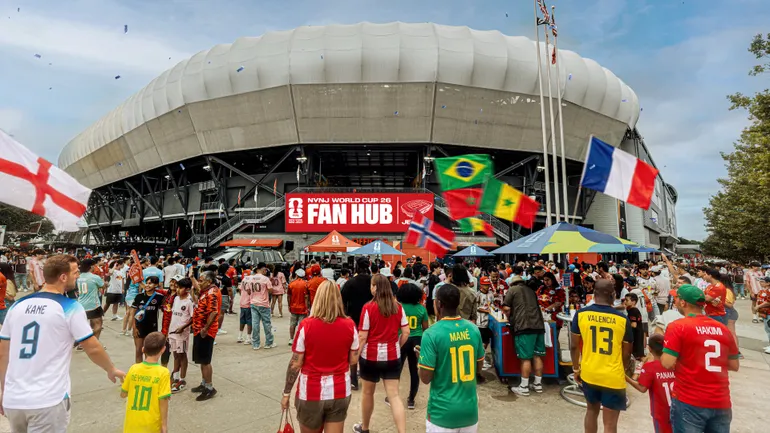
With 104 games across three host countries, the 2026 World Cup was the largest edition ever and possibly the biggest sporting event of all time. Advertisers spent a combined $1.42 billion on in-game media across the tournament, per MediaRadar. Earnings calls are now revealing what separated effective sports sponsorship from expensive noise.
Official status is not a strategy
"A lot of companies are trying to assess whether it's worthwhile investing in an official partnership, because it is a very crowded commercial space, and if you don't have a really strong plan, and your creative, in particular, is not connected to the brand, you can spend a lot of money without having a lot of return," said James May, co-lead of Kantar's Sports Marketing Practice.
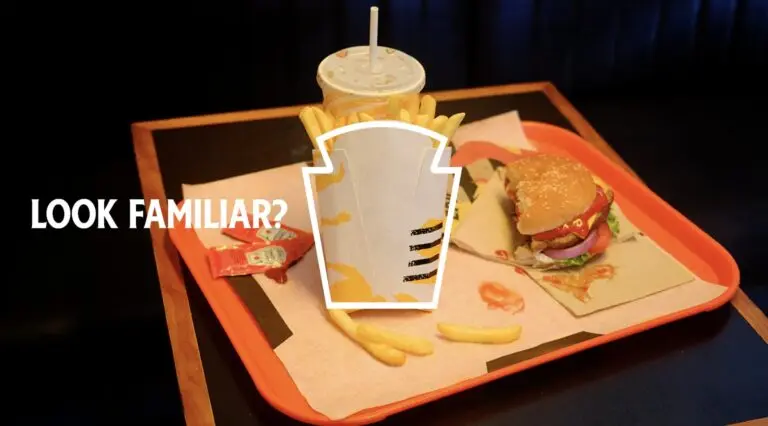
McDonald's is the cautionary case. The official restaurant sponsor and a FIFA partner since 1994 attributed roughly a third of its Q2 customer traffic underperformance to its FIFA campaign. "While the campaign provided a lift to the business and generated excellent system excitement, the campaign underperformed versus our expectations," CFO Ian Borden said.
Coca-Cola: brand principles applied at zip-code resolution
Coca-Cola started advertising in January and kept iterating through the tournament. The campaign spanned over 180 markets and more than 20 million retail outlets, executing what North America CMO Shakir Moin has described as "de-averaging at scale" — passion-point data applied at the zip code level.
It worked: the activation contributed to trademark Coca-Cola volume growth of 5% in Q2 2026, the brand's strongest volume growth in 17 years excluding COVID recovery. The execution, which included Powerade, drove average incidence above 80% at tournament venues — about one drink per attendee, a World Cup record for a company that has sponsored since 1978. The tournament also produced more than 25 million first-party data points and over 9 billion views across digital and social.
Per Kantar, brand metrics began moving a month before kickoff, with buzz and social awareness more than doubling. "Whilst TV was such an anchor for them, among the Gen Z group, it was really the social media activation that drove the buzz," May said. "We actually see that then feeding through into stronger brand consideration and higher net promoter score."
Adidas: spending to hold the heat
Adidas has supplied the official ball since 1970 and outfitted 14 qualifying teams in 2026 — the most of any manufacturer — including finalists Spain and Argentina. Currency-neutral revenues grew 14% in Q2 to record net sales of about €6.7 billion ($7.7 billion), with operating profit of €574 million despite spending €212 million more on marketing than a year earlier.
CEO Bjørn Gulden said that incremental investment will not continue in Q3 and Q4: "That doesn't have a payback in commerciality in the same period. For the brand heat going forward and also during the tournament, we had to invest in media."
He was candid about attribution limits, saying connecting awareness directly to conversion "doesn't really work in the real business." "How much of that is marketing and how much of that is organic and how much is that because we have the distribution is very, very difficult to measure. But everything that we do measure — and digital, you can measure much more [accurately] — everything that is upper funnel has actually helped us all the way down to the lower funnel." Per Meltwater, Adidas led sponsor mention share of voice and ranked second on engagement.
Unilever: 50,000 creators
Since announcing plans to shift half its digital media spend to social and work with 20 times as many influencers, Unilever has led the industry's social-first turn. As official personal care sponsor, it treated the tournament not as a corporate sponsorship but as an activation of 35 brands across more than 120 markets, uniting creator content, social production, retail distribution and local conversion — involving more than 50,000 creators with a combined audience above 600 million.
"The FIFA World Cup has been a pivotal moment for Unilever," CEO Fernando Fernandez said. "We believe that this is a proof of what Unilever is creating in terms of a new social-first model of reach and engagement for our brands at a scale that I personally believe very few companies can match." Personal care underlying sales growth reached 5.9% in Q2.
The most visible execution was deodorant brand Rexona, which branded not only substitution boards but the armpits of fourth officials, and stood up a New York Sweat Club activation connecting creators, athletes and fans.
AB InBev: converting long-term equity
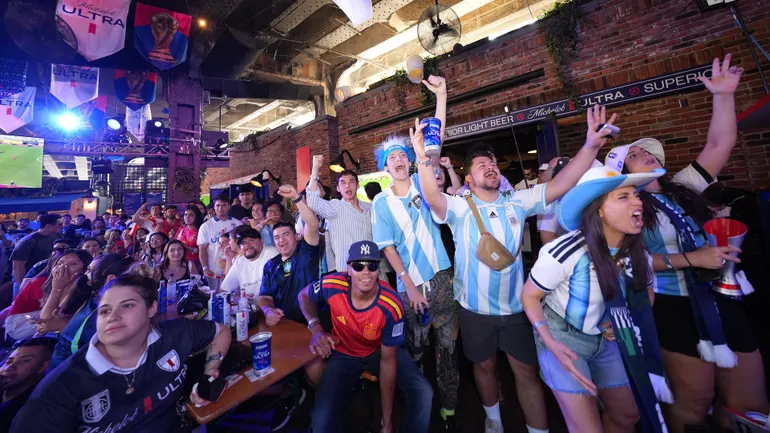
After Qatar 2022, where officials blocked beer sales at the last minute, AB InBev finally executed its plan — rolling Michelob Ultra out across North America. Revenue for the low-cal beer grew 21% outside its home market, with 40% of volume growth coming from outside the U.S.
The company invested $7.9 billion in sales and marketing over the last 12 months, up 9% organically in the first half, and expects the World Cup to deliver 20 to 30 basis points of full-year volume benefit. Per Meltwater it led engagement share of voice at about 31%, helped by FIFA amplifying assets like the Michelob Ultra Player of the Match and Budweiser Celebration of the Match. Pitchside Club activations in New York and Santa Monica drew more than 100,000 RSVPs.
Home Depot: using Beckham without losing the brand
David Beckham, retired since 2013, appeared in nearly a dozen campaigns — creating the risk that the ad is remembered for the celebrity rather than the brand. "Some brands did a little bit too much in the way of focusing on the celebrity," said Mike Griffin, VP in Kantar's insights division. "The celeb ads tend to be the most engaging and deliver the most emotions, so when you're able to connect the brand effectively to that… you get best-in-class performance."
First-time sponsor Home Depot won that trade-off with a March-launched campaign built around a TV spot following Beckham's Home Depot-assisted DIY efforts, plus content and Beckham's Backyard experiences. Per iSpot, it made Home Depot the most-seen brand by TV ad impression share of voice, and Kantar credited it with Gen Z engagement. "When you think about Gen Z, they're not buying big houses with the backyards that have the built-in TVs," May said. "Even though David Beckham could probably buy 500 houses, [the ad] built on the idea of him doing something very do-it-yourself."
Three patterns across the winners
Start early — Coca-Cola in January, Home Depot in March. Campaigns that appear only during the tournament disappear into a crowded field.
Own a repeatable asset, not just impressions: Player of the Match, the fourth official's armpits, Beckham doing DIY.
And be honest about measurement. Even Adidas' CEO said direct attribution from upper-funnel investment to sales does not work; the workable approach was tracing measurable digital signals downward through the funnel.
For the streaming context around live sports, see Streaming Services Turn to Live Sports and Concerts; for advertising built inside the broadcast itself, see Lilly Puts Candace Parker in WNBA on Prime.