Why an on-screen product pushed people off-screen
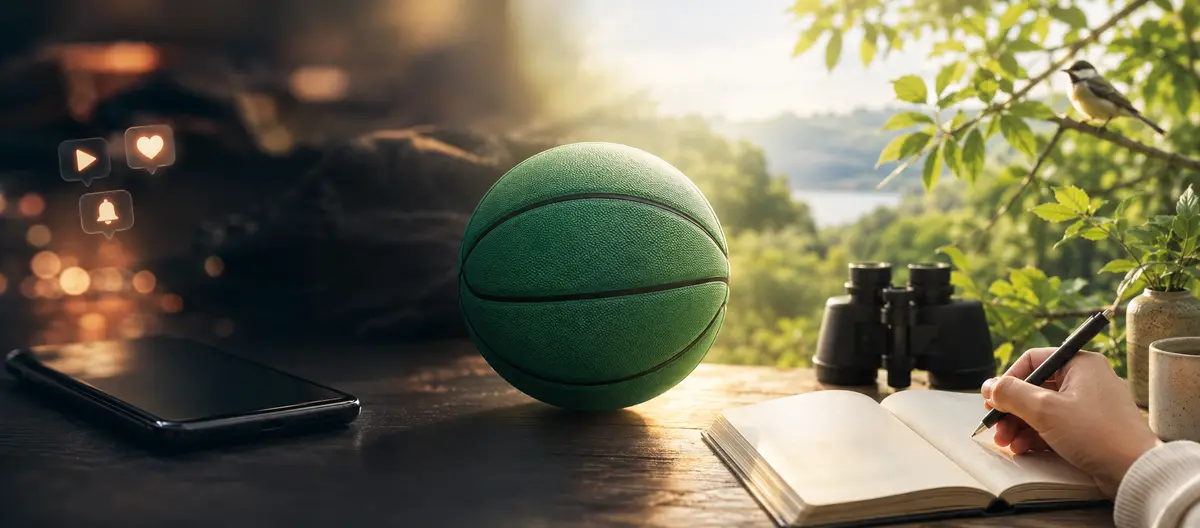
ChatGPT released a basketball. The green ball, printed with "Chat GPT," came with the line that unexpected good ideas can arrive while you're running the court. It was merchandise for the "Pause, Play, Prompt" campaign — stop the screen, play in the physical world, come back and type a prompt. It cost $70 and sold out shortly after launch.
Behind a screen-native service recommending time away from screens sits a consumer trend worth naming: dopamine rebalancing. In an environment saturated with stimulus, digital detox has stayed on hobby lists for years, and analog pastimes — reading, knitting, ceramics, handwriting — keep gaining ground. What started as a fad has merged with a broader health-oriented value set and become a lifestyle direction.
Stage 1: Blocking stimulus
The signature ritual is the "dark shower" — showering with the lights off. The practice is specific: about an hour before bed, turn off bright bathroom lighting in favor of a candle or a low, warm-toned lamp; use comfortably warm water rather than cold; and keep the phone away entirely, focusing on the sound of water and physical sensation. It functions as sensory meditation.
A related format is the boredom challenge. It started in 2024 as "do nothing on the plane" — no films, no media, just looking out the window — and expanded into sitting still anywhere with a timer running, no phone, no music, no conversation. The point is to tolerate boredom rather than eliminate it. A common participant reaction: the urge to reach for the phone arrives within five seconds.
Stage 2: Redesigning stimulus
Internationally this goes by "slow tech" — rejecting technology built for faster responses, more notifications and longer sessions, in favor of tools that let users control the pace and purpose of their use.
Minimal phones
Phones with features deliberately removed are the clearest example. Light Phone is now in its third generation with cumulative sales past 100,000 units, and recently launched a carrier partnership that refunds part of the bill for reduced data usage — a signal of how much demand exists for reclaiming attention.
Feed cleaning
Costing nothing, this one spreads on social media itself. Users audit their following list and unfollow accounts they no longer want to spend time on, then deliberately hit "skip" or "not interested" on recommended posts and ads to reshape the algorithm. Next they intentionally search for content they do want, watching it to completion and saving it to plant better signals. Rather than resisting stimulating content by willpower, it changes the environment producing it.
Stage 3: Pursuing healthier rewards
Dopamine does not literally come in varieties; the idea is designing a reward system that delivers enjoyment and achievement in healthier form. Birdwatching is the standout case. A "birding picnic" hosted by camera brand Nikon drew around 400 applicants for a ratio above 17 to 1, and 70% of applicants were in their 20s and 30s. What makes it work is that finding and logging birds behaves like a collection game, not just nature appreciation.
The management tool getting traction is the "dopamine menu": mood-shifting activities organized like a restaurant menu. Appetizers are a five-minute walk or one favorite song; mains are exercise, seeing friends or craft work — healthy activities that take real time; sides are things layered into daily life like a scented candle or sunlight; desserts are social media and shopping, enjoyable but easy to overconsume. It mirrors the shift in dieting from "never eat sugar" to "keep a balanced diet."
What marketers should take from it
The center of gravity has moved from passive rest to active recovery. Just as post-workout recovery favors stretching or an easy walk over lying still, the brain is understood to need varied activity to recover rather than mere absence of input.
Two implications for brands. First, campaigns that design a substitute behavior outperform campaigns that prohibit one — see CeraVe Takes On Tanmaxxing for a brand changing the environment instead of demanding willpower. Second, offline experience becomes a trust asset for online-native brands; for one version of moving online-validated products into physical space, see Kurly Opens Its First Permanent Store in Gangnam.
FAQ