A Gen Z sunscreen campaign that renovates instead of warning
CeraVe, the L'Oréal brand, launched a social content series supporting its Invisible Mineral Sunscreen SPF 50. The premise sits in the data: Google searches for "tanning" are at their highest point in five years, and more than a fifth of Gen Z adults prioritize getting a tan over protecting their skin, per American Academy of Dermatology figures cited by the brand.
"As we watched trends like 'tanmaxxing' and 'UV index hacking' surface, we saw an opportunity to change the conversation around sun care," said Esther Garcia, U.S. brand general manager at CeraVe. "We didn't want to add another warning to the conversation. We wanted to build something tangible with Gen Z."
The format: home improvement tropes
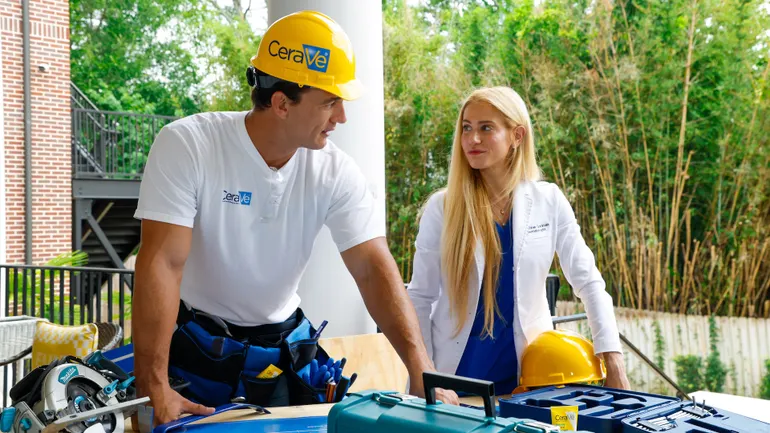
The content pairs television personality Tyler Cameron with board-certified dermatologist Dr. Chloe Goldman and borrows the language of renovation shows. In one video the pair throw a "tan-trum," destroying a tanning bed with sledgehammers and power tools; in others they plan and execute a renovation while applying sunscreen.
The series ends with a rebuilt outdoor space for the Alpha Eta chapter of Delta Delta Delta at Florida State University, chosen because Florida has some of the highest year-round UV exposure in the country. The finished space adds greenery and a pergola for shade, sunscreen stations, sorority letters made of UV-reactive material, UV meters, fabric awnings and an outdoor lounge.
An extension of "medutainment"
CeraVe has called its blend of medical education and entertainment "edutainment" or "medutainment," previously using NBA-themed social campaigns for moisturizers and anti-dandruff products. This time the vehicle is an episodic short-form series. "Renovation goes in phases, and sun habits also require a renovation," said Jasteena Gill, CeraVe U.S. senior vice president and head of marketing.
Why this campaign is harder than the last ones
Earlier CeraVe work promoted products in categories consumers had already embraced. Sunscreen asks for behavior that runs against a cultural trend. "It's an important part of our mission as the number-one dermatologist-recommended skincare brand to continue to educate the public, even if that means that it will be a little bit more of an uphill battle on getting a new habit," Gill said.
The product spec answers the same problem. Invisible Mineral SPF 50 was designed around blendability and texture, reducing the friction that keeps people from forming the habit at all.
What marketers should take from it
Prohibition messaging rarely beats a trend. CeraVe's move was not "stop tanning" but "let's rebuild this space." Changing the environment rather than demanding willpower leaves behind artifacts — shade, sunscreen stations, UV meters — that double as content and as usage cues.
Choosing a sorority house as the unit is deliberate too. Shift a community rather than an individual and peer pressure starts pushing the other way. Staging a campaign inside a community instead of renting one creator echoes the branded media approach in Bazooka Turns MomTok Rivalry Into a Campaign.
For context, L'Oréal posted 6.5% adjusted like-for-like growth in the first half of 2026, with its Dermatological Beauty division delivering double-digit gains led by CeraVe; executives credited innovation including the sunscreen. For a different route to category expansion, see Jif Reworks Its Logo to Escape the PB&J Box.
FAQ