“We’ve had some work done”
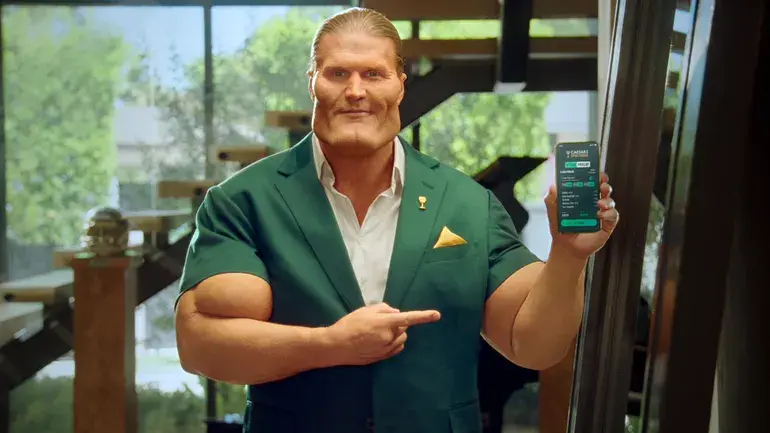
Caesars Sportsbook, the online betting arm of Caesars Entertainment, launched “We’ve Had Some Work Done,” a campaign showcasing changes to its mobile app and user experience. Former Green Bay Packers star Clay Matthews appears with an over-the-top makeover — exaggerated jawline, overinflated muscles, even calf implants. The 15- and 30-second spots roll out nationally across TV, digital and social through football season. The look nods to “looksmaxxing,” an internet trend about maximizing physical appearance. It’s a parody ad campaign that makes a potentially dull product-update message memorable.
How the campaign works
Timing
The launch coincided with the NFL season kickoff and Matthews’ September 10 debut as a Netflix sportscaster. The ads pair Matthews’ makeover with the app’s. The app, launched in 2021, competes in a crowded market dominated by DraftKings and FanDuel.
Message
“The Caesars Sportsbook app today is vastly different from the one we launched in 2021. We knew it wasn’t enough to simply tell bettors we’ve improved,” said Samira Zebian, SVP of digital brand marketing and strategy. “We needed an unforgettable campaign that made the evolution impossible to miss.” The spots highlight improved design, new rewards and features like Flex Parlays — alongside Matthews’ ridiculous jawline.
Practical effects, not AI
The campaign was created with minority-owned agency Fellow Kids, produced by Hungry Man and directed by Dave Laden. Prosthetics and makeup came from special effects studio Legacy Effects — not artificial intelligence or digital filters.
A teaser to earn media first
TMZ teased Matthews’ new look before launch, and it went viral as people speculated online — an earned media tactic similar to CeraVe’s Michael Cera campaign and other recent Super Bowl efforts.
Borrowing a controversial trend
Looksmaxxing spread in so-called manosphere circles and was popularized by controversial influencers, but it has also become a target of parody across pop culture. Challenger brand Purely Elizabeth, for example, parodied the “maxxing” of protein. Brands are using the meme to mock it, not endorse it.
Takeaways for marketers
- Show product changes through metaphor: a “surgically enhanced” legend makes an app overhaul tangible.
- Earn media before paid media: pre-launch speculation builds attention without ad spend.
- Stand on the satire side of sensitive trends: when borrowing a controversial meme, make sure it reads as parody, not endorsement.
For how betting advertisers are courted by platforms, see Snapchat’s pitch to sportsbook advertisers, and for another NFL-season campaign, Jersey Mike’s Danny DeVito spot.