Tech/AI모비인사이드
OpenAI DevDay 2026 Recap — ChatGPT Becomes a Shared Workspace for People and Agents
OpenAI DevDay 2026 introduced the always-on agent Dots, GPT-6.1 Sol and ChatGPT Spaces. A recap of the shift from model races to work platforms.
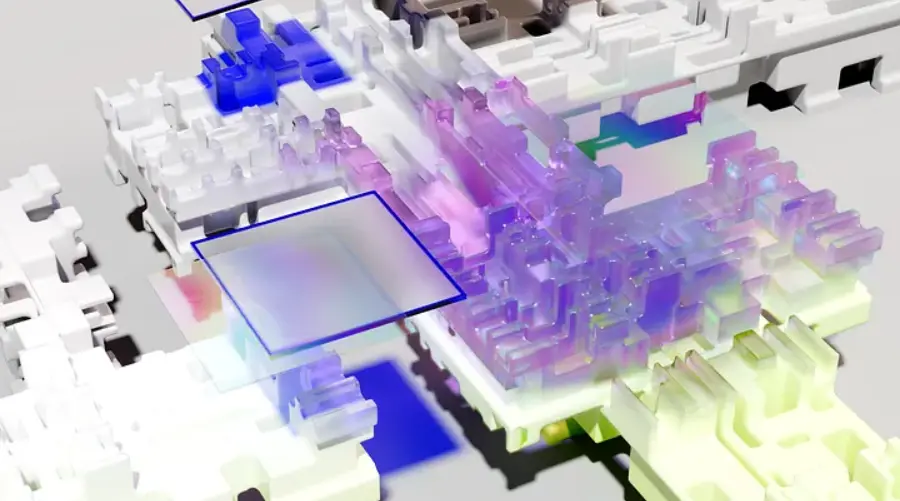
As models arrive that reason and create at something close to expert level, the definition of a designer's job moves. Craft with tools stops being the differentiator, and the work shifts toward putting AI at the center of the process and designing that system itself. Call it AX design.
AX design still serves humans. What changes is the designer's position: less the person drawing the output, more the person who architects the AI design system, configures it, and feeds it data. The industrial revolution produced industrial design, print produced graphic design, digital transformation produced UX design — the AI transition opens the next chapter.
The starting point is not a flashy AI tool. It is turning the organization's own knowledge into an asset. However capable a model is, without your brand philosophy, design principles, project history and customer understanding, it produces work anyone could have produced.
That knowledge is usually scattered: instinct that lives in a designer's head, craft passed on verbally, decision rationale buried in Slack threads and inboxes. LLM wiki design is the work of organizing that into a form an AI can read and act on. It is not documentation for people; it is a knowledge base for agents to reference. The quality of the wiki sets the ceiling on the quality of the output.
Obsidian was built as a personal knowledge tool — a "second brain" note app. Its value is being reassessed in the AI era because the way it stores knowledge happens to match the way agents read it.
Every note is stored as an ordinary file in a folder on your machine, not on a vendor's server. Data locked inside a service is hard to call fully yours once policies change or the service shuts down; local files are not bound to any platform. Agents benefit too: a tool like Claude Code can read and write those files directly with no integration layer, so the vault becomes the agent's workspace and the wiki tool and the AI's stage collapse into one. Sensitive design assets also stay under the organization's control rather than on an outside server.
Notes are stored as markdown — natural language with minimal structural markup. Models read text in tokens and pay in cost and latency for each one. Unlike Word or PDF files carrying formatting metadata, markdown is content only, so the same knowledge transfers in fewer tokens. That means faster responses, lower cost, and more context per request. Markdown is also the de facto format agents already use to exchange instruction files and outputs.
Notes link to other notes, and the result visualizes as a graph. The value is not the picture; it is that an agent can follow those links. Starting from a brand principles document, an agent can move to a project retrospective, then to customer research notes, reading only the context it needs instead of scanning everything. As knowledge accumulates, the links thicken, and denser links produce deeper answers.
The transition starts small: write the team's design principles, what this project taught you, and the feedback that keeps recurring as markdown notes, and link them to each other. That accumulated data is what drives the agents, and the agents are what drive the design system.
On staffing and capability placement when adopting AI tools, see They Tried Hiring 'AI Product Builders' and Failed. On the limits coming from the input rather than the tool, see AI Isn't Blunt — I Was Getting Blunt.
UX design shapes the user experience directly. AX design places AI at the center of the work and shifts the designer toward architecting, configuring and feeding the AI design system. The end goal — design for humans — stays the same.
It is written for agents to reference rather than for people to read. Content is stored as markdown files with links between documents so an agent can traverse context instead of scanning everything.
Models read text in tokens and pay in cost and latency for each. Markdown carries content without formatting overhead, transferring the same knowledge in fewer tokens, and it is already the standard exchange format between agents.
To apply what you just read to your own site, start with a free audit of where things are now.
A strategist replies within 24 hours on business days.
OpenAI DevDay 2026 introduced the always-on agent Dots, GPT-6.1 Sol and ChatGPT Spaces. A recap of the shift from model races to work platforms.

Zero-click GEO explained from TBWA's observations: 68% of U.S. Google searches end without a click, so extend existing SEO content into AI citations.
Claude Fable 5.1 improves coding and research while cutting cache costs, reducing false safety interventions, and introducing regulatory watermarking.