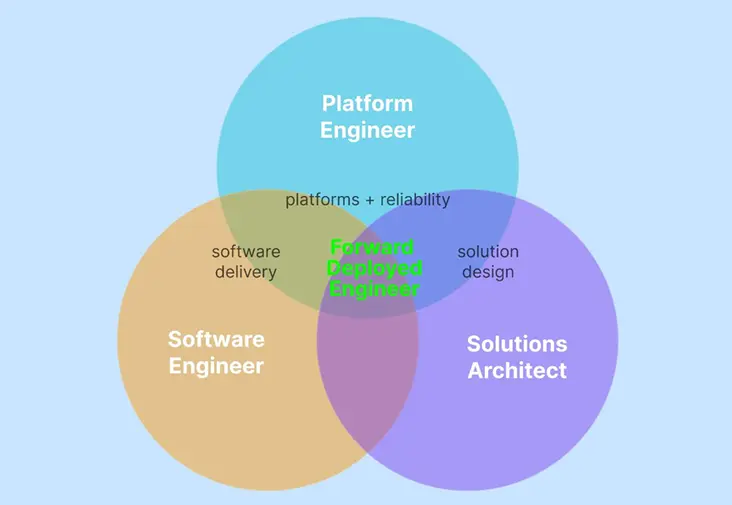
OpenAI, Anthropic, AWS, and Google. This year, the companies leading the AI industry poured enormous sums into something other than LLMs or compute infrastructure. The answer was people — specifically, a role called the forward deployed engineer (FDE).
From 'Adopting' AI to Making It Actually Work
An FDE is an engineer who embeds directly inside a client's real operating environment, connecting data, systems, and workflows so AI actually functions on the ground. It's not a deliver-and-walk-away model — it's defining problems together with a client's internal teams and co-designing the execution itself so AI turns into measurable business results.
The Big Four's Moves, and a '95% Failure' Problem
AWS has moved most concretely, committing roughly $1 billion on June 30 to launch a new "Frontier AI Engineering and Services" organization, embedding five-to-six-person engineering teams directly with clients. OpenAI, Anthropic, and Google have all invested in similar enterprise AI deployment capability around the same time.
The backdrop is a sober realization: companies are learning that simply adopting AI doesn't produce provable business results. Despite tens of billions of dollars invested in generative AI, 95% of companies still can't show measurable returns. Rolling out an LLM across an organization and actually turning it into business value through real workflows and processes are two entirely different problems.
Palantir Wrote the Original Playbook
Palantir is the company that pioneered the FDE model. From its 2003 founding, Palantir's primary clients were U.S. intelligence agencies, including the CIA, where constraints like workflow confidentiality and data non-portability made conventional software delivery impossible. The solution was to send engineers directly to the client.
Engineers embedded on-site brought back patterns from the field and distilled them into core platform capabilities — a process that grew into today's Foundry platform. The model solves, on the ground, the practical problems every organization hits when adopting AI: connecting scattered data, setting permissions, integrating legacy systems, and clearing security review.
What Marketers Should Take From This
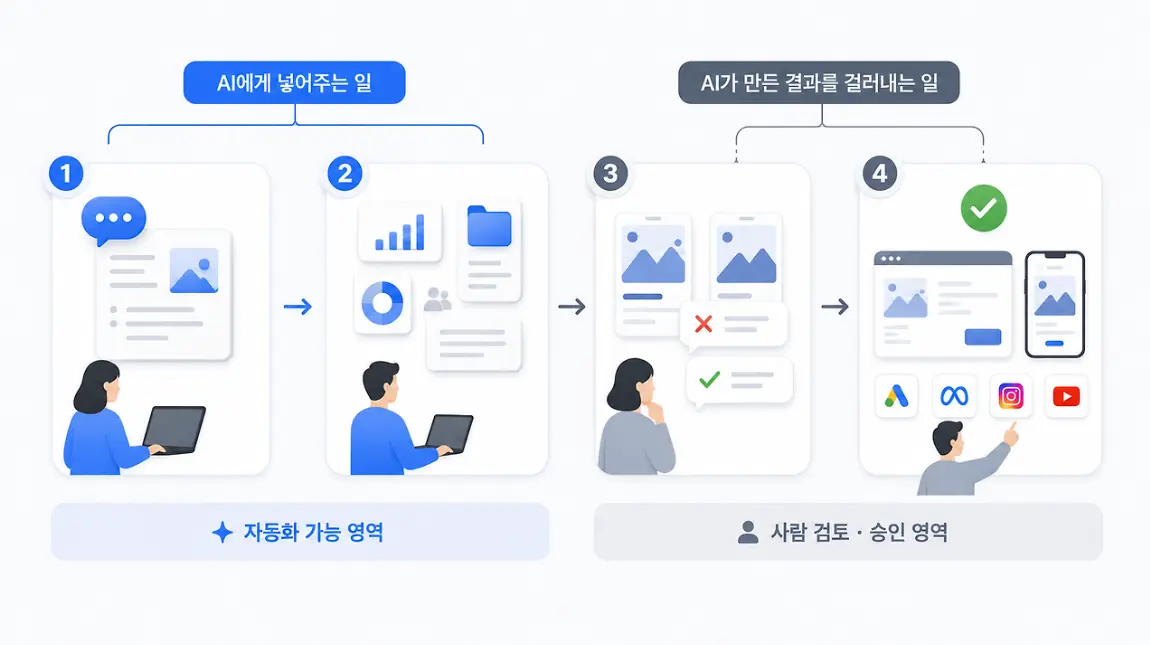
This shift applies directly to how marketing organizations approach AI adoption. Simply having the latest model is no longer a competitive advantage on its own. If campaign data, CRM, ad performance metrics, and content assets remain scattered and can't be connected due to permissions or security constraints, even the best LLM struggles to become real operational value — and that "95% show no measurable return" statistic isn't unfamiliar to marketing teams either.
The core question the piece raises is clear: before deciding which model to use for enterprise AI adoption, the first question should be whether your data and operating standards are actually ready to connect to AI. For marketers, that means data readiness, standardized processes, and internal execution capability come before tool selection. The competitive edge in AI is moving from the model itself to execution — a signal worth not missing. For related context, see our piece on why 88% of enterprise AI projects fail. If you need help getting marketing data and workflows AI-ready, Best Partner's services can help.