Traditional PPC metrics show what happened. AI visibility metrics help explain why. They surface pre-click influences that are not obvious from search terms, conversion tracking or landing page analysis.
Performance marketers are paid to find the most valuable customers with the most efficient spend, and the baseline is understanding what happened after someone searched, clicked or converted. But focusing exclusively on cleaning up existing demand is short-sighted, because AI experiences shape what customers know, which brands they consider, and the language they use before they ever reach an ad or website.
Three signals
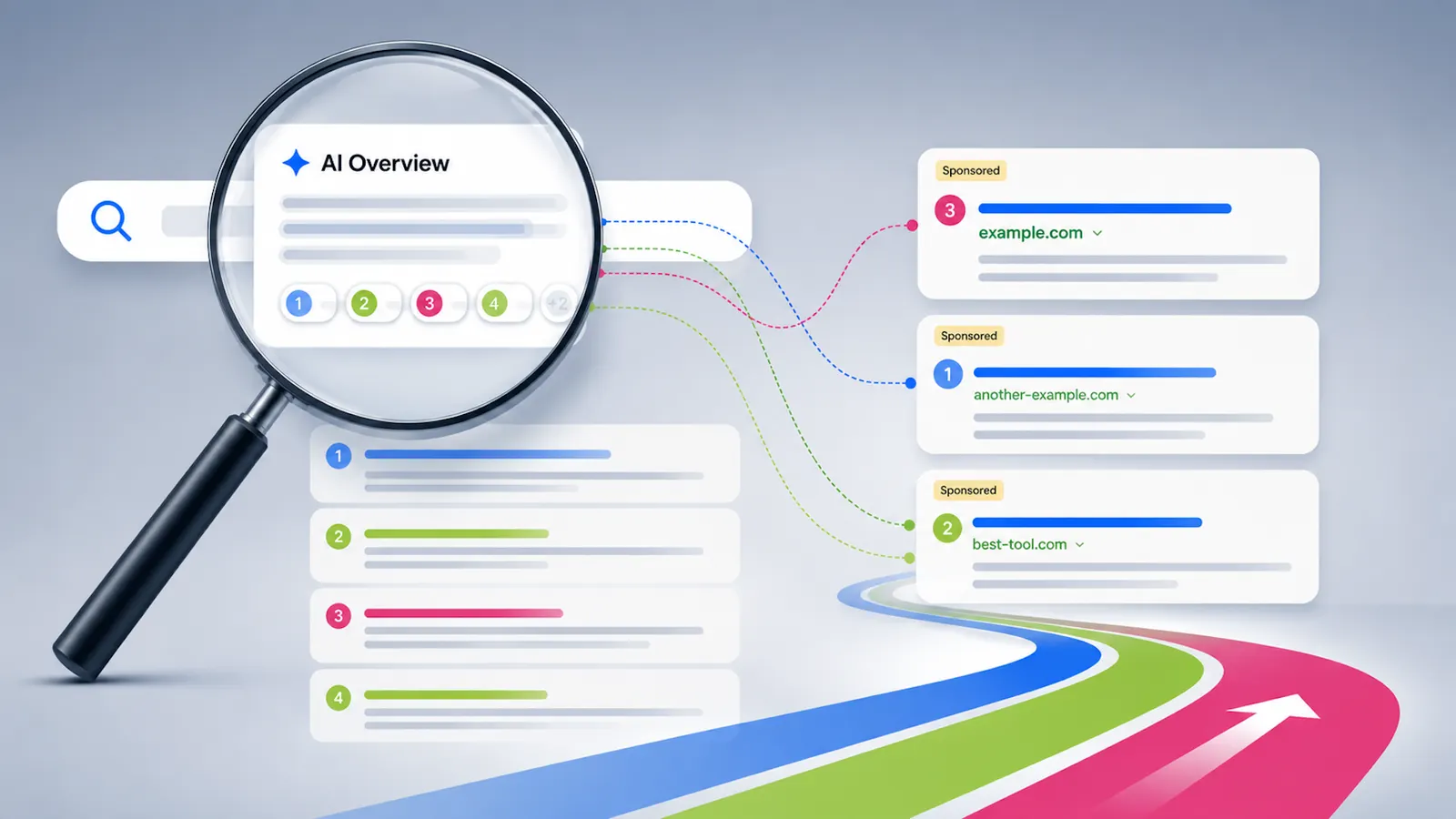
AI visibility metrics answer two questions: what information did an AI system retrieve to support its response, and was your brand part of what shaped it?
- Grounding queries show the retrieval searches AI systems run to gather supporting information, and the broader topics your brand appears in
- Citations show when your content is referenced in an AI-generated response
- Share of authority shows how much citation activity belongs to your domain versus other cited domains for the same topic or query set
Grounding queries show how AI interprets intent
Search terms show what a person typed. Grounding queries show what the AI retrieved to answer them. A single prompt can generate several grounding queries covering comparisons, pricing, reviews, product details, availability or implementation questions — revealing how AI translates a human need into retrievable information.
That gives you another way to evaluate whether landing pages, product descriptions and campaign messaging communicate the right value. If AI systems consistently associate your brand with services you do not offer, audiences you do not want, or use cases that convert poorly, that mismatch eventually shows up in paid campaigns as traffic that looks relevant but performs badly.
A B2B company offering executive coaching, for example, does not want to be interpreted the same way as a company offering tactical sales training. The ideas are semantically similar but attract different buyers, budgets, expectations and conversion paths. If grounding queries keep associating the company with lower-value training searches instead of higher-value advisory needs, that is worth investigating.
The useful signal is not whether one phrase is universally better. It is whether grounding queries, search terms, landing page behavior and conversion quality all point to the same interpretation of the same offer.
What to do with the insight
Plenty of relevant grounding queries is a good reason to test AI-powered query matching with Performance Max, AI Max or other AI-supported campaign types. At minimum, they inform keyword testing, search themes, creative ideas and landing page updates.
Treat grounding queries as inputs, not instructions. A grounding query is not a keyword; it is a clue about interpretation. Before acting, ask:
- Does this query reflect a product or service we actually want to sell?
- Does it match the customers we want more of?
- Do we have a landing page that supports this intent?
- Would this work better as a keyword, search theme, creative test or content update?
- Can we measure whether the test improves conversion quality?
Where grounding queries and search terms overlap usefully, that validates that AI systems and customers read your offer the same way. Where they do not, investigate before changing bids or budgets — the issue may be messaging, landing page clarity or content gaps rather than campaign settings.
Citations and topics preview how AI understands your brand
A citation does not mean you won the customer, the final answer or the conversion. It means your content helped shape the AI experience — which matters because consideration can happen before a measurable click.
If your brand is cited for topics that align with your paid campaigns, content and campaign messaging are reinforcing each other. If it is cited for topics that do not match what you sell, who you serve or where you win, that may explain why some traffic looks relevant on the surface but does not convert.
Topics add another layer by showing which themes, attributes and categories AI systems associate with your brand. If a cybersecurity platform wants to be known for enterprise identity protection but AI visibility reporting keeps associating it with small-business antivirus comparisons, that mismatch can produce low-quality conversions that then feed bad data back into the ad platform.
The practical takeaway
These metrics do not replace PPC metrics; they add interpretation to the pre-click window. When performance drops, the sequence they enable is to check what AI understands your brand to be before touching settings and bids.
For what happens when AI answers contradict your ads, see When AI Overviews Contradict the Ad Right Above Them; for a free measurement baseline, see Microsoft Clarity Splits AI Queries Into Branded and Non-Branded.